
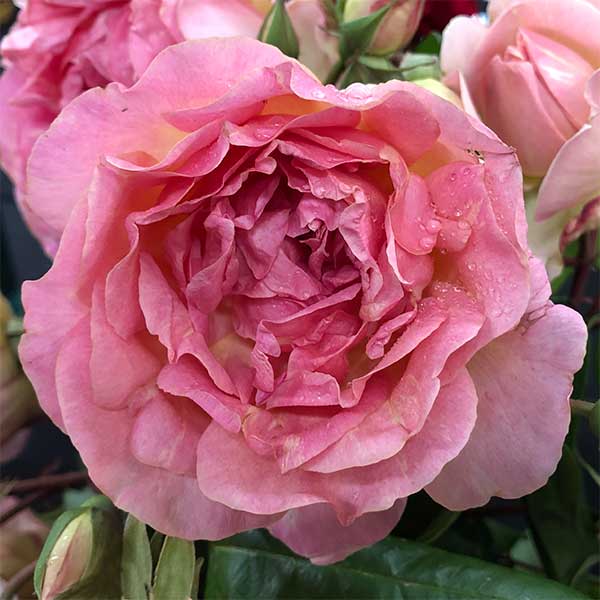
Souvenir de Mme Leonie Viennot is a historic climbing rose bred in 1858 by the French rosarian Jean Alexandre Bernaix in Lyon. It is generally described as a rambling Tea rose and is valued for its large coppery pink flowers and pleasing honey scented fragrance.
This is a rose suited to gardeners who have space to allow it to develop as a climber. When given room and a suitable support it produces an attractive display of blooms early in the season.
Flowering usually begins in early spring with additional flowers appearing intermittently through to summer.
The blooms are large and soft coppery pink in colour, with a warm tone that is typical of many Tea roses. Combined with the gentle fragrance, it makes an appealing rose for garden structures where flowers can be appreciated up close.
How to grow
Souvenir de Mme Leonie Viennot is maintained in much the same way as other climbing roses.
Because the plant produces thorny canes it can also act as a barrier plant when trained along a fence.
Allow adequate space when planting as this rose performs best when it is not crowded.
Light
Good sunlight is essential for strong flowering.
Ideal conditions include:
• A position in full sun
• Some afternoon shade in hotter climates if required
• A location with good air circulation
Plants grown in too much shade will produce fewer flowers.
Soil
Like most roses, Souvenir de Mme Leonie Viennot grows best in fertile soil that drains well.
Recommended soil preparation includes:
• Humus rich garden soil
• Soil improved with compost or well rotted manure
• Good drainage to prevent root problems
Before planting, dig well rotted cow manure into the soil to improve fertility and soil structure.
Watering
Consistent watering is important during the establishment period.
During the first growing season:
• Water regularly through the first summer, particularly during dry spells
• Apply mulch around the base of the plant to retain moisture
Once established, roses generally require watering during extended dry periods.
Mulching helps maintain a cool, moist root run and improves soil condition.
Basic care includes:
• Mulching annually to improve soil condition
• Feeding during the growing season
• Training canes onto a support structure
Regular observation will help ensure the plant develops a balanced framework of canes for future flowering.
Fertiliser
Feed the plant each year using either an organic fertiliser or a specialist rose fertiliser.
Applying fertiliser in spring as new growth begins will support healthy foliage and flowering.
Additional organic matter such as compost or aged manure can also be incorporated into the soil around the plant.
Pruning
Pruning is carried out in the same way as other climbing roses.
Remove weak or damaged growth and shorten overly long canes as needed. Training the remaining canes along supports helps encourage flowering along the stems.
Light pruning can also be carried out to maintain shape and keep the plant within its allotted space.
- A position in good sun is essential for good flowering, a little afternoon shade in hotter climates is OK.
- Choose a humus rich soil with good drainage.
- You will need some form of support for this climbing rose.
- Dig in some well rotted cow manure before planting.
- Plant and water in well with a liquid seaweed fertiliser.
- Mulch around the plant to maintain a cool moist root run.
- Water during the first summer during dry spells.
- Prune as required in the same manner as any other climbing rose.
- Fertilise each year with any organic fertiliser or specialist rose fertiliser.
Landscaping Uses
Use it along a fence or wall or train it over a trellis, just give it room and it will thrive. It it thorny so will certainly act as good barrier.
Try going it up and over a garden shed to create a great effect.
So who was Mme Leonie Viennot ?
From what we can glean she was the wife of Jean Alexandre Bernaix and he named the rose after her.