Nurseries Online
  • Home
  • A-Z Plant Index
  • Trees and Shrubs
    • Fruit Trees
    • Advanced Trees
    • Evergreen Trees
  • Native Plants
  • Roses
  • Buying Plants Online
    • Mail Order Nurseries
    • Retail Plant Nurseries
    • Wholesale Nurseries
  • Garden Pots
  • Water Features for the Garden
  • Garden Accessories
  • About Us
  • Water Features for the Garden
  • Garden Pots
  • Garden Accessories
Home  »  A-Z Plant Index  »  Orchids  »  Phragmipedium Court Jester

Phragmipedium Court Jester

  • Facebook
  • Pinterest

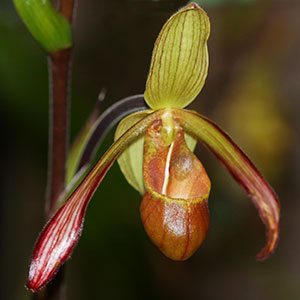
A real show stopper Phragmipedium Court Jester is a hybrid and it’s been around since 1977.

hragmipedium Court Jester

Known for its strikingly colourful blooms and elegant, elongated petals, this orchid commands attention with its playful, almost theatrical appearance. The flowers typically display either a bright green or an ochre to orange.

With the parents being Phragmipedium caudatum × Phragmipedium boissierianum with primary hybrid the color will naturally vary.

Phrag. caudatum, native to the cloud forests from Souther Mexico into Peru, at elevations of 1000 – 2500 metres is best known for its long, ribbon-like petals and dramatic, spider-like flowers. It thrives in cool to intermediate conditions with high humidity and abundant water. Its influence in Court Jester contributes to the hybrid’s elegant form and flowing petal shape.

Phrag. boissierianum, found in Central America (mainly southern Ecuador and Peru, Costa Rica and Panama) at elevations of 400 – 1500 metres , brings a more compact stature and brighter colouration to the hybrid. It prefers slightly warmer temperatures than caudatum and is more forgiving in cultivation, often blooming multiple times a year. This species contributes to the vibrant colours and floriferous nature of Court Jester.

Together, these parent species create a hybrid that is both eye-catching and relatively easy to grow when given the right conditions.

Phragmipedium Court Jester – Growing Conditions and Basic Care

  • Light: Bright, indirect light. Around 1500–2500 foot-candles is ideal—similar to Cattleya or bright Paphiopedilum conditions. Avoid harsh midday sun to prevent leaf burn.
  • Temperature: Intermediate to warm. Daytime temperatures between 18–27°C (65–80°F) and nighttime temps not below 13°C (55°F).
  • Humidity: High humidity is essential—aim for 60–80%, with good air movement to prevent fungal issues.
  • Watering: These plants love moisture. Keep the medium damp at all times, especially during active growth. Unlike many orchids, Phragmipediums can tolerate and even appreciate having their pots sit in a shallow tray of clean water.
  • Water Quality: Use low-mineral or distilled water if possible, as Phrags are sensitive to salt buildup.
  • Potting Medium: Use a mix that retains moisture but still drains well. A blend of fine bark, perlite, sphagnum moss, and charcoal works well.
  • Feeding: Fertilize lightly but frequently—about ¼ strength orchid fertilizer every 1–2 weeks during active growth, with occasional flushing to prevent salt accumulation.
  • Repotting: Every 1–2 years, or when the medium breaks down. Phrags don’t like stale, decomposed media.
Selenipedium Orchid
Selenipedium Orchid
Phragmipedium lindleyanum

Comments

Orchids

Orchids
  • Aerangis Orchids
  • Arpophyllum spicatum
  • Ascocentrum Orchids
  • Australian Native Orchids
  • Beallara Orchids
  • Bletilla striata – Chinese Ground Orchids
  • Brassia Orchids
  • Bulbophyllum Elizabeth Ann Buckleberry
  • Bulbophyllum Orchids
  • Calanthe Orchids
  • Cascading Cymbidium Orchids
  • Cattleya coccinea
  • Cattleya Orchids
  • Cattleya purpurata
  • Coelogyne mooreana
  • Coelogyne tenellum
  • Coelogyne usitana
  • Cool Growing Orchids
  • Cymbidium elegans
  • Cymbidium erythraeum
  • Cymbidium erythrostylum
  • Cymbidium lowianum
  • Cymbidium Orchids -Varieties
  • Cymbidium tracyanum
  • Cypripedium Orchids
  • Dactylorhiza
  • Dendrobium falcorostrum
  • Dendrobium kingianum
  • Dendrobium Orchid ‘Bardo Rose’
  • Dendrobium Orchids
  • Dendrobium primulinum
  • Dendrochilum Orchids
  • Dockrillia Orchids Fact Sheet
  • Dracula Orchids
  • Epidendrum Orchids
  • Fertilizing Orchids
  • Gongora Orchids
  • How to Use Orchid Flower Spike Clips
  • Laelia Orchids
  • Lycaste Orchids
  • Masdevallia Orchids
  • Maxillaria Orchids
  • Miltonia Orchids
  • Miltoniopsis Orchids
  • Odontoglossum Orchids
  • Oncidium Orchids
  • Orchid Flasks
  • Orchid Pots Clips and Accessories
  • Orchids
  • Osmoglossum pulchellum
  • Paphiopedilum insigne
  • Paphiopedilum micranthum
  • Paphiopedilum Orchids
  • Paphiopedilum Venustum
  • Phaius Orchids
  • Phalaenopsis hieroglyphica
  • Phalaenopsis Orchids
  • Phalaenopsis stuartiana
  • Phragmipedium Court Jester
  • Phragmipedium Orchids
  • Pleione Orchids
  • Pleurothallis Orchids
  • Sarcochilus Orchids
  • Selenipedium Orchids
  • Slatted Orchid Baskets
  • Species Orchids
  • Spider Orchids – Caladenia (syn. Arachnorchis)
  • Spiranthes
  • Stanhopea Orchids
  • Thelymitra Orchids
  • Vanda Orchids
  • Watering Orchids
  • Zygopetalum Orchids

Copyright © 2025 · Advertise with Us · Contact Us