
Top Orchid Watering Tips for Healthy and Blooming Plants
Improper watering is one of the most common mistakes in orchid care. Overwatering, in particular, can lead to root rot and prevent your orchid from flowering. Often, this issue is worsened by using the wrong growing medium, which may retain too much moisture.
The key to watering orchids is not simply how much water you give them, but how quickly the growing medium drains and how long the roots remain wet. Orchids grown indoors, orchids grown in bark and orchids grown in different types of pots can all have different watering requirements.
- Understand How Orchids Grow
- Recognize Root Health
- Know Your Orchid’s Origin
- The Purpose of Watering
- Common Watering Problems
- Watering Best Practices
- When to Water
- Should You Water Orchids From the Top or Bottom?
- Don’t water on sight—check the media first.
- How to Water an Orchid
- Watering Orchids in Bark
- How Much Water Does an Orchid Need?
- Should You Water Orchids With Ice Cubes?
- Final Advice
- More Information
- We Are Asked – FAQ
Understand How Orchids Grow
Most orchids grown at home are epiphytic, meaning they naturally grow on trees or rocks where water drains quickly. These species receive water from rain and moisture in the air, not soggy soil. Knowing your orchid’s native environment helps you mimic natural watering conditions.
Recognize Root Health
Orchid roots are covered in velamen, a spongy layer that changes color based on moisture. Healthy roots appear green or creamy white. If roots are dry, the plant suffers. If they stay too wet, they may rot. Proper drainage and watering technique are crucial.
Clear orchid pots can make this easier to judge. Rather than watering simply because it has been several days, look at the roots and growing medium first.
Know Your Orchid’s Origin
Not all orchids are tropical, and even tropical species vary in temperature and water needs. For example, orchids from high altitudes often need less water and cooler conditions. Identifying your orchid’s native habitat will help tailor your watering schedule.
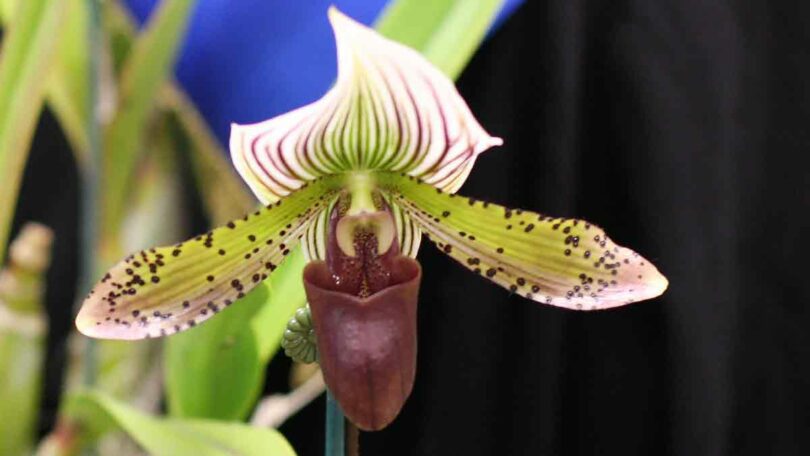
Different types of orchids also have different preferences. Some, such as many Dendrobium, Oncidium, Vanda and Cattleya alliances, can be allowed to become quite dry between waterings. Others, such as Paphiopedilum, generally prefer more even moisture and should be watered before the growing medium dries completely.
The Purpose of Watering
Watering orchids does more than hydrate them. It also:
Watering Orchids performs a number of tasks.
- Providing orchids with water, all plants like to drink.
- Creating humidity around the plant.
- As a means of making fertiliser accessible to orchids.
- Flushing away excess salts from fertilisers and the growing medium.
Watering also helps maintain the balance between moisture and air around the orchid roots. This is why good drainage and the right growing medium is just as important as the water itself.
Common Watering Problems
- Overwatering Orchids
Overwatering is one of the most common causes of problems with orchids. Roots that remain wet for too long have limited access to oxygen and can begin to rot.
It is worth remembering that overwatering does not necessarily mean using too much water at one time. More often, it means watering too frequently or growing the orchid in a medium that stays wet for too long. - Low or high humidity.
Low humidity can cause stress, particularly in warm indoor environments. Very high humidity combined with poor air movement can also cause problems.
Orchids generally benefit from reasonable humidity and good air circulation rather than constantly wet leaves or roots. - Nutrient Lockout
Dry, compacted or poorly draining media can interfere with nutrient uptake. On the other hand, repeatedly adding fertiliser without thoroughly watering the plant can result in a build-up of salts around the roots.
Regular watering with plain water helps flush away excess fertiliser salts.
Watering Best Practices
- Water thoroughly until it drains from the pot’s bottom.
- Re-water after 30 minutes for complete saturation.
- Water the growing medium during active growth when it begins to dry out.
- Mist Spray or ‘Spritz’ to increase humidity without soaking the roots.
- Water in the morning to allow leaves to dry before evening.
When to Water
- Don’t water on sight—check the media first.
- Most growers tend to recommend watering in the morning.
- You do not need to water orchids every time you look at them, do something else instead, weed the pots, clean up the growing area, but do not over water.
- Some orchids such as Dendrobium, Oncidium, Vanda and Cattleya alliances can be allowed to almost dry out before they actually need water.
- Others such as Paphiopedilum need to watered well before they dry out.
Should You Water Orchids From the Top or Bottom?
For most orchids, watering from the top is the simplest and most effective method. Slowly soak the growing medium with water until it runs freely from the drainage holes, then allow the pot to drain completely.
You can also water an orchid by sitting the pot in a container of water for a short period, allowing the bark or other growing medium to absorb moisture from below. This can work well, particularly when the medium has become very dry, but the pot should still be allowed to drain thoroughly afterwards.
Whichever method you use, the important thing is that the roots are thoroughly moistened and then allowed to receive plenty of air.
When to Water
Don’t water on sight—check the media first.
Most growers tend to recommend watering in the morning. You do not need to water orchids every time you look at them, do something else instead, weed the pots, clean up the growing area, but do not over water.
How often you water will depend on the type of orchid, the potting mix, the size and type of pot, temperature, humidity, air movement and the time of year.
An orchid in a warm room in summer may need water much more often than the same orchid in winter. A plant growing in coarse bark will generally dry more quickly than one growing in a finer, moisture-retentive mix.
How to Water an Orchid
The simplest approach is to water the orchid thoroughly and then let it drain.
Place the orchid somewhere where excess water can escape. Slowly apply water to the bark or other growing medium, making sure the entire root area is moistened. Continue until water runs from the drainage holes.
Allow the pot to drain completely before returning it to its decorative cover or saucer. If the orchid is sitting in a cachepot, make sure there is no water collecting around the bottom of the pot.
Avoid allowing water to sit in the crown of the orchid, particularly with Phalaenopsis. If water does collect in the crown or between leaves, gently remove it with a paper towel or allow good air movement to dry it.
Watering Orchids in Bark
Bark is one of the most commonly used growing media for epiphytic orchids because it provides drainage and allows air to reach the roots.
However, bark can vary considerably in size and moisture retention. Fine bark holds more moisture than coarse bark, while old bark can break down and retain water.
How Often Should You Water Orchids in Bark?
There is no set number of days for watering orchids in bark.
As a general guide, water when the bark is beginning to dry rather than while it is still thoroughly wet. In warm conditions this may be once or twice a week, while in cooler conditions it may be considerably less often.
The best guide is the condition of the bark and roots rather than the calendar.
If the bark is still damp and the roots are green, wait. If the bark is dry and the roots have become silvery or grey, it is usually time to water.
How Much Water Does an Orchid Need?
There is no set amount of water an orchid needs per week.
An orchid does not need a measured weekly dose of water in the same way that we might measure fertiliser. The amount required depends on the season, the potting mix, temperature, humidity, pot size and the type of orchid.
For example, an orchid growing in coarse bark during warm summer weather may need considerably more water than the same plant growing in finer bark during winter.
Instead of asking how many millilitres of water an orchid needs each week, it is better to ask whether the growing medium has dried enough to be watered again.
When you do water, water thoroughly so the growing medium is properly moistened, then allow the excess water to drain away.
Should You Water Orchids With Ice Cubes?
No. Ice cubes are not recommended for watering orchids.
The idea of placing a few ice cubes on the growing medium may seem convenient, but orchids are tropical and subtropical plants and there is no advantage in exposing their roots to very cold water.
Ice cubes can also provide an inconsistent and inadequate amount of water, particularly in a well-draining orchid mix such as bark.
Instead, use room-temperature water and water the orchid thoroughly when it needs it.
Final Advice
Different orchids have different watering needs. For instance, Cymbidium orchids can survive on rainwater alone in some climates. Always request specific care instructions when purchasing orchids. Not only does this guide proper care, but it also reflects the seller’s expertise.
More Information









We Are Asked – FAQ
Can I water orchids with ice cubes?
This method is controversial. While it limits overwatering, ice water may shock tropical orchids. It’s better to water thoroughly with room-temperature water.
How do I flush orchid roots to remove salt buildup?
Once a month, water your orchid thoroughly with clean water until it drains out fully. Repeat after 15–30 minutes to flush out accumulated salts.
Do orchids need more water when flowering?
Yes, during blooming or active growth, orchids often require more consistent moisture. Monitor root and medium moisture levels carefully.
Can I use tap water to water my orchid?
It depends on the tap water quality. If it’s high in salts or chlorine, use rainwater, distilled water, or filtered water to prevent salt build-up on roots.
How often should I water my orchid?
Watering frequency depends on the orchid type, environment, and season. Most orchids need water once a week, but always check if the potting medium is dry before watering again.