
Brassia Orchids are a warm to cool climate orchid sometimes referred to as Spider Orchids. spider orchids. Although they do not like very cold conditions they will thrive in cool climates as long as the temperature does not drop below 10 C for extended periods.
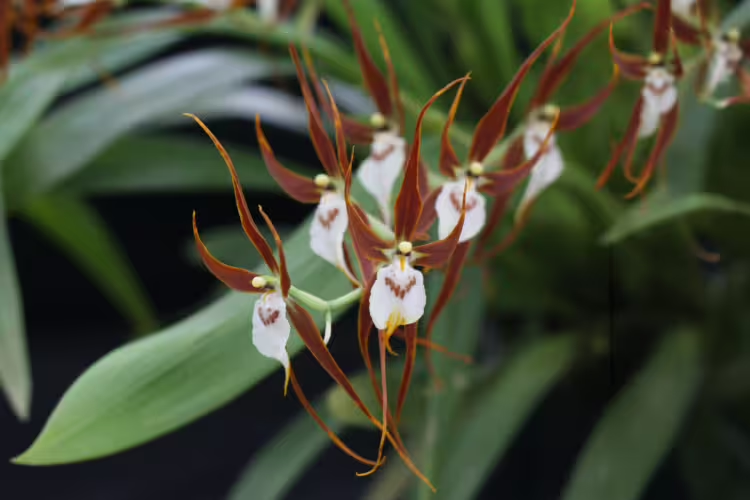
These are a fragrant orchid, spider like extensions on the petals give the orchid its common name.
With over 40 species and an ever increasing number of cultivars for sale you can be spolit for choice. However it is difficult to go past species such as Brassia verrucosa which is pictures right. Others such as Brassia lomgissima are also worth considering.
Hybrids such as the popular Brassia Rex group with the trademark green to yellow flowers marked with brown are also popular. Brassia Rex is more tolerant of heeat than others. Spotless forms are also available.

Brassia Orchid Culture
Although they are from South America, many Brassia species come from higher elevations and are naturally epiphytic, growing on trees in forested areas. In culture, they are usually mounted on tree fern, cork or coir. They can also be grown in containers in a free-draining pine bark medium.
When grown in pots, good drainage is important. Brassia orchids do not like to remain wet around the roots for extended periods, so use an open orchid mix that allows air to reach the root system.
How To Grow Brassia Orchids – Care Guide
The main aspects of general care for Brassia Orchids are light, moisture, humidity, temperature and fertiliser.
Watering and Fertilising Brassia Orchids
- The growing season is from spring to early autumn and during this period a liquid fertiliser applied every 2–3 weeks as part of the watering regime will help them thrive.
- Use a 50% solution rather than full strength with these frequent applications.
- In between applications of fertiliser, water well until the water runs through the pot. This will help flush away excess salts from the fertiliser.
- Allow the potting mix to become slightly drier between waterings, but do not allow the plant to remain completely dry for extended periods.
As autumn comes to an end, reduce watering, particularly in cooler conditions. Allow the potting mix to dry out more between waterings and hold off with fertiliser while the plant is resting. If grown somewhere warm, or if the plant continues to produce new growth, it may still require occasional watering.
Light and Temperature
Light needs to be strong but filtered. Brassia orchids do not like strong direct sun, particularly during the hottest part of the day.
A position with bright filtered light, such as beneath shade cloth or under the canopy of suitable trees, is ideal. Too little light can result in poor flowering, while too much direct sun can scorch the leaves.
Increased humidity may be required indoors. Use a tray of pebbles with water beneath the pot to increase humidity. Do not sit the pot itself in water.
Warm, humid days of around 20–25°C and cool nights of around 10–15°C are ideal. During winter, Brassia can tolerate cooler conditions, but temperatures around 10°C or below should not be maintained for extended periods.
Good air movement is also important, particularly when humidity is high. This helps reduce the risk of fungal and bacterial problems.
Re Potting
Repotting is best carried out after flowering, when the plant is beginning new growth. In many Australian gardens this can be around autumn or spring, depending on the growing conditions and the particular plant.
- Soak the pot in tepid water for 20 minutes to help loosen the root system. Carefully remove the plant from the pot and remove the old potting mix from around the roots.
- Trim away any dead, damaged or rotting roots with clean cutting tools. Avoid removing healthy firm roots unnecessarily, as Brassia orchids rely on their root system to establish quickly after repotting.
- Use a free-draining orchid mix containing materials such as pine bark, and choose a pot only slightly larger than the existing root system. Brassia orchids do not need a large pot.
After repotting, water lightly and keep the plant in a warm, humid position with filtered light while it settles in. Once new root and leaf growth is evident, normal watering and feeding can be resumed.
Top Tips
The key to growing Brassia orchids successfully is to provide bright filtered light, good humidity, free drainage and regular feeding while actively growing. Avoid extremes of temperature and do not allow the roots to remain constantly wet.
Given the right conditions, Brassia orchids can reward the grower with their unusual, fragrant spider-like flowers and make an interesting addition to an orchid collection.