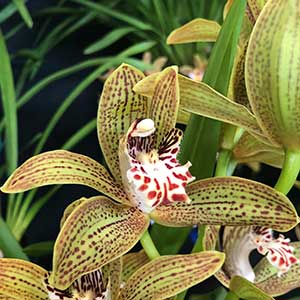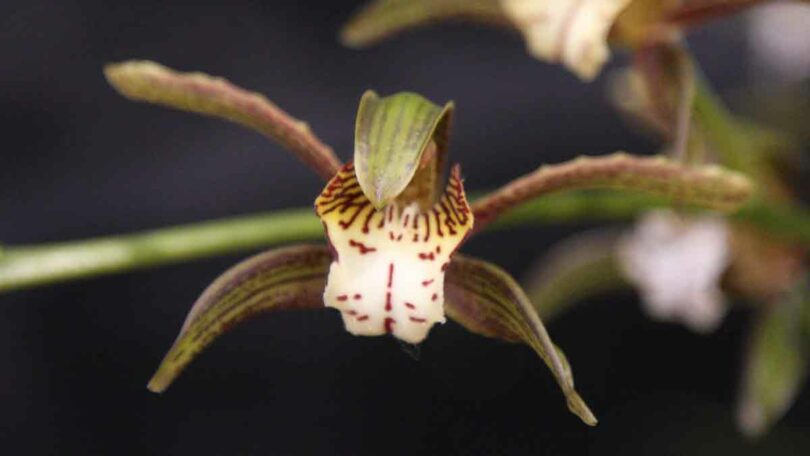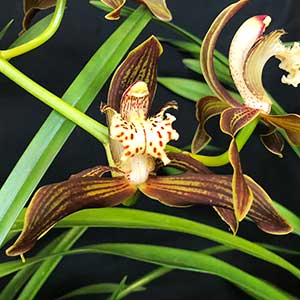
Cymbidium erythrostylum is a rare and elegant cool-growing orchid native to Vietnam’s mountainous regions. Prized for its pure white blooms and crimson-red lip, this species is compact, resilient, and perfect for temperate gardens with mild winters and bright summers.

In this article we look at how to grow both Cymbidium erythrostylum and the only other form which is Cymbidium erythrostylum alba
With large flowers, and being an early flowering species Cymbidium erythrostylum is very popular in the hybridisation of Cymbidiums.
Botanical Origins & Features
- Scientific Name: Cymbidium erythrostylum Rolfe
- Family: Orchidaceae
- Native Range: Central and southern Vietnam, 1200–1500m elevation
- Flowering Season: Late autumn to winter
This species was first described by British botanist Robert Allen Rolfe. The name Cymbidium comes from the Greek word kymbe, meaning “boat,” referring to the flower’s lip shape. Erythrostylum denotes its striking red labellum.
Mature plants form tight clumps of 30–40 cm arching leaves. Flower spikes (30–45 cm) carry 2–7 pendulous blooms that can last several weeks in cool conditions.
Ideal Growing Conditions
Creating an environment that mimics Cymbidium erythrostylum’s native highland climate is key to successful cultivation.
Temperature
- Optimal Range: 10–25 °C
- Tolerates: Brief exposure to 2–5 °C
- Avoid frost; ensure cool nights and warm days to trigger flowering.
Humidity
Aim for a humidity of around 75%
Light
- Prefers bright, indirect or dappled light.
- Ideal under deciduous trees or near east/north-facing windows.
- Avoid full sun (leaf scorch) and deep shade (poor flowering).
Air Movement
Good airflow helps prevent fungal issues. Use oscillating fans indoors or natural breezes outdoors to simulate its mountain habitat.
Potting Media & Containers
Cymbidium erythrostylum grows epiphytically, lithophytically, or terrestrially. Choose a potting mix that ensures excellent drainage and aeration.
Recommended Mix:
- Orchid bark
- Perlite
- Coconut husk or coarse peat
In dry climates, add sphagnum moss for moisture retention. In humid regions, lean toward coarser materials to avoid root rot.
Tips:
- Use terracotta pots for airflow and quicker drying.
- Repot every 2–3 years, post-flowering, to refresh media and manage root growth.
Watering Schedule
Cymbidium erythrostylum appreciates a balanced wet-dry cycle.
- Spring/Summer: Water deeply once or twice per week.
- Autumn/Winter: Reduce to every 14– 21 days. Depending on climate and growing medium. Some mist spraying early in the day will improve humidity.
- Allow media to dry between waterings. Avoid standing water or soggy roots.
The plant’s pseudobulbs store water, enabling survival through short dry periods.
Fertilizing & Feeding
Healthy growth and flowering depend on consistent, moderate feeding.
- At Repotting: Mix in a balanced, slow-release orchid fertilizer.
- During Growth (Spring–Summer): Apply diluted liquid orchid fertilizer weekly or biweekly.
- Flush pots monthly to prevent salt buildup.
- Consider using mycorrhizal inoculants to enhance nutrient uptake.
Light Placement Tips
Proper lighting is essential for flower spike formation.
- Place outdoors under dappled tree cover or indoors near bright, filtered light.
- Avoid dark corners (leads to vegetative growth only).
- Shield from harsh midday sun, especially in summer. Use a shade cloth to prevent leaf burn, however remove shade cloth at other times, just ensure that leaf burn is not occurring.
Seasonal Growth & Bloom Cycle

Understanding the annual growth rhythm will help you align care with the plant’s needs:
- Spring–Early Summer: New growth and pseudobulbs emerge.
- Mid–Late Summer: Pseudobulbs mature, storing energy.
- Autumn–Winter: Flower spikes appear and bloom.
- Winter: Dormancy period—scale back watering and feeding.
Each pseudobulb blooms once, so yearly growth ensures regular flowering.
General Care & Propagation
- Best grown outdoors in frost-free climates or protected greenhouses.
- Maintain humidity at 50–70%. Use trays or humidifiers indoors if needed.
- Watch for aphids, mites, slugs, and fungal issues. Treat promptly.
- Propagate by division after flowering. Each division should have 3–4 healthy pseudobulbs.

Some Examples of Cymbidium erythrostylum Hybrids
- Cymbidium Niveum – eburneum × erythrostylum
- Cymbidium Frosty Jack – mastersii × erythrostylum
- Cymbidium Hanburyanum – erythrostylum × tracyanum
- Cymbidium Florinda – erythrostylum × iridioides
- Cymbidium Osborn – erythrostylum × dayanum
- Cymbidium Eternal Jewel – Cym. wadae × Cym. erythrostylum
Summary Table for Cymbidium erythrostylum
| Field | Details |
|---|---|
| Botanical Name | Cymbidium erythrostylum |
| Family | Orchidaceae |
| Genus | Cymbidium |
| Common Names | Erythrostylum Cymbidium, Red column cymbidium. |
| Origin | Vietnam (central highlands), possibly Laos |
| Height | 30–60 cm (including flower spike) |
| Width | ~30 cm (clump-forming, can spread wider over time) |
| Growth Habit | Sympodial, clump-forming with pseudobulbs and strap-like leaves |
| Flower Colour | White to pale cream with a bright crimson/red lip |
| Flowering Season | Autumn to early winter (typically late March to May in the Southern Hemisphere) |
| Fragrance | Yes — fragrant, often described as sweet or spicy |
| Foliage | Long, narrow, arching green leaves (evergreen) |
| Root System | Thick, fleshy, white to cream-colored roots typical of epiphytic or terrestrial orchids |
Why Grow Cymbidium erythrostylum?
Elegant, compact, and forgiving, Cymbidium erythrostylum offers a striking floral display with relatively simple care. When grown in cool, bright conditions with good airflow and seasonal adjustments, it rewards growers with breathtaking blooms that light up the winter months.