
Nurseries Online
  • Home
  • A-Z Plant Index
  • Trees and Shrubs
    • Fruit Trees
    • Evergreen Trees
  • Native Plants
  • Roses
  • Buying Plants Online
    • Mail Order Nurseries
    • Retail Plant Nurseries
    • Wholesale Nurseries
  • Garden Pots
  • Water Features for the Garden
  • Garden Accessories
  • About Us
  • Water Features for the Garden
  • Garden Pots
  • Garden Accessories
Home  »  A-Z Plant Index  »  Climbing Plants  »  Chocolate Vine or Five-leaf Akebia

Chocolate Vine or Five-leaf Akebia

  • Facebook
  • Pinterest
Akebia quinata - The Chocolate Vine
Akebia quinata – The Chocolate Vine

Akebia quinata, commonly known as Chocolate Vine or Five-leaf Akebia, is a fast growing climbing plant native to Japan as well as China and Korea. Grown for both its ornamental qualities and unusual fruit, this vigorous climber is well suited to a range of garden situations.

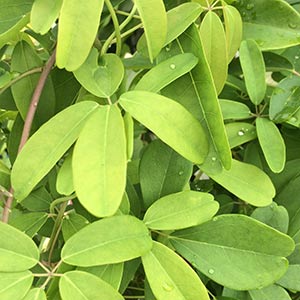
This is an evergreen to semi-evergreen plant depending on climate. In warmer regions it will retain foliage year round, while in cooler areas it may become deciduous through winter. The foliage is a soft mid green, made up of five leaflets, giving rise to the common name.

In spring, Akebia quinata produces small, cup shaped flowers in shades of purple to brown. These have a light vanilla fragrance. In warm climates flowering can begin in early spring and continue into summer. The plant is commonly called Chocolate Vine due to the scent of the fruit, which has a subtle chocolate-like aroma when ripe.

Growth Rate and Habit

This is a vigorous and fast growing climber that can quickly cover structures. It is well suited to training along fences, wires, pergolas and trellis. In good conditions it can reach several metres in height and spread, so some control may be required to keep it tidy.

Landscaping Uses.

Chocolate Vine is widely used as a screening or covering plant.

  • It is ideal for growing over fences, pergolas and arbours where it can provide filtered shade.
  • It can also be trained along wires or espaliered for more structured effects.
  • The fragrant flowers make it a useful addition to sensory or cottage style gardens

Growing Conditions

  • Position – Full sun to part shade
  • Soil – Prefers humus rich, moist, well drained soil
  • Climate – Suitable for temperate to warm regions; semi deciduous in cooler climates
  • Support – Requires a structure such as a trellis or wires to climb effectively

Care

Akebia quinata is generally low maintenance once established. The best time to plant is in ealy spring which gives it time to develop a good root system before summer.

  • Water regularly during establishment and during extended dry periods.
  • Apply a slow release fertiliser in spring to encourage healthy growth and flowering.
  • Mulch around the base of the plant to help retain moisture and keep the root system cool.

Pruning

This is a plant that will benefit from pruning lightly immediately after flowering to maintain shape and control growth.

Hard pruning can be carried out in winter if the plant becomes too vigorous or overgrown. You can cut it right back ground level and it will recover very quickly.

Fruit and Edibility

The fruit of Akebia quinata is edible and is considered a delicacy in parts of Japan. The soft inner pulp has a mildly sweet flavour, while the black seeds which are bitter are usually discarded. Fruiting is more common in warm climates and when more than one plant is grown for pollination.

Notes on Growth Habit

In favourable conditions this plant can spread readily and is often described as robust. Regular pruning will help manage its size and prevent it from becoming overly dense.

The Chocolate Vine is available for sale form the following nurseries


Weslor Flowers Plant Nursery – 07 5488 6923

Passionfruit
Passionfruit
Wine Grape Vine
Wine Grape Vine
Clematis ville de lyon classic climbing plant
Climbing Plants

Climbing Plants

Climbing Plants
  • Actinidia – How To Plant, Grow and Prune Kiwi Fruit
  • Allamanda neriifolia
  • Antigonon leptopus
  • Bomarea
  • Bougainvillea
  • Canarina canariensis
  • Chocolate Vine or Five-leaf Akebia
  • Clematis
  • Clematis amandii ‘Apple Blossom’
  • Clematis Blue Angel
  • Clematis florida Sieboldii
  • Clematis henryii
  • Clematis maximowicziana
  • Clematis montana
  • Clematis x cartmanii ‘Sweet Hart’
  • Clerodendrum bungei
  • Clerodendrum thomsoniae
  • Climbing Plants
  • Clytostoma callistegioides
  • Cobaea Scandens
  • Dipladenia – The Rock Trumpet
  • Epipremnum aureum – Pothos Plants
  • Ficus pumila
  • Gelsemium sempervirens
  • Gourds
  • Hoyas
  • Humulus lupulus: Growing Hop Plants in the Garden
  • Jasminum polyanthum
  • Lapageria – The Chilean Bellflower
  • Lonicera ‘Honeysuckle’ Plants
  • Mandevilla
  • Mandevilla alice dupont
  • Ornamental Grape
  • Parthenocissus Tricuspidata
  • Passiflora
  • Phaedranthus buccinatorus
  • Philodendron Birkin
  • Podranea ricasoliana – The Pink Trumpet Vine
  • Potato Vine
  • Pseudocalymma alliaceum
  • Rhodochiton astrosanguineus
  • Schizophragma hydrangoides
  • Solandra maxima
  • Standard Wisteria
  • Stephanotis floribunda
  • Tecoma capensis ‘Aurea’
  • The Firecracker Honeysuckle
  • Thunbergia gibsonii
  • Tibouchina laxa ‘Skylab’
  • Trachelspermum jasminoides
  • Tropaeolum
  • Tropaeolum tricolor
  • Veronicastrum latifolium
  • Vigna caracalla
  • Virginia Creeper
  • Wisteria
  • Wisteria floribunda
  • Wisteria sinensis

Copyright © 2026 · Advertise with Us · Contact Us