
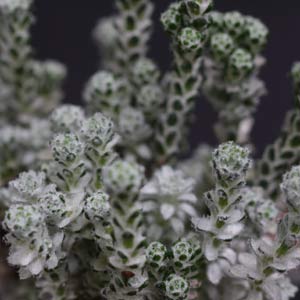
Helichrysum argyrophyllum, sometimes called silver leaf helichrysum, is a charming perennial boasting soft, silvery foliage that’s sure to catch the eye in a rock garden or mixed planting. Native to the Eastern Cape area of South Africa. Bright bright, woolly leaves give it a uniquely textured appeal.

Growing this easy-care plant brings delight: its bushy habit spreads gracefully, and over time it softens at the edges—almost like a cushion of silver moss that glows against darker greens.
Description and Origins
Plant Type: Herbaceous perennial with aromatic, silver-grey leaves.
Origins: Indigenous to mountainous and rocky slopes of (typically) South Africa.
Adapted to well-drained soils and bright conditions in its native habitat.
How To Grow Helichrysum argyrophyllum – Basic Care
- Natural Habitat
In the wild, Helichrysum argyrophyllum thrives on sun-drenched, rocky inclines, where the soil drains quickly and air flow is good so humidity is low.. - Soil / Potting Mix
A gritty, free-draining medium is ideal—think sharp sand or gravel blended with good potting mix. Replicates its native rocky substrate. - Sun / Light
Prefers full sun to light shade: morning sun with gentle afternoon light works best to maintain that silver tone. Excessive shade dulls the foliage. - Temperature Range
Tolerates mild frost, but benefits from protection below –5 °C / 23 °F. Thrives in temperate to warm climates. - Fertiliser
Low needs — feed lightly in spring with a liquid fish and seaweed fertiser. Avoid over-fertilizing; too fertiliser will encourage lanky thin growth.
How to Plant
- Choose a well‑draining site or container with gritty mix.
- Plant at same depth as nursery container.
- Water in thoroughly, then let surface dry before watering again.
Ongoing Care
- Keep soil moist but not soggy—water when top 1 cm (½”) of soil is dry.
- Provide good air circulation around the foliage to prevent rot.
- Mulch lightly in winter for frost protection.
- Repotting
Best done in spring. Move into a slightly larger pot with fresh gritty mix if roots begin showing or crowding occurs. - Watering
Allow the top 1 cm (½”) of soil to dry before watering. In summer, watering once a week is often sufficient—less in cooler months. - Dormancy
Doesn’t experience true dormancy, but slows growth in cooler seasons. Water sparingly during winter months.

PRUNING
Trim gently in spring to maintain shape and encourage lush, compact growth. Remove any leggy or greyed-out bits to keep the plant tidy.
PROPAGATION
Helichrysum argyrophyllum is easily propagated from softwood cuttings in spring or early summer. Use a well-draining mix, keep cuttings lightly moist, and they root in 2–4 weeks. Seed propagation is possible but slower.
Climate Zones
- USA: USDA Zones 8–10.
- UK: Mostly suited to milder coastal or sheltered inland areas—tolerates down to about –5 °C.
- Australia: Ideal for zones 9–11; perfect in coastal to temperate areas.

Helichrysum argyrophyllum Summary Description
- Plant Type – Herbaceous perennial with silvery, aromatic foliage
- Growth Habit – Low mound, spreading edge, potentially soft cushion
- Height – Approx. 10–15 cm (4 – 6″)
- Width – Approx. 30–60 cm (12–24″) (spreads outward)
- Time to Ultimate Height – Usually reaches mature size in 1–2 growing seasons
- Light – Full sun to light afternoon shade — bright but not scorching
- Climate Zone = USA: 8–10 • UK: mild coastal sheltered • Aus: 9–11
- Plant Usage – Rock gardens, borders, edging, gravel gardens, container displays
- Plant Environment – Rockery, exposed mixed planting, pots, coastal gardens
- Frost Tolerance – Mild frost tolerant (down to –5 °C with protection)
- Drought Tolerance – Moderate—drought-resilient once established; avoid prolonged driout
- Special Features – Striking silver foliage, soft texture, low maintenance
- Soil Type =Sandy, gritty, well-draining mixture
- Soil Moisture -Dry to slightly moist—never waterlogged
- pH Level – Neutral to slightly alkaline
- Attracts Wildlife – Occasional pollinators during bloom
- Flower Colour – Pale yellow or cream (typical to helichrysum types)
- Flowering Time – Late summer to early autumn
- Foliage Type – Evergreen, woolly/silvery
- Foliage Colour – Silvery-grey with soft texture
- Autumn / Fall Colour – Evergreen—no seasonal colour change
- Lifespan – Perennial—lifespan 3–5+ years with good upkeep