
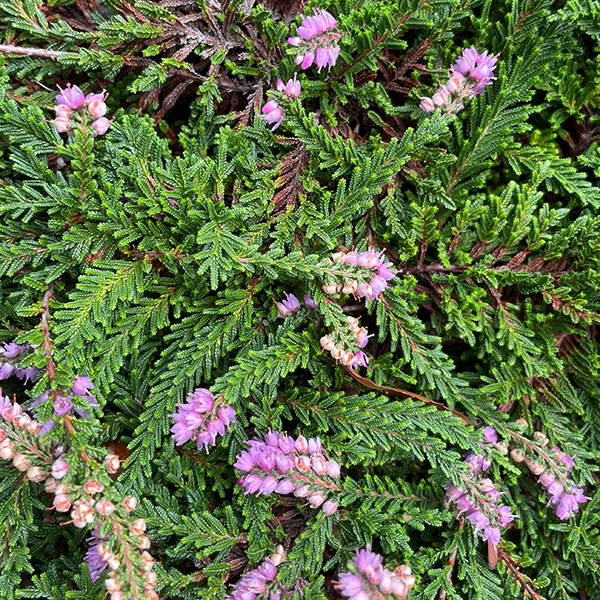
Calluna ‘Mrs Ronald Gray’ is a compact Scotch Heather cultivar valued for its low spreading growth habit and attractive summer flowers. With its deep green foliage and soft pink to purple blooms, this plant works well as a ground cover, edging plant, or rock garden specimen.
This evergreen heather forms small mats of foliage that remain neat throughout the year. Although the flowers are relatively small, they appear in abundance and add delicate colour to the garden during the warmer months.
Because of its naturally trailing habit, it is also a good choice for container plantings and raised garden beds.
Calluna ‘Mrs Ronald Gray’ Quick Facts
| Feature | Details |
|---|---|
| Botanical Name | Calluna ‘Mrs Ronald Gray’ |
| Common Name | Scotch Heather |
| Plant Type | Evergreen ground cover shrub |
| Height | 5–10 cm |
| Spread | 30–45 cm |
| Position | Full sun |
| Soil | Slightly acidic, well-drained |
| Flower Colour | Pink to purple |
| Flowering Season | Summer |
| Growth Rate | Moderate |
Key Features
- Low-growing evergreen shrub
- Pink to purple flowers in summer
- Attractive as a ground cover or edging plant
- Suitable for rock gardens and containers
- Moderate growth rate
Appearance and Growth Habit
Growth Form
Calluna ‘Mrs Ronald Gray’ forms a low, spreading mound, typically reaching around 5–10 cm in height while gradually spreading outward.
The branches grow outward and may trail slightly over edges, making the plant useful for softening the edges of walls or raised beds.
Foliage
The foliage is dense and deep green, providing year-round structure even when the plant is not in flower.
Flowers
During summer, the plant produces small purple-pink flowers that appear along the stems. While individual flowers are tiny, the overall display can be quite attractive when the plant is in full bloom.
The flowers can also be used as delicate cut flowers, particularly in small arrangements.
How to Grow Calluna ‘Mrs Ronald Gray’
Heathers generally prefer cooler climates and acidic soil conditions. With the right location and soil preparation, they are relatively easy to grow.
Position
Plant in full sun for the best flowering. In hotter regions, some protection from intense afternoon sun may help prevent stress.
Soil
This plant prefers slightly acidic soil with good drainage.
Ideal soil conditions include:
- Sandy or loamy soils
- Soil enriched with organic matter
- Good drainage to prevent root problems
Avoid strongly alkaline soils where possible, as heathers generally perform poorly in these conditions.
Watering
Heathers prefer consistent moisture, particularly while establishing.
- Water regularly during the first growing season
- During dry periods, watering every couple of weeks may be beneficial depending on soil type and climate
- Avoid waterlogged conditions
Mulching can help maintain even soil moisture.
Fertilising
Apply a light application of organic fertiliser in spring to support healthy growth.
Avoid heavy fertilising, as heathers typically perform best in moderately fertile soils rather than rich garden beds.
Planting and Spacing
Because this cultivar spreads gradually, planting several together will create a fuller ground cover effect.
Recommended spacing:
- Plant 3–5 plants together
- Space approximately 35–40 cm apart
Over time the plants will grow together to form a low carpet of foliage and flowers.
Landscaping Uses
Calluna ‘Mrs Ronald Gray’ is particularly useful in gardens where low-growing evergreen plants are required.
Ideal Uses
- Rock gardens
- Garden borders and edging
- Crevice gardens
- Containers and troughs
- Raised beds or retaining walls
Because of its trailing habit, it can be planted along the top of a retaining wall, allowing the foliage and flowers to cascade gently over the edge.
In crevice gardens, the plant can follow natural lines in the stonework, creating a soft “flowing” effect.
Growing Heather in Containers
This cultivar also grows well in pots and troughs, especially when combined with other alpine or small rock garden plants.
For best results:
- Use a free-draining potting mix designed for acid-loving plants
- Ensure the container has good drainage
- Place in a bright sunny location
Container planting works particularly well in courtyards or small garden spaces.
Is Scotch Heather Suitable for Warm Climates?
Heathers generally prefer cool to temperate climates. In warmer regions they may perform best in areas with cooler soil, good drainage, and some protection from intense afternoon sun.
Providing mulch and consistent watering can help maintain healthy growth in warmer conditions.
Companion Plants for Heather Gardens
Calluna combines well with other plants that prefer acidic soils, including:
- dwarf conifers
- small alpine plants
- ericas (winter heathers)
- azaleas and rhododendrons
These combinations create attractive year-round colour and texture in heath or alpine-style gardens.
Tips for Using Heather in Garden Design
When planted in groups, heathers create soft carpets of foliage and flowers. Repeating small clusters through a garden can help create a natural, cohesive look.
Mixing different flowering seasons can also provide colour throughout much of the year.
You may also like

