
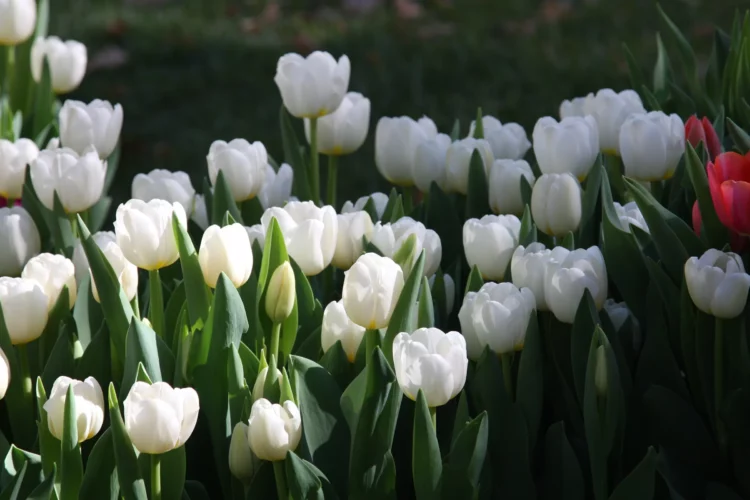
Tulip bulbs give us some of the world’s most spectacular spring-flowering bulbs. Available in an enormous range of colours and flower forms, they brighten garden beds, borders, containers and make excellent cut flowers. From elegant Single Late Tulips to flamboyant Parrot, Fringed, Darwin Hybrid and Double varieties, there is a tulip to suit almost every garden.
Quick Facts
- Botanical Name: Tulipa spp.
- Common Name: Tulip
- Plant Type: Spring flowering bulb
- Height: 20–70cm
- Position: Full sun
- Soil: Fertile, humus-rich, well-drained soil
- Planting Time: Autumn
- Flowering: Late winter to spring, depending on variety
- Climate: Cool to temperate, with selected varieties suited to warmer regions
- Water Needs: Moderate during active growth
- Best Uses: Garden beds, borders, pots and cut flowers
How To Grow Tulips

Tulips were once thought to be suitable only for the cooler climate zones parts of Australia, including Tasmania, Victoria’s highlands, southern New South Wales and parts of South Australia. Today, many newer varieties perform well in warmer climates, particularly Single Late Tulips and many of the Species Tulips.
In warmer regions, refrigerating the bulbs for six to seven weeks before planting helps provide the winter chilling needed to produce strong stems and reliable flowering. Store the bulbs in the refrigerator, never the freezer.
One of Australia’s best-known celebrations of tulips is the annual Tesselaars Tulip Festival, where thousands of flowering bulbs are displayed each spring.
When to Plant Tulip Bulbs
Plant tulip bulbs in autumn once the soil has begun to cool after the hottest part of summer. Planting too late can reduce flower size and overall performance.
If you live in a warmer climate, purchase bulbs in early autumn, refrigerate them for six to seven weeks, then plant them in late autumn.
How to Plant Tulip Bulbs
Tulips perform best in fertile, well-drained soil enriched with compost or well-rotted manure.
As a general guide:
- Species Tulips: plant around 8cm deep.
- Most hybrid tulips: plant approximately 15–20cm deep, depending on bulb size.
- Taller varieties, including some Monet types: up to 30cm deep.
Plant bulbs with the pointed end facing upwards and water well after planting.
Caring for Tulips
Tulips prefer full sun and evenly moist, well-drained soil during their growing season. Feed with a bulb fertiliser or a balanced fertiliser low in nitrogen at planting time, then again after flowering to help replenish the bulbs for the following season.
In warmer climates, many gardeners lift the bulbs once the foliage has completely died back. Store them in a cool, dry place over summer before replanting in autumn.
Tulips in Pots
Tulips are excellent container plants. Choose a quality potting mix with good drainage and use a pot with drainage holes. Position containers in full sun and keep the mix evenly moist while the bulbs are actively growing.
Containers are also ideal for gardeners in warmer climates, making it easy to pre-chill bulbs before planting.
Tulip Flowering Season
Different tulips flower at different times throughout spring.
Generally, Species Tulips flower first, followed by Parrot Tulips, Fringed Tulips, Darwin Hybrids and Double Tulips. Single Late Tulips are among the last to flower, extending the display well into the season.
By planting a mixture of early, mid and late-season varieties, you can enjoy tulips for many weeks.
What to Do with Tulip Bulbs After Flowering
After flowering, remove the spent blooms to prevent the plant from putting energy into seed production. Leave all of the foliage until it naturally yellows and dies back, allowing the leaves to return valuable energy to the bulb for next year’s flowers.
In cooler climates, bulbs can often remain in the ground provided the soil stays reasonably dry over summer. In warmer regions, lifting and storing the bulbs usually produces more reliable flowering the following year.
Given the right growing conditions, tulip bulbs will gradually multiply and can be divided when they become overcrowded.

- Asarum Bulbs
- Allium Bulbs
- Arisaema Bulbs
- Asiatic Lilly Bulbs
- Babinia Bulbs
- Brunsvigia Bulbs
- Calochortus Bulbs
- Chiondoxa Bulbs
- Clivia Bulbs
- Crocus Bulbs
- Cyclamen Bulbs
- Daffodil Bulbs
- Miniature Daffodil Bulbs
- Daylily Bulbs
- Dutch Iris Bulbs
- Dodecatheon Bulbs
- Erythronium Bulbs
- Freesia Bulbs
- Fritillaria Bulbs
- Galanthus (snowdrop) Bulbs
- Galtonia
- Gladiolus Bulbs
- Haemanthus Bulbs
- Hippeastum Bulbs
- Leucojum Bulbs
- Lilly Bulbs
- Ixia Bulbs
- Lachenalia Bulbs
- Morea Bulbs
- Muscari Bulbs
- Nectaroscordum Bulbs
- Nerine Bulbs
- Oriental Lily Bulbs
- Ornithigalum Bulbs
- Pushkinia Bulbs
- Ranunculus Bulbs
- Sternbergia Bulbs
- Sparaxis Bulbs
- Trillium Bulbs
- Tulip Bulbs
- Species Tulip Bulbs
- Velthemia Bulba
- Anomatheca Bulbs
- Ferraria Bulbs
- Hermodactylus Bulbs
- Onixotus Bulbs
- Narcissus Bulbs
- Colchicum Bulbs
Tulip Bulbs in the USA
Tulip Bulbs in the UK
Wikipedia on Tulips
Skagit Valley Tulip Festival
Bloomin’ Tulips Festival T
Where To Buy Tulip Bulbs

365 Lighthouse Rd Wynyard. TAS 7325
PH 03 6442 2012
email to: [email protected]
www.vdqbulbs.com.au

357 Monbulk Road SILVAN VIC 3795
Guaranteed "garden worthy" bulbs, plants and perennials. Visit the website to browse our large range of daffodils or request the latest free catalogue.
www.tesselaar.net.au

2 Jacksons Hill Rd, Menzies Creek VIC 3159
Hundreds of different varieties of daffodils as well as other beautiful spring & autumn flowering bulbs for home gardeners. Free colour catalogues available. Tulips, Daffodils,Alliums, Freesias, Iris and many other bulbs.
www.daffodilbulbs.com.au

470 Monbulk-Silvan Road Monbulk VIC 3793
"Guaranteed mail order flowering bulbs, perennials, roses, trees, landscaping plants, garden accessories and community fundraising Austra lia-wide."
www.gardenexpress.com.au

'Sylvan Vale' 375 Olinda Creek Rd, Kalorama, VIC.3766
Including a large range of Rare and unusual bulbs, corms and perennials
www.tonkinsbulbs.com.au