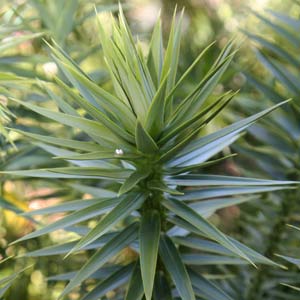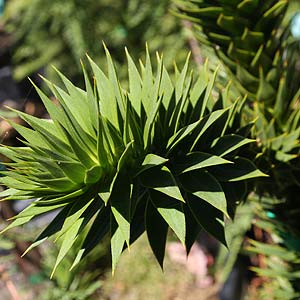
Araucaria heterophylla, commonly known as the Norfolk Island Pine, is a tall, evergreen conifer that has become an iconic feature tree in coastal landscapes throughout Australia. Known for its beautifully symmetrical form, evenly spaced branches and long lifespan, it is widely planted in large gardens, parks and seaside locations where it thrives in exposed conditions.

Growing to around 40 metres in cultivation, and capable of reaching 70 metres in its natural environment, the Norfolk Island Pine is a fast-growing, long-lived tree. Growth rates will vary depending on climate, soil conditions and available moisture. Its attractive growth habit, combined with its hardy, low-maintenance and generally disease-free nature, has made it one of the most popular landscape trees for coastal planting.
Quick Look
| Botanical Name | Araucaria heterophylla |
| Common Name | Norfolk Island Pine |
| Plant Type | Evergreen conifer |
| Family | Araucariaceae |
| Height | 40m+ in cultivation, up to 70m in its natural habitat |
| Spread | 10–15m |
| Growth Rate | Fast |
| Position | Full sun |
| Soil | Well-drained sandy, loam or coastal soils |
| Water Needs | Moderate when establishing, drought tolerant once established |
| Climate | Coastal, subtropical and warm temperate climates |
| Frost Tolerance | Light frosts once established |
| Drought Tolerance | Moderate |
| Salt Tolerance | High, making it ideal for coastal gardens |
| Maintenance | Low |
| Best Uses | Feature tree, parks, coastal gardens, avenues and large landscapes |
Landscaping and other uses
The Norfolk Island Pine is best suited as a feature tree in large gardens, parks and open landscapes where its natural shape can be appreciated. It is also widely planted along the Australian coastline, where its tolerance to wind and coastal conditions has made it a familiar sight in many seaside towns.
It naturally grows from a strong single trunk and, when planted in an open position, develops its distinctive symmetrical crown with beautifully spaced horizontal branches. Although naturally a subtropical species, it grows successfully along much of the Australian coast and performs well as far south as Melbourne and the Surf Coast.
Its straight trunk and quality timber have also made it a valued species for furniture making.
Soil and Climate
Araucaria heterophylla is tolerant of a range of soil types, including poor sandy soils, provided drainage is good. It will cope with occasional periods of very wet soil but does not perform well in permanently waterlogged conditions.
Once established it is reasonably drought tolerant, although extended dry periods may cause the foliage to yellow, indicating the tree requires watering.
The Norfolk Island Pine performs best in coastal, subtropical and warm temperate climates where some humidity is present. It is highly tolerant of strong winds and exposed coastal conditions, making it an excellent choice for seaside gardens and public landscapes. While it grows well in southern coastal regions, including Melbourne, it is less suited to hot, arid inland areas with prolonged dry winds
Care and Maintenance
Once established, Norfolk Island Pine requires very little maintenance. Water regularly while young to encourage a deep root system, particularly during extended dry periods. Applying mulch around the base helps conserve soil moisture and suppress weeds, although mulch should be kept clear of the trunk.
Pruning is rarely necessary, as the tree naturally develops its attractive symmetrical shape. Norfolk Island Pine is generally free from serious pests and diseases, further adding to its appeal as a reliable landscape tree.
Araucaria heterophylla – Norfolk Island Pine Planting Considerations
As the tree matures it develops an extensive root system. For this reason, it is best planted well away from buildings, roads, driveways and paved areas, as roots can lift hard surfaces over time. It is also important to allow sufficient room for both its eventual height and spread, making it best suited to larger gardens, parks and open landscapes.
With its striking architectural form, exceptional longevity and ability to thrive in challenging coastal conditions, Araucaria heterophylla remains one of Australia’s most distinctive and widely planted feature trees.
Where To Buy

email [email protected]
One of Australia's largest wholesale trade nurseries. Over 30,000 species available, tubestock to advanced trees, an almost unlimited choice of plants.
www.plantmark.com.au