
Araucaria cunninghamii, commonly known as the Hoop Pine, is a tall, long-lived Australian native conifer that grows naturally from coastal Queensland to northern New South Wales. It is also found in New Guinea. Valued for its straight trunk, attractive symmetrical form and adaptability, Hoop Pine is widely grown as a feature tree, windbreak and timber species. Although naturally a rainforest tree, it adapts well to a range of climates and is suitable for both subtropical and many temperate areas with well-drained soils.
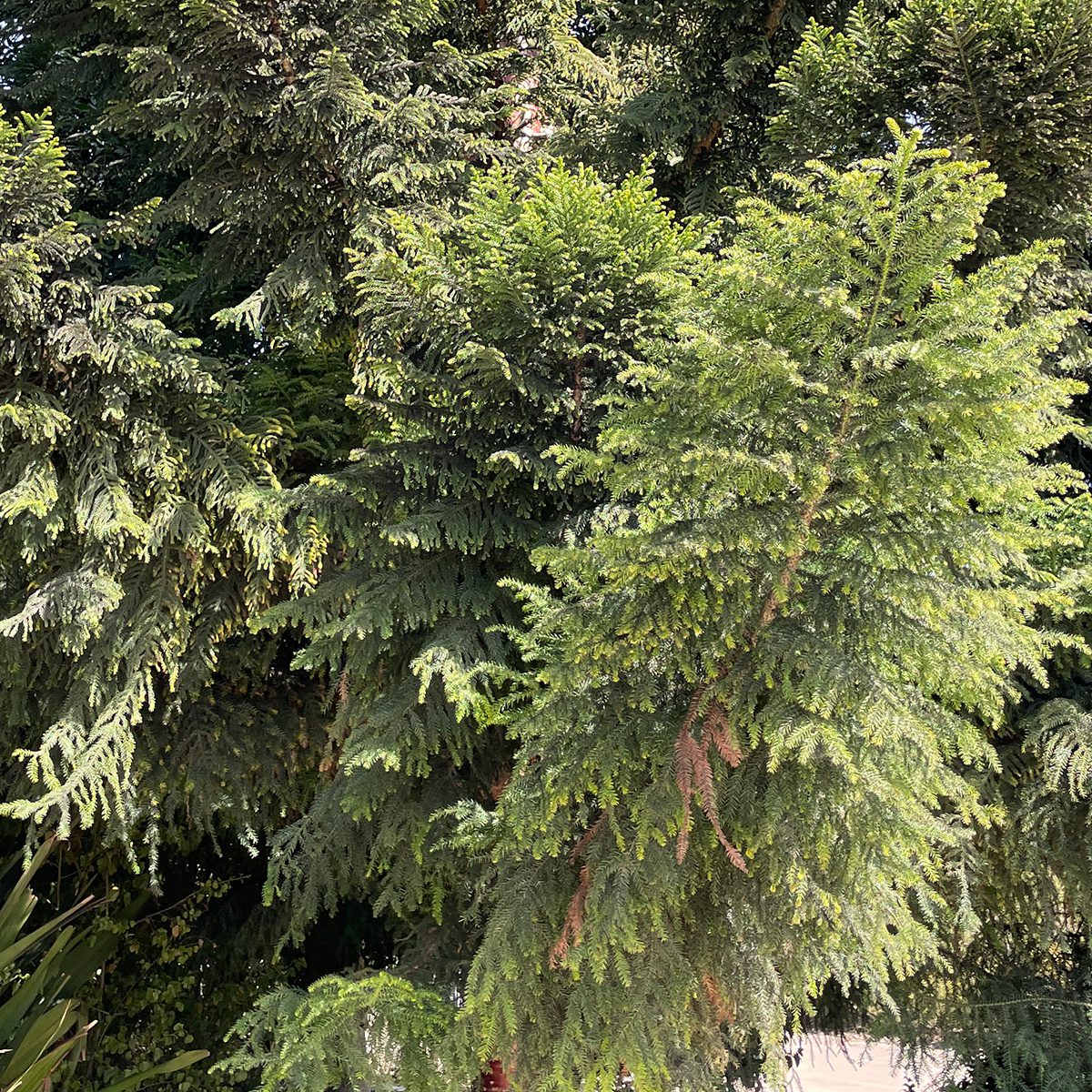
One of Australia’s largest native conifers, the Hoop Pine can live for more than 300 years. In its natural habitat it may reach 50–60 metres in height, while in cultivation it is more commonly 20–40 metres depending on climate, soil and available space.
Being a versatile and forgiving species, the Hoop Pine adapts well to a wide range of climates. It thrives in tropical and subtropical regions but also performs well in cooler climates provided it is protected from severe frost while young.
Foliage and Bark
Characterised by a tall, straight trunk, the common name “Hoop Pine” comes from the distinctive horizontal rings or hoops that appear around the trunk as it matures. New bark is an attractive crimson-red before ageing to a soft grey.

Like many Araucaria species, the foliage is prickly, although Araucaria cunninghamii develops an attractive branch structure that makes it useful as both a large specimen tree and an effective windbreak.
Hoop Pine was widely harvested by early European settlers for its high-quality timber, and many of the original forests were heavily logged.
Hoop Pine Cones
As the tree matures it produces both male and female cones on the same tree. Female cones generally begin appearing after around 15 years, with male cones following a few years later. The cones are green when young, gradually turning brown as they mature. They contain edible seeds, although cone production varies with age and growing conditions.
How to Grow Araucaria cunninghamii
Because of its eventual size, Hoop Pine is best suited to larger gardens, parks, rural properties and open landscapes.
Although newly planted trees spend their first year or two establishing a strong root system, they develop a faster growth rate once established. Applying a suitable fertiliser during the first 10 years will encourage strong growth.
Choose a position in full sun, although the tree will tolerate light shade. It grows well in coastal conditions and adapts to a range of soil types provided drainage is good. Heavy, waterlogged soils should be avoided.
Once established in a warm climate, Araucaria cunninghamii is a very low-maintenance tree.
Choose the planting position carefully, as Hoop Pines do not transplant well once established.
Planting
- Dig the soil over well before planting.
- Incorporate well-rotted compost into the planting hole.
- Plant at the same depth as it was growing in the container.
- Water in well after planting.
- Water regularly through the first two summers and during extended dry periods.
- Apply mulch to conserve moisture and suppress weeds, keeping it clear of the trunk.
- Feed with a native plant fertiliser or blood and bone during the first two to three years.
The Hoop Pine develops a deep tap root and becomes drought tolerant once established, requiring little supplementary watering.
Pruning
Very little pruning is needed. Simply remove any dead, damaged or diseased branches as required.
Propagation
Hoop Pine is most commonly propagated from fresh seed. Seedlings require regular watering while establishing. Propagation from cuttings is possible but generally less reliable than growing from seed.
Landscape Uses
With its tall, symmetrical habit and attractive trunk, Hoop Pine makes an outstanding specimen tree for large gardens and parks. It is also widely planted as a windbreak, shelter belt and for revegetation projects. Because of its eventual size, allow plenty of room for future growth when planting.

Summary Information
- Botanical Name – Araucaria cunninghamii
- Common Names – Hoop Pine, the aboriginal name is Kumbartcho, it is also known as Queensland pine, Dorrigo pine, Moreton Bay pine and Richmond River pine
- Position – Full Sun.
- Climate – Best in subtropical areas.
- Soil – Well drained, deep and fertile for good growth. Will tolerate dry soils once established.
- Height – To around 60 metres.
- Spread – To around 10 metres.
- Growth Rate – Fast when young, slowing as the tree ages.
- Flowers – Spikes (Male) or Cones (Female)
- Flowering Time – Winter to Spring and Summer.
- Foliage – Mid to deep green.
- Frost tolerant – Mild frosts only.
- Drought tolerant – Yes once established.
Where To Buy

email [email protected]
One of Australia's largest wholesale trade nurseries. Over 30,000 species available, tubestock to advanced trees, an almost unlimited choice of plants.
www.plantmark.com.au


Frequently Asked Questions
Is Hoop Pine native to Australia?
Yes. Hoop Pine is native to coastal Queensland and northern New South Wales and also occurs naturally in New Guinea.
How fast does Hoop Pine grow?
Growth is modest during establishment but becomes moderate to fast once the tree has developed a strong root system.
How tall does Hoop Pine grow?
In cultivation it commonly reaches 20–40 metres, while wild trees may exceed 60 metres.
Can Hoop Pine grow near the coast?
Yes. It performs well in many coastal locations provided the soil is well drained.
Does Hoop Pine need much maintenance?
Very little. Once established it requires only occasional watering during prolonged dry periods and the removal of dead or damaged branches if required.