
The Geraldton Wax Flower

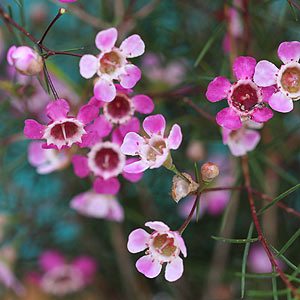
Chamelaucium, commonly known as Geraldton Wax, is one of Australia’s most popular native flowering shrubs. Native to Western Australia, the best-known species is Chamelaucium uncinatum, although more than 30 species exist and numerous hybrids are now available.
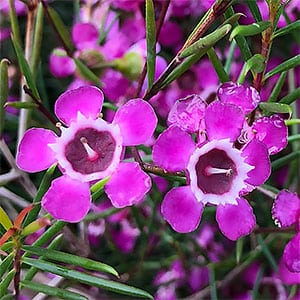
Highly valued as both a garden plant and a commercial cut flower, Geraldton Wax produces masses of colourful blooms over an extended flowering period. Modern hybrids offer improved vigour, larger flowers and an impressive range of colours from pure white through pink, mauve, purple and deep red.
Its drought tolerance, aromatic foliage and ability to attract pollinators have made Geraldton Wax a favourite for Australian gardens.
Why Grow Geraldton Wax?
Geraldton Wax offers a number of advantages:
- Long flowering period.
- Excellent cut flowers.
- Drought tolerance once established.
- Attractive aromatic foliage.
- Low maintenance requirements.
- Wildlife-friendly flowers.
- Suitable for coastal and Mediterranean-style gardens.
Australian Native Food Plant Uses
Although Geraldton Wax is primarily grown as an ornamental plant, some species have a history of limited use as native food plants.
The aromatic foliage can be infused in hot water to produce herbal teas and may be used sparingly as a flavouring ingredient. The flowers are occasionally used as edible garnishes in contemporary Australian cuisine where they add colour and visual appeal.
As with many Australian native plants, culinary use is generally focused on selected species and correctly identified plants should always be used.
Growing Geraldton Wax
The secret to success is to replicate the plant’s natural environment.
In the wild, Geraldton Wax grows in poor sandy soils with excellent drainage and little supplementary water.
Position
Plant in full sun for the best flowering performance.
While light afternoon shade is tolerated, flowering and overall plant health are generally superior in a sunny position.
Soil
Good drainage is absolutely essential.
Plants are susceptible to root diseases if grown in poorly drained soils. In heavy clay soils, consider planting on raised mounds or raised garden beds.
Water Requirements
Water regularly through the first summer after planting.
Once established, Geraldton Wax is drought tolerant and generally requires little supplementary irrigation except during prolonged dry periods.
Fertiliser
Use only low-phosphorus fertilisers formulated for Australian native plants.
Over-fertilising can lead to weak growth and reduced plant health.
Air Movement
Good air circulation is beneficial and helps reduce humidity-related problems.
Landscaping Uses
Geraldton Wax is highly versatile in the landscape.
It can be used as:
- A feature shrub.
- Informal hedge.
- Screening plant.
- Coastal garden specimen.
- Pollinator garden plant.
- Native cottage garden shrub.
- Container specimen.
- Cut flower garden plant.
It combines particularly well with:
- Westringia.
- Correa.
- Grevillea.
- Eremophila.
- Salvias.
- Lavenders.
- Santolina.
Wildlife Benefits
The flowers are highly attractive to:
- Native bees.
- Honey bees.
- Butterflies.
- Beneficial insects.
- Nectar-feeding birds.
Flowering plants can significantly increase garden biodiversity.
Flowering
Most Geraldton Wax varieties flower from late winter through spring, although flowering periods vary depending on the cultivar.
The blooms are long lasting both on the plant and when cut, which is one reason they are widely grown by commercial flower producers.
Pruning Geraldton Wax
Geraldton Wax responds well to pruning.
The best time to prune is immediately after flowering.
Pruning by around one-third of the plant’s growth each year encourages:
- Denser growth.
- Better flowering.
- Improved plant shape.
- Increased longevity.
Deadheading spent flowers is also beneficial.
Avoid cutting heavily into old wood where there is no green growth, as regrowth may be poor.
Propagation
From Cuttings
Softwood cuttings taken in spring provide the most reliable results.
From Seed
Propagation from seed is possible but is less commonly used for named cultivars because offspring may vary from the parent plant.
Grafted Plants
Many modern cultivars are available grafted onto disease-resistant rootstocks. These plants often show improved adaptability and disease resistance.
Common Problems
Root Rot
The most common cause of failure is poor drainage.
Reduced Flowering
Often caused by insufficient sunlight.
Weak Growth
Can result from excessive fertiliser or overly rich soils.
Popular Geraldton Wax Varieties
‘Teina’s Delight’
Pink to tangerine flowers.
‘Blossom Magic’
Rich red flowers.
‘My Sweet 16’
White flowers that gradually turn red, creating a striking two-tone display.
‘Moon Delight’
Red buds through winter followed by white flowers.
‘Chantilly Lace’
Tall stems and white flowers, flowering later than many cultivars.
‘Lady Stephanie’
Compact growth with masses of pale pink flowers.
‘Meringur Mist’
A hybrid between Chamelaucium floriferum and Chamelaucium uncinatum reaching 2–3 metres.
‘Purple Pride’
Large upright shrub with striking two-toned purple flowers.
Other Chamelaucium Species
Chamelaucium ciliatum
Sterling Wax, a lower-growing species reaching around 1 metre.
Chamelaucium floriferum
Commonly known as Walpole Wax.
Chamelaucium megalopetalum
Noted for its larger flowers.
Chamelaucium axillare
Esperance Wax, producing flowers that open white before turning red.
Chamelaucium uncinatum ‘Alba’
A pure white flowering selection growing to around 2 metres.
Quick Growing Guide
| Feature | Details |
|---|---|
| Botanical Name | Chamelaucium uncinatum and hybrids |
| Common Name | Geraldton Wax |
| Plant Type | Native flowering shrub |
| Position | Full sun |
| Soil | Well drained |
| Water | Low once established |
| Height | 1–4 metres |
| Spread | 2–5 metres |
| Flower Colours | White, pink, mauve, purple, red and yellow |
| Flowering Season | Late winter to spring |
| Foliage | Evergreen, aromatic |
| Drought Tolerance | High |
| Frost Tolerance | Light frost |
| Propagation | Cuttings, seed, grafting |
With their colourful flowers, fragrant foliage and exceptional drought tolerance, Geraldton Wax plants remain among the most rewarding Australian native shrubs. Whether grown fo
Where to Buy Geraldton Wax plants

Specialist Native Food Nursery with thirty species available in both forestry tubes and 14 cm pots, from ground cover to canopy. Twenty years experience supplying landscape scale projects to backyard gardens.
www.peppermintridgefarm.au .

email [email protected]
One of Australia's largest wholesale trade nurseries. Over 30,000 species available, tubestock to advanced trees, an almost unlimited choice of plants.
www.plantmark.com.au
Others Include
In Melbourne Try Kuranga Nursery- phone 03 9760 8100
York Rd Mt Evelyn VIC 3796
In Sydney Try Sydney Wildflower Nursery – phone 02 9548 2818 9 Veno St Heathcote NSW 2233
In Adelaide Try – Coromamdel Native Nursery – phone 8388 277728
Star and Arrow Rd Coromandel East SA 5157
In Perth Try Zanthorea Nursery – phone 08 9454 6260
155 Watsonia Rd Maida Vale WA 6057