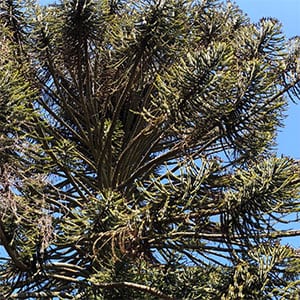
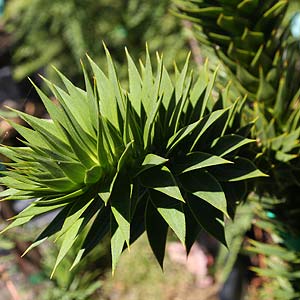
Also known as the Chilean Pine, Araucaria araucana, or the Monkey Puzzle Tree, is one of the world’s most distinctive evergreen trees. Native to the mountains of Chile and Argentina, it is prized for its unusual architectural form, spiny branches and remarkable longevity. It is a slow-growing tree when young but develops into a magnificent specimen that can live for hundreds of years.
Although famous for its prehistoric appearance, the Monkey Puzzle Tree is surprisingly adaptable and grows well in full sun to part shade in well-drained soils. Once established it is a tough tree that performs well in many Australian gardens, including coastal areas.
The edible nuts produced by mature female trees have long been an important food source in their native range. Trees are extremely long lived, with many specimens over 200 years old and some believed to be more than 500 years of age.
Growth is slow for the first few years after planting while the tree establishes a strong root system. Once settled, a healthy tree can grow by around 50cm each year in good conditions.
In its natural habitat the Monkey Puzzle Tree can reach around 40 metres in height, although in cultivation it is usually much smaller, commonly growing to around 20 metres with a broad pyramidal shape.
Why is it called the Monkey Puzzle Tree?
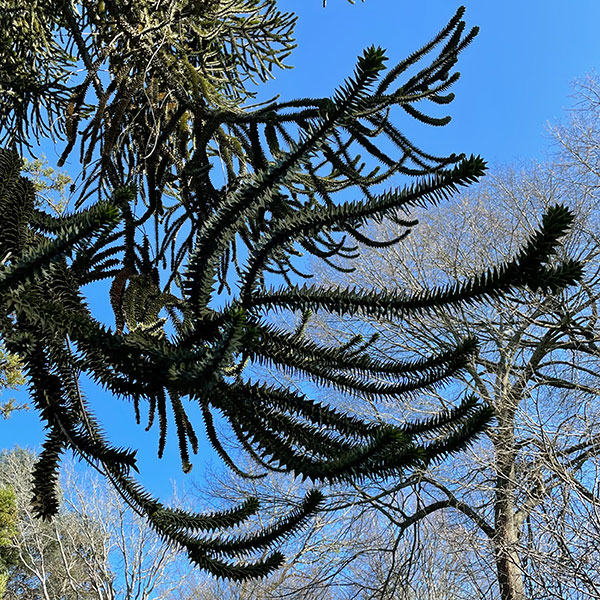
The unusual name comes from the tree’s stiff, sharply pointed branches. It was once remarked that the branches would puzzle even a monkey trying to climb them, and the name has remained ever since.
Care
Choose an open position in full sun or light shade with humus-rich, well-drained soil. Good drainage is essential, as waterlogged soils can cause problems, particularly for younger trees.
These trees appear to dislike root disturbance, so select the planting position carefully and avoid transplanting once established.
Water regularly during the first year to help establish a deep root system. Mature trees are relatively drought tolerant, although they perform best with occasional deep watering during extended dry periods.
Apply a balanced slow-release fertiliser in spring if required, although established trees generally need very little additional feeding.
Pruning is rarely necessary other than removing damaged or dead branches.
Monkey Puzzle Trees can also be grown in large containers while young. Growth will be slower, making them an interesting specimen plant for patios and courtyards, although they will eventually require planting into the ground if they are to reach their full potential.
The species grows well in coastal situations provided drainage is good and can be propagated from fresh seed.
Landscape Uses
Monkey Puzzle Trees make outstanding feature or specimen trees in larger gardens, parks and public landscapes where there is room to appreciate their distinctive form. Their symmetrical habit and unusual foliage provide year-round interest, making them a striking focal point.
Frequently Asked Questions
How fast does a Monkey Puzzle Tree grow?
Growth is slow during the first few years after planting. Once established, around 50cm of growth each year can be expected in favourable conditions.
How tall does a Monkey Puzzle Tree grow?
In the wild it can reach around 40 metres. In cultivation it is more commonly around 20 metres tall.
Can you grow a Monkey Puzzle Tree in a pot?
Yes. Young trees grow well in large containers, although long-term they are best planted into the ground.
Are the seeds edible?
Yes. Mature female trees produce large edible seeds that have been harvested as a traditional food in their native range. Male and female trees are generally needed for pollination and seed production.
Is the Monkey Puzzle Tree frost tolerant?
Yes. Once established, it is highly tolerant of frost and cold conditions, making it suitable for many cool temperate regions.