A Sculptural Japanese Pine for Modern Gardens
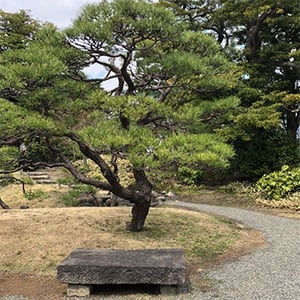
If you are looking for an architectural feature plant with year-round appeal, Pinus thunbergii ‘Thunderhead’ is one of the best Japanese pines available. With deep green foliage, rugged bark and a naturally irregular growth habit, it creates a striking focal point in both Japanese-inspired and contemporary gardens.
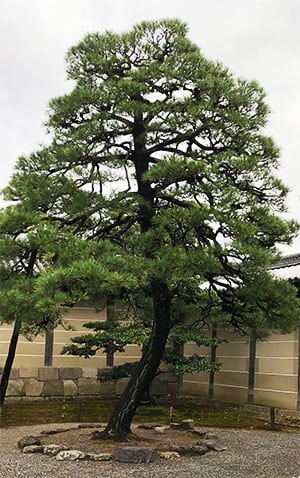
Unlike many conifers that eventually outgrow their space, Thunderhead is slow growing and naturally compact. Left unpruned it develops into a sculptural specimen tree, forming distinctive masses of foliage that give rise to its common name, “Thunderhead”. The effect is dramatic, with dense green clouds of foliage sitting above strong branching and textured bark.
This natural habit also makes it one of the best conifers for cloud pruning, topiary and the Japanese art of Niwaki. Widely used in Japanese gardens, Japanese Black Pine can be carefully shaped over time into living garden sculptures. In fact, few plants respond as well to this style of pruning.
Its ornamental qualities are matched by its toughness. Pinus thunbergii grows well in full sun, tolerates a range of well-drained soils and is considered drought tolerant once established. The deeply fissured bark, dark green needles and slow growth rate ensure it provides structure and interest throughout the year without becoming a maintenance burden.
Distinct from Japanese Red Pine and Japanese White Pine, the Japanese Black Pine is recognised by its darker foliage and rugged, chunky bark, features that only become more attractive as the tree matures.
Basic Care
In a well drained soil and a sunny position this is a very easy care plant.
To keep your Black Pine happy avoid overwatering, and under watering especially when first established.
Good drainage is essential. Once established, it can grow in fairly dry conditions.it can survive in coastal soils and poor soils.
Pruning Your Black Pine
Pruning by ‘candling’ and other selective pruning will keep them much smaller and of course, bonsai techniques, will give you a really small specimen.
Pruning is not actually required, however it is for Bonsai and Topiary that this plant is most commonly grown.
Whats In A Name?
Pinus thunbergii is named after Carl Peter Thunberg and the cultivar ‘Thunderhed’ is from Angelica Nursery in Kennedyville, Maryland in the USA.
It is often pruned, especially cloud pruned, and Thunderhead pine is an apt name for this attractive landscape plant that can be easily be shaped over a number of years to create wonderful feature trees.
Summary Details.
- Botanical name – Pinus thunbergii
- Common Name – Japanese Black Pine and Thunderhead Pine
- Origins – Japan
- Position – Full sun
- Soil – Well drained
- Foliage – Typical needle like foliage that is tufted.
- Fertiliser – A high nitrogen fertiliser will improve growth rate’
Varieties
You will find a number of named varieties, although not all are readily available.
- Pinus thunbergii ‘Kyokko Nishiki’ – A smaller growing cultivar of the Japanese Black Pine.
- Japanese Black Pine Coolwyn Kotobuki – This is a compact growing and slow growing variety well suited to Japanese style gardens.
- Pinus thunbergii ‘Thunderhead’ tends to have a more upright/columnar growth habit
- The ‘Yatsubusa’ variety means dwarf. Also Gekka Yatsuba, Ban-Sho-Ho and Koto-Buki
- Pinus thunbergii ‘Emerys Dwarf’
- Nishiki means cork barked.
- Mikawa has a deeply fissured bark which gives it an aged look earlier on than the others.
Pinus thunbergii is available for sale from the following nurseries

125 Palmer Rd Jindivick 3818
Open Thursday - Sunday 10am - 4pm
Specialising in growing and selling Rare and Unusual Trees, shrubs Perennials Bulbs and Climbers, a unique nursery with amazing stock.
www.muskersbroughtonhall.com.au