
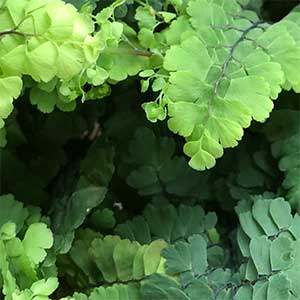
Adiantum raddianum ‘Fritz Lüthi’ is one of the most popular and elegant maidenhair fern varieties.
Known for its fine triangular fronds, soft mid‑green to blue‑tinted foliage, and slender black stems, it’s a beautiful choice for shaded gardens or indoor plant collections.
This fern thrives in humid, sheltered environments, making it ideal for bathrooms, conservatories, or shaded patios. With the right moisture and light, it forms a graceful clump that adds texture and movement to any space.
Appearance and Growth Habit
The fronds of Adiantum ‘Fritz Lüthi’ have a delicate, lace‑like look with small fan‑shaped leaflets that branch from fine black stems. The fronds form a neat triangular shape, creating a full and airy display. In some conditions the foliage takes on a subtle blue hue, adding extra visual interest. Mature plants usually reach about 40 cm high and 50 cm across.
How to grow Adiantum ‘Fritz Lüthi’ – Basic Care
Ideal Growing Conditions
In its natural habitat, this fern grows in moist, shaded forests. To mimic these conditions:
- Choose a sheltered position with bright, filtered light.
- Keep it away from direct sun, which can scorch fronds.
- Maintain consistent moisture and humidity.
Indoors, it loves steamy spots such as bathrooms or well‑lit kitchens. Outdoors, plant it in a protected, frost‑free area with dappled shade.
Soil and Repotting
Use a well‑drained, humus‑rich potting mix that holds moisture without becoming heavy. Repot every 2–3 years as the mix breaks down or roots fill the pot. The best time to repot is spring, when new growth begins.
Watering and Humidity
Keep the mix evenly moist, never dry or waterlogged. To lift humidity levels:
- Sit the pot on a tray of pebbles and water (keeping the base above the water line).
- Mist the foliage regularly, or
- Place the plant in a humid room such as a bathroom.
If the plant dries out completely, soaking the pot in water for 10–15 minutes can help rehydrate it.
Fertilising
Feed lightly with a liquid seaweed or organic fertiliser every 4–6 weeks from spring through summer. Cut back fertilising in cooler months when growth slows.
Indoors use a potting mix that is rich with organic material. Try a saucer of water with pebbles in it to sit the pot on to increase humidity.
Fertilise from spring through summer with a liquid seaweed fertiliser.
A position in good filtered light is best, and keep the plant away from heating and air-conditioning outlets.
Repot every 2- 3 years as the growing medium begins to break down. The best time to repot is in spring.
Common Problems and How to Fix Them
Even experienced growers can run into a few issues with Adiantum ‘Fritz Lüthi’—mostly related to humidity, light, or watering. Here’s what to look for and how to fix it.
Brown or Crispy Fronds
Cause: Low humidity, dry soil, or too much direct sun.
Fix: Trim dead fronds and raise humidity by misting, using a pebble tray, or moving the plant to a humid spot. For a severely dried fern, soak the pot for 10–15 minutes and drain well.
Leaves Dropping
Cause: Cold drafts, temperature drops, or extended dryness.
Fix: Move to a warmer, more stable spot away from draughts and air‑conditioning.
Yellowing Fronds
Cause: Overwatering or poor drainage.
Fix: Let the top few centimetres of soil dry between waterings and make sure the pot drains freely.
Curling Fronds
Cause: Air that’s too hot or dry.
Fix: Increase humidity and remove the plant from direct heat or airflow.
Sparse or Fading Growth
Cause: Not enough light.
Fix: Move to a brighter spot with gentle, indirect light—such as near an east or north‑facing window.
Pests
Cause: Spider mites in dry air; mealybugs in still, humid spots.
Fix: Shower the plant to remove pests and treat with neem oil or an organic insecticidal soap if needed.
Companion Plants for Adiantum raddianum ‘Fritz Lüthi’
Adiantum raddianum ‘Fritz Lüthi’ needs constant moisture and high humidity to thrive — dry air or soggy mismatches will quickly stress both it and its companions. Choose plants that share these exact needs to avoid rot in less-tolerant partners or crisping in the fern. Grouping them creates a mini humid habitat that keeps everyone happy.
- Peace Lily (Spathiphyllum wallisii)
Matches the fern’s love for high humidity and evenly moist soil in low light. Glossy leaves and occasional white blooms add contrast without any care clashes.
Matches the fern’s love for high humidity and evenly moist soil in low light. Glossy leaves and occasional white blooms add contrast without any care clashes. - Boston Fern (Nephrolepis exaltata)
A perfect match — same moisture, humidity, and shade needs. Its lush, arching fronds sit alongside the maidenhair for a full, layered look in pots or hanging baskets. - Rex Begonia (Begonia rex)
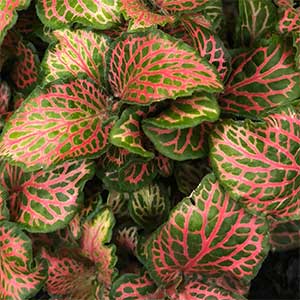
Thrives in humid, shaded spots with steady moisture. The bold, coloured leaves bring texture and pattern that highlight the fern’s fine fronds. - Nerve Plant (Fittonia albivenis)
Craves the same wet, humid shade. Its low, veined foliage works as a colourful groundcover under taller maidenhair without competing for water. - Prayer Plant (Maranta leuconeura)
High humidity is non-negotiable, just like for the fern. Patterned leaves that fold at night add subtle movement and interest in the same moist conditions. - Bird’s Nest Fern (Asplenium australasicum)
An Australian native that handles constant moisture and humid shade effortlessly. Its rosette shape complements the upright maidenhair clumps perfectly.



Tip: For mixed pots, use the same humus-rich, moisture-retentive mix across the board. If planting in the garden, mulch heavily to lock in humidity for the group.
Summary Information
- Botanical Name – Adiantum raddianum ‘Fritz Lüthi’ – Blue
- Common Name – Delta Maidenhair Fern.
- Family – Pteridaceae
- Origins – South America.
- Height – To around 40cms.
- Spread To around Clumping to around .5 metres.
- Growth rate – Medium
- Position – Part sun to afternoon shade.
- Soil – Well drained humus rich with some moisture
- Flowering Time – N/A
- Foliage – Mid to Deep Green/Blue.
- Frost tolerant – No.
- Drought tolerant – No.
Where To Buy
1052 Whittlesea-Kinglake Road Kinglake West 3757
Offering a specialist variety of Australian native Ferns plus Dendrobium/Dockrillia & Sarcochilus species & hybrids in pots, loose, or mounted. Species Cymbidium sauve and maddidum.
www.ferns.com.au