
Cyathea tomentosissima is one of the smaller growing tree ferns, native to high-elevation regions of New Guinea. Unlike many tropical tree ferns, it prefers a warm to cool climate rather than constant heat, with little seasonal variation and no exposure to frost.

This species naturally grows as an understory plant, so like most tree ferns, good filtered light is the key to strong, healthy growth.
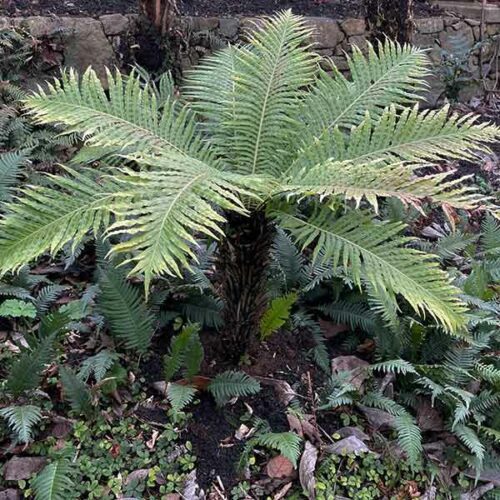
It will eventually form a trunk to around 6 ft (2 m) in height. The foliage is very attractive, with fine rusty-brown woolly coverage on the stipes (broken-off stems) along the trunk, which gives the plant much of its character.
Cyathea tomentosissima grows well in containers on a verandah and can also be grown indoors with good light and humidity. In the UK, this plant is sometimes called the Dwarf Woolly Tree Fern.
A Compact Tree Fern for Cool, Sheltered Gardens
How to Grow Cyathea tomentosissima
Being a subtropical species, this is a fern that needs protection from cold.
No frosts and no freezes.
Hot, dry conditions will cause the plant to decline quickly and may kill it. However, if it is kept consistently moist and out of hot direct sun, it will cope with warm conditions surprisingly well.
Cold and wet conditions will also not suit this fern. In cooler weather, make sure the soil is free draining, never wet or soggy. In temperatures below around 10°C, the plant should be moved indoors or into a protected environment.
Good airflow, steady moisture, and shelter from extremes are far more important than high heat.
Care Summary – Cyathea tomentosissima (At a Glance)
Water:
Keep consistently moist. Never allow to dry out, but avoid cold, waterlogged soil.
Light:
Bright filtered light or light shade. No hot direct sun.
Temperature:
Warm to cool conditions. Protect from cold, no frost. Bring indoors below ~10°C.
Humidity:
Prefers high humidity. Ideal for verandahs, sheltered patios, or indoor growing.
Soil:
Free-draining, organic-rich mix. Never wet and soggy in cool weather.
Position:
Sheltered, understory-style placement with protection from wind and extremes.
Indoors and Container Growing
When grown indoors, Cyathea tomentosissima benefits from bright light, steady moisture, and good humidity, making it one of the more manageable tree ferns for indoor conditions.
Quick Facts About Cyathea tomentosissima
- Botanical Name: Cyathea tomentosissima
- Common Names: Dwarf Woolly Tree Fern
- Plant Type: Evergreen tree fern
- Lifespan: Long-lived perennial
- Climate / Hardiness Zones: Subtropical to mild temperate; frost-free climates
- Sun / Shade: Bright filtered light, light shade; no hot direct sun
- Growth Habit: Upright trunk-forming tree fern, understory growth
- Height / Width: Up to 6 ft (2 m) tall; fronds to 3–4 ft spread
- Flowering Time: Does not flower (fern)
- Foliage Description: Fine-textured green fronds with rusty-brown woolly stipes
- Flower Description: None – reproduces via spores
- Native Range: High-elevation regions of New Guinea
- Wildlife Value: Provides shelter and humidity for small insects and invertebrates
- Special Attributes: Compact tree fern, excellent container plant, attractive woolly trunk, suitable for indoor or sheltered outdoor growing
For growers looking for a smaller, character-filled tree fern that suits containers and protected spaces, Cyathea tomentosissima is a distinctive and rewarding choice.
You May Also Like Other Small Tree Ferns and Ferns


We are Asked
Can Cyathea tomentosissima be grown indoors?
Yes. This species grows well indoors or on a sheltered verandah provided it receives bright filtered light, steady moisture, and good humidity. Avoid dry air and direct sun.
How much sun does Cyathea tomentosissima need?
Like most tree ferns, it prefers filtered light or light shade. Hot direct sun will damage the fronds and dry the plant quickly.
Is Cyathea tomentosissima frost hardy?
No. This fern is not frost tolerant. It should be kept frost-free at all times and moved indoors or into protection when temperatures drop below around 10°C.
Does Cyathea tomentosissima flower?
No. Like all ferns, it does not flower and reproduces via spores.