
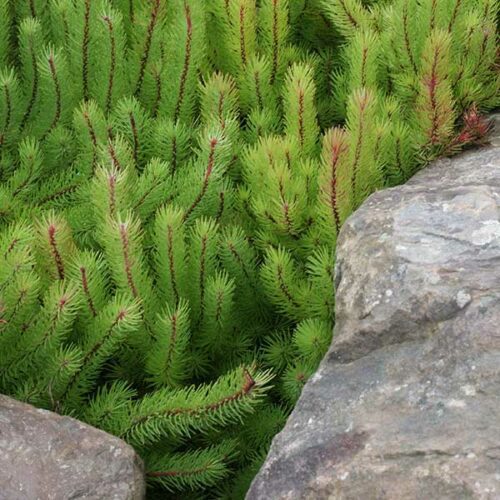
Persoonia chamaepitys, known affectionately as the Mountain Geebung or Creeping Geebung, stands out among its taller relatives as a premier low-growing native.
While many Geebungs grow as shrubs or small trees, this prostrate species is specifically valued for its dense, pine-like foliage and ability to carpet rocky landscapes or steep embankments. It is an ideal choice for the practical gardener looking for a long-lived, hardy ground cover that thrives where more pampered plants might struggle.
Key Features
- Habit: Low-growing, prostrate ground cover reaching approximately 20–30 cm in height and spreading up to 1–2 metres.
- Foliage: Attractive, bright to mid-green needle-like leaves that provide year-round texture.
- Flowers: Small, bright yellow to orange flowers appearing from late spring through summer.
- Wildlife: Highly attractive to local bees, butterflies, and nectar-feeding birds.
- Hardiness: Frost-tolerant and highly drought-tolerant once established.
How to Grow Persoonia chamaepitys
We like this one growing amongst rocks where the soft green foliage contrasts beautifully.
- Open sunny position to part shade
- Well drained soil
- A low phosphorous Native plant fertilizer in late winter
- Water only in very dry periods once established
- Requires little to no pruning
Growing Conditions
Persoonia chamaepitys is remarkably adaptable, performing well in both full sun and part shade. Unlike some larger Persoonia species that strictly require protection from the afternoon sun, this ground-hugging form is robust enough to handle open, sunny positions.
Soil and Drainage: Like all Proteaceae, excellent drainage is non-negotiable. It thrives in sandy, gravelly, or loam soils. If your garden has heavy clay, do not force this plant into the ground; instead, plant it in a raised rockery or a mound to ensure the roots remain well-aerated. It prefers slightly acidic, low-nutrient soils and is well-suited to growing beneath the canopy of established Eucalypts.
Planting and Establishment
Autumn and early spring are the best times to get your P. chamaepitys in the ground, as the cooler temperatures help the plant adjust before the heat of summer.
When planting:
- Ensure the soil is free-draining before digging your hole.
- Avoid deep planting; keep the crown of the plant slightly above the soil line to prevent collar rot.
- Water consistently for the first 6–12 months, particularly during dry spells, to encourage deep root development. Once the plant is established, it will only require occasional deep watering during prolonged drought.
Maintenance and Care
The Mountain Geebung is essentially a “plant and forget” species, but a little attention can improve its appearance.
- Pruning: While it requires little to no pruning to survive, a light trim after the summer flowering period can help keep the plant dense and compact, preventing it from becoming too “woody” or sparse in the centre.
- Fertilising: Use only a low-phosphorus native-specific fertiliser. Apply a small amount in late winter or early spring. Avoid heavy applications, as the plant is adapted to nutrient-poor soils.
- Mulching: Keep the root zone cool with a layer of gravel or native leaf litter. Avoid using thick organic mulches that trap too much moisture against the stems.
Landscaping Uses
Persoonia chamaepitys is at its best when allowed to spill over surfaces. It is an exceptional choice for:
- Rockeries: The soft, pine-like foliage creates a beautiful contrast against hard rock surfaces.
- Retaining Walls: Plant it at the top of a low wall and let it naturally cascade down.
- Native Ground Cover: Use it for erosion control on slopes or as a weed-suppressing carpet in mixed native beds.
- Containers: It is surprisingly versatile in pots, provided the potting mix is high-quality and free-draining.
Companion Planting
Pair your Mountain Geebung with other low-water, low-phosphorus native plants to create a cohesive, low-maintenance look. Good companions include:

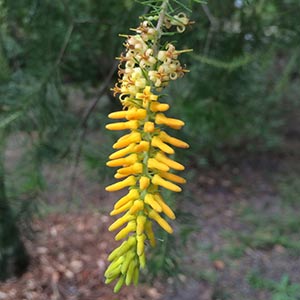

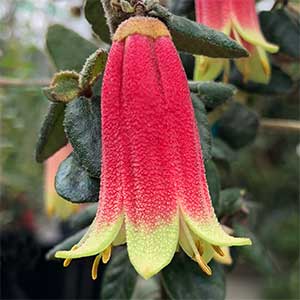

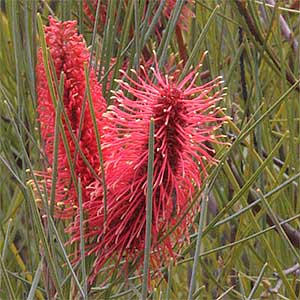
An excellent rockery plant or native ground cover plant this long lived plant is drought tolerant once established and although it grows well in full sun it is also well suited to part shade and does well under taller eucalypts.
We are Asked?
Is Persoonia chamaepitys difficult to establish?
Not if the drainage is correct. The most common cause of failure is “wet feet.” If your soil is heavy, always plant on a raised mound or in a rockery.
Can I grow this plant in deep shade?
It prefers full sun to part shade. In very deep shade, the plant may lose its density and become “leggy” as it stretches for light.
Does it need a lot of water?
Once established, it is highly drought-tolerant. Only intervene with deep watering during extended, severe dry spells.
Can I propagate this myself?
Propagation is best achieved through cuttings. While seed propagation is possible, it is notoriously difficult for the home gardener due to very low and erratic germination rates.
Summary Information
- Botanical Name – Persoonia chamaepitys
- Common Names – ‘Mountain Geebung’ and ‘Creeping Geebung’
- Family – Proteaceae
- Position – Full sun to a little shade.
- Soil – Well drained.
- Height – To around .3 metres.
- Spread – To around 2 metres.
- Flowers – Small yellow flowers in spring to summer.
- Foliage – Mid green.
- Frost tolerant – Yes
- Drought tolerant – Yes once established.
YOU MAY ALSO BE INTERESTED IN THESE SPECIES
- Leucospermum
- Protea
- Waratah (Telopea)
- Banksia
- Grevillea
- Dryandra
- Isopogon
- Adenanthos