
Isopogon anemonifolius ‘Little Drumsticks’
One of the best known Isopogon varieties is Isopogon ‘Little Drumsticks’, a long lived low growing shrub widely used as a ground cover plant.
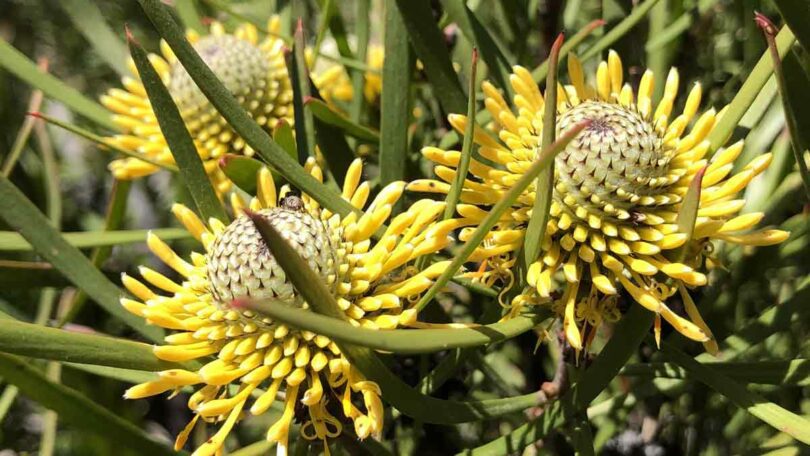
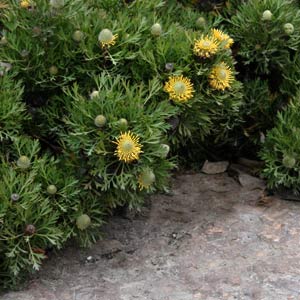
Isopogon anemonifolius, commonly known as Broad-leaved Drumsticks, is a delightful native shrub from the Proteaceae family, naturally occurring in eastern New South Wales. It grows in forests, woodlands, and heathlands across coastal and inland ranges, adapting well to sandy, free-draining soils and variable conditions.
This resilience translates beautifully to the garden, where it proves to be a reliable, low-maintenance choice suited to coastal gardens, native borders, and low-water landscapes.
Among its cultivated forms, Isopogon anemonifolius ‘Little Drumsticks’ stands out as one of the most popular. This compact, long-lived cultivar is admired for its low, spreading habit, typically reaching about 40 cm in height with a spread of 60–70 cm. It works beautifully as a ground cover or small shrub, ideal for rock gardens, the front of borders, or softly cascading over paths and lawn edges.
Gardeners also appreciate the similar compact variety Isopogon anemonifolius ‘Sunshine’, which offers comparable charm in a slightly more upright, tidy form.
Quick Facts
- Botanical Name: Isopogon anemonifolius ‘Little Drumsticks’
- Common Name: Isopogon ‘Little Drumsticks’
- Plant Type: Native shrub / ground cover
- Height: ~40 cm
- Spread: 60–70 cm
- Position: Full sun to part shade
- Soil: Free-draining, sandy or loamy
- Water Needs: Low once established
- Flowering Time: Spring (buds may form in summer)
- Flower Colour: Golden yellow
- Wildlife Attraction: Bees, butterflies, birds
- Best Uses: Ground cover, edging, rockeries, containers
- Suitable Climates: Cool temperate to semi-arid
- Maintenance Level: Low
Attractive Features of Isopogon ‘Little Drumsticks’
This hardy native boasts finely lobed foliage that brings texture and visual interest throughout the year. In spring—often preceded by bud formation in summer—it produces masses of cheerful golden-yellow flower heads reminiscent of miniature proteas.
These blooms are rich in nectar and highly attractive to pollinators, drawing in bees, butterflies, and nectar-feeding birds. This makes it a valuable addition to wildlife-friendly and pollinator-focused gardens.
Following flowering, the plant forms distinctive rounded seed cones at the tips of its stems. These long-lasting “drumsticks” provide ongoing structure and ornamental interest well beyond the flowering season.
As one of the earlier Australian natives introduced into cultivation, ‘Little Drumsticks’ has proven itself to be reliable, resilient, and rewarding with minimal care.
Landscaping Ideas for Isopogon anemonifolius ‘Little Drumsticks‘.
This adaptable plant shines as a sunny border feature, where it forms a soft, spreading ground layer. It’s especially effective when planted along pathways, where its natural form gently spills over edges to create a relaxed, informal feel.
It also performs beautifully in rockeries and native-style plantings, blending effortlessly with other drought-tolerant species. In containers, it offers a compact yet eye-catching display, making it a great choice for patios, courtyards, and balconies.
When planting, allow space for its natural spread so it can develop its characteristic mounded shape without crowding.
For a cohesive garden design, it pairs well with other Australian natives that thrive in similar conditions. Combining it with contrasting foliage shapes or flower colours helps create a layered, textural look that feels natural and balanced.
Companion Planting Ideas
Isopogon ‘Little Drumsticks’ integrates easily into native plantings and looks particularly effective when combined with other low-water, free-draining species. Suitable companions include:
- Low-growing grevilleas for extended flowering and bird attraction
- Compact banksias for bold texture contrast
- Lomandras and other strappy-leaf plants for structure
- Native grasses to soften edges and add movement
These combinations not only enhance visual appeal but also support a diverse, habitat-friendly garden.
Care Guide for Isopogon anemonifolius ‘Little Drumsticks‘ and ‘Sunshine’
These cultivars are notably easy to grow and, once established, display excellent drought tolerance. They suit a wide range of Australian climates, from cool temperate regions through to semi-arid zones.
Soil: Prefers well-drained soils, especially sandy or loamy types. Avoid heavy or poorly drained conditions.
Light: Thrives in full sun for best flowering and compact growth, though it will tolerate light shade.
Watering: Water regularly during the first growing season to establish roots, allowing soil to dry slightly between watering. Mature plants cope well with dry periods.
Fertiliser: Use a slow-release, low-phosphorus fertiliser formulated for native plants in spring.
Pruning: Light pruning after flowering can help maintain a neat shape, although the plant often remains naturally compact.
Containers: Performs well in pots when grown in a high-quality, free-draining native mix.
Good drainage is essential for long-term success, particularly in wetter climates or during prolonged rainfall.
Common Problems
While generally trouble-free, ‘Little Drumsticks’ can encounter a few issues if conditions aren’t ideal.
- Poor drainage: The most common cause of decline, often leading to root rot
- Overwatering: Especially in heavier soils, this can stress the plant
- Excess phosphorus: Can damage roots, so only use native-specific fertilisers
Ensuring a well-drained position and avoiding overly rich soils will help keep plants healthy and long-lived.
Where to Plant Isopogon ‘Little Drumsticks’
This versatile native is well suited to a variety of garden settings, including:
- Coastal gardens exposed to wind and salt
- Native and wildlife-friendly gardens
- Rockeries and gravel gardens
- Garden borders and edging
- Low-water or drought-tolerant landscapes
Its adaptability and compact form make it an easy addition to both small and large garden designs.
With very little effort, ‘Little Drumsticks’ rewards gardeners with year-round texture, vibrant spring colour, and valuable habitat for pollinators. It’s an excellent choice for low-maintenance gardens, native landscapes, and anyone looking to add a subtle yet distinctive Australian touch.



You may also be interested in
- Banksia
- Alyogyne Huegelii (Native Hibiscus)
- Diplolaena grandiflora
- Veronica perfoliata (Diggers speedwell)
Author
Written by JohnnyA, drawing on horticultural sources, a certificate in plant propagation, membership of horticultural societies and over 40 years of practical gardening experience, including producing YouTube gardening tutorials.