

Persoonia species, commonly known as Geebungs, are versatile Australian natives that range from prostrate ground covers to small trees. They’re valued for their fine texture, bright yellow flowers, wildlife appeal, and strong performance in low-maintenance, drought-tolerant gardens.
As members of the Proteaceae family, they’re related to Banksias and Waratahs and generally thrive in similar conditions. With the right soil and position, they can be long-lived, attractive, and very rewarding plants for home gardeners.
Key Features of Geebungs
- Small yellow flowers, usually appearing in summer, often attracting bees and other pollinators.
- Variable foliage, from narrow and needle-like to broader leaves, adding useful texture.
- Fruits that are technically edible, though often considered an acquired taste.
- Good wildlife value, especially for birds, bees, and insects.
- Generally hardy and low-maintenance once established.
Popular Persoonia Species for Home Gardens
- Persoonia pinifolia — Also known as Pine-leaf Geebung, this upright shrub can reach 3–4 m and has narrow, needle-like foliage with attractive hanging yellow flowers.
- Persoonia chamaepitys — A prostrate form often called Mountain Geebung, staying under 20 cm high and making an excellent ground cover for rockeries and slopes.
- Persoonia juniperina — Commonly called Prickly Geebung, this compact shrub grows to around 75 cm and has flowers along the leaf axils.
- Persoonia stradbrokensis — A broader-leaved species that can grow into a small tree around 5 m tall.
- Persoonia linearis — A narrow-leaved, upright shrub that can reach around 3 m.
Ideal Growing Conditions
Light
Most Persoonias do best in part sun to light shade. In hotter inland gardens, some afternoon protection is helpful.
Soil
Free-draining soil is essential. Sandy, sandy loam, or gravelly soils are ideal, and most species prefer slightly acidic conditions. Avoid heavy clay, compacted soil, and sites that stay wet for long periods.
Climate Suitability
- Australia: Best suited to temperate and coastal regions, especially eastern states and cooler highlands. They generally handle dry periods well once established but dislike very humid tropical or subtropical coastal conditions.
- North America: Most suitable for USDA zones 9–11, especially mild coastal areas with reliable drainage.
- UK and Europe: Best in sheltered mild climates, or in containers and protected spots in cooler regions. They do not cope well with prolonged cold, wet winters.
Planting and Establishment
Autumn or early spring is usually the best planting time in Australia, when temperatures are milder and rainfall can help with establishment.
To prepare the site:
- Improve drainage with coarse sand, gravel, or raised beds if needed.
- Add a small amount of well-rotted organic matter or native plant compost.
- Use a low-phosphorus slow-release fertiliser at planting.
Water new plants regularly through their first summer and continue until they are well established.
Ongoing Care and Maintenance
Persoonias are fairly easy to maintain once settled in the right site.
- Watering: Water regularly while establishing, then only during long dry spells.
- Fertilising: Apply a low-phosphorus native fertiliser in spring.
- Pruning: Lightly prune after flowering to keep plants tidy and encourage bushier growth.
- Mulching: Use gravel or native leaf litter to help keep roots cool and reduce weeds.
Avoid overwatering and dense, humid planting positions, as these can cause problems over time.
Landscaping Uses
Geebungs are excellent plants for native gardens, mixed shrub borders, and low-maintenance landscapes. Prostrate forms like Persoonia chamaepitys are especially useful for cascading over rocks, retaining walls, and embankments.
Upright species such as P. pinifolia and P. linearis work well as feature shrubs or informal screening plants. They also suit woodland-style plantings under eucalypts and combine naturally with other Australian natives.
Companion Plants
For a cohesive native planting scheme, pair Persoonia with plants that enjoy similar conditions:
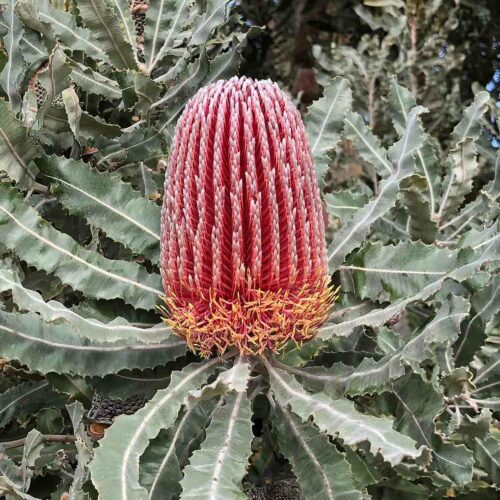
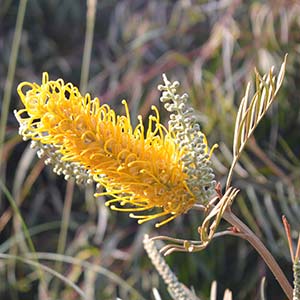
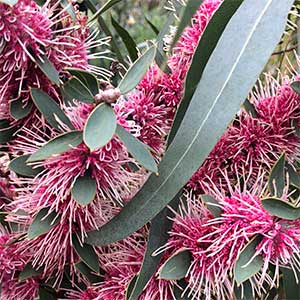
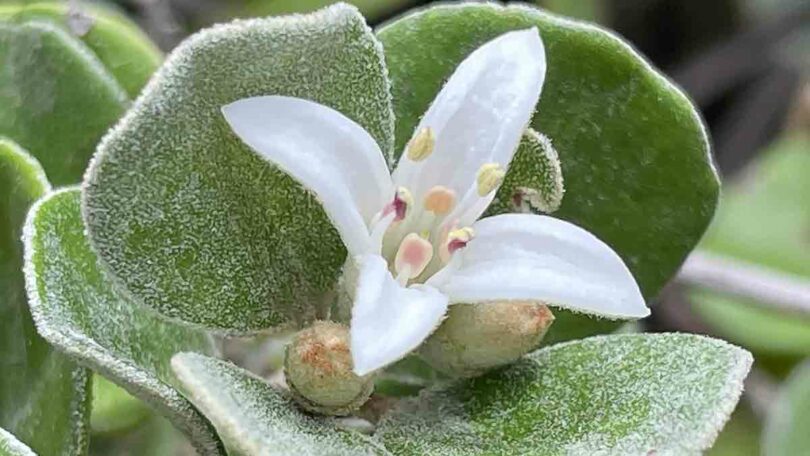


These companions add contrast in foliage, flower form, and seasonal colour while supporting birds and pollinators.
Climate and Position Tips
Choose a spot with good air movement and excellent drainage. In hot inland gardens, a little afternoon shade is helpful, while cooler or wetter areas need shelter from heavy winter rain.
If your soil is heavy, it’s usually better to raise the planting area than to try to force Persoonias into poor drainage. That small adjustment often makes the difference between a struggling plant and a thriving one.
We are Asked?
Are Persoonia plants hard to grow?
Not especially, as long as they have well-drained soil and the right light. They are usually quite forgiving once established.
How often should I water Geebungs?
Water regularly during establishment, then reduce to occasional deep watering during dry periods.
Can Persoonia grow in pots?
Yes. Use a large pot with excellent drainage and a quality native potting mix. Smaller or compact species are usually the best choices.
Do Geebungs need much pruning?
Very little. A light trim after flowering is usually enough to maintain shape and encourage denser growth.
Persoonia species bring texture, flowers, and wildlife value to gardens with relatively little effort. They’re a smart choice for water-wise, native-friendly landscaping that looks good year-round.