

Evergreen Magnolias are among the most popular large‑leafed flowering trees used in Australian gardens and landscaping. They combine glossy evergreen foliage with large, often fragrant white flowers, making them ideal as feature trees, tall screens and hedging plants.
The most prominent group is based around Magnolia grandiflora, the classic ‘Evergreen Magnolia’ or ‘Bull Bay’, which has given rise to a range of smaller‑growing cultivars suited to suburban and commercial planting.
- What are evergreen Magnolias?
- Magnolia grandiflora – the Evergreen Magnolias
- Growing evergreen Magnolias in Australia
- Landscaping uses for evergreen Magnolias
- Growth rates and final heights
- Popular evergreen Magnolia cultivars
- Smaller Growing Varieties
- Other evergreen Magnolia species and related plants
- Comparison of popular evergreen Magnolia cultivars
- Pruning and maintenance
- Buying evergreen Magnolias
- Buyer’s Guide: Choosing the right evergreen Magnolia
- FAQ: Evergreen Magnolias
What are evergreen Magnolias?
Evergreen Magnolias are large‑leafed trees that retain their foliage year‑round, unlike deciduous Magnolia species which drop their leaves in winter. They are valued for their glossy evergreen leaves, strong architectural form and large white or creamy flowers, many of which are fragrant.
In Australia, the main species used is Magnolia grandiflora, with many cultivars bred for smaller size, longer flowering, and better suitability to gardens and urban landscapes.
Magnolia grandiflora – the Evergreen Magnolias
Magnolia grandiflora is a large evergreen tree originating from the southern United States, also known as the ‘Southern Magnolia’ or ‘Bull Bay’. It is distinguished by its glossy green leaves and large, intensely fragrant white flowers.
The true species can grow to over 20–25 m with a broad crown of 10–15 m, making it best suited to large gardens, parks and parklands. However, in Australia it is mostly the smaller‑growing cultivars such as ‘Little Gem’, ‘Kay Parris’ and ‘Teddy Bear’ that are widely used by landscapers and homeowners.
Growing evergreen Magnolias in Australia
Light and position
- Evergreen Magnolias perform best in full sun to part shade.
- They flower most heavily in bright light and benefit from some protection from hot, drying winds.
Soil and moisture
- Prefer humus‑rich, deep, well‑drained but consistently moist soil.
- Avoid heavy, waterlogged clays; in poorly drained sites, consider raised beds or mounding.
Climate and hardiness
- Evergreen Magnolias grow well in a wide range of Australian climates, from cool‑temperate (Tasmania, Melbourne) through to subtropical (Sydney, Brisbane).
- Once established, they are remarkably hardy and resilient, though young plants appreciate some frost and wind protection in cooler zones.
Pests and diseases
- Generally disease‑ and pest‑resistant when grown in suitable conditions.
- Good air circulation and appropriate site selection help reduce stress and potential fungal issues.
Landscaping uses for evergreen Magnolias
Evergreen Magnolias are one of the most versatile large‑leafed trees available. They are commonly used as:
- Large shade trees in parks and gardens.
- Feature trees near driveways, courtyards and entry areas, where their glossy foliage and white flowers make a strong visual impact.
- Screening and hedging, especially the smaller cultivars such as ‘Little Gem’, ‘Kay Parris’ and ‘Teddy Bear’, which respond well to pruning.
- Container‑grown specimens for courtyards, patios and large commercial spaces; large established specimens are even used in highly visible urban settings, such as outside the Casino in Melbourne.
They also work well as backdrop plants in mixed‑border plantings, providing year‑round structure and foliage interest.
Growth rates and final heights
The final height of evergreen Magnolias varies greatly depending on the cultivar, climate, soil and moisture.
- The larger‑growing types (e.g., species forms, ‘Exmouth’, ‘St Mary’s’, ‘Alta’) can reach 15–25 m in favourable conditions.
- Smaller‑growing cultivars such as ‘Little Gem’, ‘Kay Parris’ and ‘Teddy Bear’ are usually kept in the 5–10 mrange, and can be pruned to maintain compact forms.
In warmer climates such as Sydney, Magnolias grow faster and reach maturity more quickly than in cooler areas such as Melbourne, which is why many wholesale growers raise them in the north and then ship them south once they reach a suitable size.
Popular evergreen Magnolia cultivars
Magnolia grandiflora ‘St Mary’s’ (St Mary)
A compact form of Magnolia grandiflora, ‘St Mary’s’ is smaller than the species and typically reaches around 6–7 m in height. It has the classic glossy evergreen foliage and large white flowers, making it ideal as a smaller‑scale feature tree or tall screen in medium‑sized gardens.
Magnolia grandiflora ‘Exmouth’
‘Exmouth’ is known for its upright, narrow habit, making it well suited to street planting, tall screens and narrow spaces. A compact form of Exmouth is also available, further reducing its width while retaining its vertical form.
Magnolia grandiflora ‘Little Gem’
‘Little Gem’ was one of the first so‑called ‘dwarf’ forms of Magnolia grandiflora and is still one of the most widely planted evergreen Magnolias. It will typically reach 5–8 m, but can be pruned to maintain a smaller size.
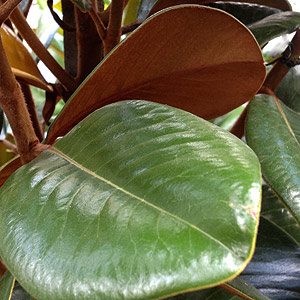
It is valued for its large white flowers, very glossy evergreen foliage and soft, coppery‑velvet undersides to the leaves. Florists often use the foliage in arrangements, which further boosts its popularity.
Because of its manageable size and tolerance of pruning, ‘Little Gem’ is excellent as a tall hedge, property screen or feature tree.
Magnolia grandiflora ‘Kay Parris’
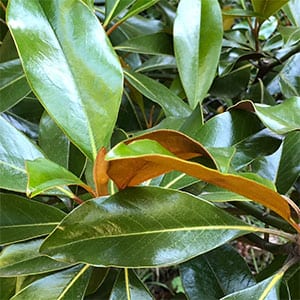
‘Kay Parris’ is a newer evergreen Magnolia cultivar now available in Australia. It has glossy green leaves with a slightly wavy margin, a denser form than many older cultivars and a deep orange to coppery felt on the leaf underside.
Flowers are large and fragrant, similar to other Magnolia grandiflora forms. ‘Kay Parris’ is generally smaller and more compact than ‘Little Gem’, reaching about 6–9 m, and is well suited as a specimen tree or screening plant. It also tends to have a longer flowering period and may hold its flowers slightly longer than older cultivars.
Magnolia grandiflora ‘Teddy Bear’
‘Teddy Bear’ is another compact evergreen Magnolia, smaller than both ‘Little Gem’ and ‘Kay Parris’. It reaches about 6 m but can be kept more compact with winter pruning.
The foliage is very dark green, rounded and cup‑shaped, held densely on the branches, giving it a distinctive, almost “teddy‑bear”‑like appearance. The underside of the leaves is heavily felted with a coppery‑velvet texture.
Flowers are large, white and fragrant, often growing to around 15–20 cm across. Like the other compact forms, ‘Teddy Bear’ responds well to pruning and can be used as a hedge or screen where a dense, evergreen foliage plant is required.
Smaller Growing Varieties

Other evergreen Magnolia species and related plants
Magnolia delavayi
Originating from China, Magnolia delavayi is a spreading, evergreen Magnolia with large, leathery leaves and creamy‑white flowers that appear in late summer to autumn. It is an attractive addition to mixed‑border plantings and woodland‑style gardens.
Magnolia virginiana (Sweet Bay, Swamp Bay)
Magnolia virginiana, commonly known as Sweet Bay or Swamp Bay, is an evergreen or semi‑evergreen Magnolia with fragrant white flowers and silvery undersides to the leaves. It is particularly well suited to wet or damp sites, such as along creeks or in low‑lying areas.
Port Wine Magnolia (Michelia figo)
Although not a true Magnolia, Port Wine Magnolia (Michelia figo) is often grouped with evergreen Magnolias due to its similar glossy foliage and fragrant flowers. It is a compact evergreen shrub or small tree, ideal for small gardens, containers and hedging.
Other related species such as Michelia doltsopa offer similar foliage and flowering characteristics and can be used in similar roles.
Comparison of popular evergreen Magnolia cultivars
| Cultivar | Typical height | Habit & form | Best suited to |
|---|---|---|---|
| Magnolia grandiflora (species) | 15–25 m | Large, broad‑crowned tree | Parks, large gardens, feature trees |
| ‘St Mary’s’ | 6–7 m | Compact, rounded tree | Medium gardens, feature trees |
| ‘Exmouth’ | 10–15 m | Narrow, upright tree | Street planting, tall screens |
| ‘Little Gem’ | 5–8 m | Dense, rounded tree | Tall hedges, screens, feature trees |
| ‘Kay Parris’ | 6–9 m | Compact, upright, dense | Screens, compact feature trees |
| ‘Teddy Bear’ | approx. 6 m | Very dense, compact, rounded | Small gardens, dense hedges/screens |
Pruning and maintenance
Evergreen Magnolias are generally low‑maintenance once established. However, they respond well to pruning, especially the smaller cultivars used for hedging and screening.
- Light pruning after flowering helps maintain shape and encourages bushier growth.
- Heavy pruning is best done in winter when the plant is dormant, but avoid removing too much foliage at once.
- For detailed techniques, refer to our pruning Magnolia grandiflora guide and consult local nursery recommendations.
Buying evergreen Magnolias
If you’re looking for evergreen Magnolia trees for sale, check the Magnolia species and cultivars listings on Nurseries Online to find participating nurseries offering Magnolia grandiflora, ‘Little Gem’, ‘Kay Parris’, ‘Teddy Bear’, Magnolia delavayi, Magnolia virginiana and related plants such as Port Wine Magnolia (Michelia figo).
You can also explore dedicated product pages for Magnolia ‘Little Gem’, Magnolia ‘Teddy Bear’, Magnolia ‘Kay Parris’, Magnolia grandiflora ‘Exmouth’ and others to compare availability and growing notes.
Buyer’s Guide: Choosing the right evergreen Magnolia
Use this as a short, scannable section under its own H2 heading (you can style this as a list‑style block or toggle if your theme supports it).
- For large gardens and parks: Choose Magnolia grandiflora (species), ‘Exmouth’ or ‘St Mary’s’ as these provide substantial shade and strong visual impact over time.
- For medium‑sized suburban gardens: Opt for compact forms such as Magnolia ‘Little Gem’, ‘Kay Parris’ or ‘St Mary’s’, which give Magnolia presence without overwhelming the space.
- For small gardens and courtyards: Magnolia ‘Teddy Bear’ is often the best choice, as it stays compact and can be clipped to form a dense hedge or feature plant. ‘Little Gem’ works too if you keep it pruned.
- For tall screens and hedges: Magnolia ‘Little Gem’ and ‘Kay Parris’ are excellent, with ‘Kay Parris’ offering a slightly more upright habit and longer flowering period.
- For coastal or exposed sites: Provide some wind protection and choose a sheltered spot; ‘Little Gem’ and ‘Kay Parris’ are generally more adaptable than the larger species forms.
- For damp or wet‑soil areas: Consider Magnolia virginiana (Sweet Bay) instead of Magnolia grandiflora, as it tolerates wetter conditions better.
FAQ: Evergreen Magnolias
Which evergreen Magnolia is best for small gardens?
For small gardens, compact cultivars such as Magnolia ‘Little Gem’, ‘Kay Parris’ and especially ‘Teddy Bear’ are best, as they can be kept to around 5–6 m and respond well to pruning. ‘Teddy Bear’ in particular is ideal where space is limited and a dense, compact form is required.
Is Magnolia ‘Little Gem’ or ‘Teddy Bear’ better for hedging?
Both are good for hedging, but ‘Teddy Bear’ tends to have denser, more compact foliage and rounded leaves, making it ideal for a tighter hedge. ‘Little Gem’ is slightly taller and can suit taller screens or informal hedges where you still want classic Magnolia presence.
What is the difference between Magnolia grandiflora and Magnolia virginiana?
Magnolia grandiflora is a large, broad‑crowned evergreen tree with classic glossy leaves and large white flowers. Magnolia virginiana (Sweet Bay) is more suited to damp or wet sites, with silvery undersides to the leaves and a more open, looser habit. It also tolerates wetter soils than Magnolia grandiflora, making it a better choice for low‑lying sites.
Can evergreen Magnolias grow in containers?
Yes, many evergreen Magnolias, especially the smaller cultivars ‘Little Gem’, ‘Kay Parris’ and ‘Teddy Bear’, can be grown in large containers. Use a humus‑rich, free‑draining potting mix, keep the root ball moist but not waterlogged, and provide some protection from hot, drying winds. Regular feeding with a balanced fertiliser will help maintain vigour in pots.
Do evergreen Magnolias need pruning?
They are generally low‑maintenance, but most evergreen Magnolias respond well to light pruning after flowering to maintain shape and encourage bushiness. Heavy pruning is best done in winter and should be done gradually rather than removing large amounts of foliage at once. Pruning is especially useful for compact cultivars used as hedges or screens.
How quickly do evergreen Magnolias grow?
Growth rate depends on cultivar and climate. In warmer areas such as Sydney, they grow faster than in cooler regions like Melbourne. Smaller cultivars such as ‘Little Gem’ and ‘Teddy Bear’ grow more slowly than the large species forms, but can still reach 5–6 m in 8–10 years under good conditions, especially if well fed and watered in the establishment phase.
Where To Buy

email [email protected]
One of Australia's largest wholesale trade nurseries. Over 30,000 species available, tubestock to advanced trees, an almost unlimited choice of plants.
www.plantmark.com.au

111 Stanhope Road Theresa Park NSW 2570
Offering a variety of sun hardy Australian natives and exotic trees, shrubs, groundcover's and perennials from semi advanced through to super advanced and semi-mature stock.
www.downesnursery.com.au

55 McDougal Rd Neerim South Victoria 3831 PH: (03) 56281507
Advanced ornamental trees and garden designs and concept plans. Direct to your property combined with specialist knowledge and outstanding service.
www.blericktreefarm.com.au

Online nursery: hedging, screening trees, natives and advanced trees delivered from grower to door, no minimum order.
nurserynearme.com.au