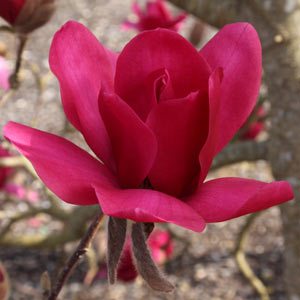

Description
Magnolia nitida is an uncommon evergreen magnolia native to highland forests from Tibet through Guangxi and Yunnan in southern China. In its natural habitat, it thrives on well-drained mountain slopes and forest edges, often growing alongside rhododendrons and camellias.
In gardens, it’s admired for its glossy foliage and elegant creamy to butter-yellow flowers that appear in spring, releasing a sweet perfume. The new growth adds extra appeal, flushing bronze to red before maturing to deep green. Its slow, compact habit makes it an excellent feature plant for collectors or small gardens seeking something distinctive.
Although not widely used in traditional medicine, magnolias as a genus have long cultural significance in Chinese herbal traditions, often valued for their fragrance and symbolic purity.
Important Warnings
- Poisonous/Toxic: Not generally considered toxic to humans or pets.
- Invasive/Weed Potential: Low; slow growth and limited seed spread make it non-invasive.
Planting Magnolia nitida
When to Plant:
Best planted in autumn or early spring, allowing roots to establish before summer heat.
Where to Plant:
Choose a sunny but sheltered position—protection from harsh winds will preserve the foliage and flowers. Understory settings or along garden edges work well.
Soil:
A humus-rich, slightly acidic soil is ideal. Ensure excellent drainage and work in compost before planting.
Spacing:
Allow at least 2–3 metres between plants for mature spread.
Container/Pots Suitability:
Can be grown in large containers when grafted on M. grandiflora rootstock, though growth remains slow.
Ongoing Care for Magnolia nitida

Watering:
Keep soil evenly moist, especially during the first two summers. Once established, it’s relatively drought-tolerant but prefers consistent moisture.
Amendments and Fertilizer:
Feed lightly in spring with blood and bone or a slow-release organic fertilizer. Topdress with composted cow manure and mulch annually to maintain soil fertility.
Pruning and Deadheading:
Minimal pruning required—remove dead or damaged wood after flowering to maintain its natural shape.
Overwintering:
Protect from severe frost; a layer of mulch around the root zone helps maintain a stable temperature.
Propagation
Propagation is most reliable through grafting onto Magnolia grandiflora rootstock, which increases vigor and resilience. Semi-hardwood cuttings can be tried under mist, though success is variable.
Pests and Diseases
Generally pest-free, though watch for scale insects on mature leaves. Fungal root rots may occur in poorly drained soils—good drainage and mulching help prevent issues.
Varieties and Cultivars
Few named forms exist outside specialist collections. Most cultivated plants are propagated from seed or grafted for enhanced performance.
Design Ideas
The soft yellow blooms and glossy foliage make Magnolia nitida ideal as a standalone specimen or featured in mixed shrub borders. Combine with azaleas, camellias, or Pieris japonica for complementary colour and texture. Its tidy habit also suits courtyard or woodland garden designs.
Best grown in a sunny yet protected position.
Magnolia nitida Care
A humus rich well drained soil is essential. A slightly acidic soil is ideal, rich with humus.
Young plants will need to be watered through the first summers. Mulch around the plant to provide a cool moist root run.
Fertilise with a little blood and bone, and top dress with some composted cow manure.
Water occasionally with a liquid seaweed fertiliser. Mulch to maintain a cool moist root run, and provide some additional water during dry summer periods.
We Are Asked
How hardy is Magnolia nitida?
It tolerates moderate frost once established but prefers mild to cool climates.
Does it need grafting to perform well?
Yes. Grafting onto Magnolia grandiflora improves growth and adaptability in conditions outside it natural range.
How long does it take to flower?
Seed-grown plants may take 5–7 years to bloom, while grafted specimens flower earlier.
More Magnolias