
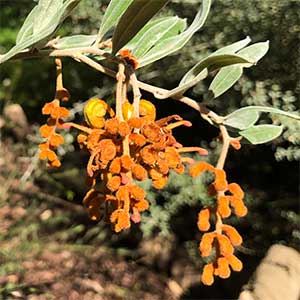
Grevillea chrysophaea, commonly known as Golden Grevillea, is a beautiful and somewhat rare Australian native shrub valued for its soft golden-yellow flowers, fine foliage, and long flowering season. This attractive shrub adds subtle colour and texture to native gardens, wildlife plantings, and naturalistic landscapes, while providing an important source of nectar for birds and beneficial insects.
Naturally occurring in woodlands and open forests of south-eastern Australia, Golden Grevillea thrives in well-drained soils and performs best in a full sun to part shade position. Flowering from winter through to spring, and often extending into early summer, its nectar-rich blooms attract honeyeaters, native bees, butterflies, and other pollinators, bringing life and movement to the garden when many other plants are not in flower.
Although less commonly cultivated due to its slower growth and propagation challenges, Golden Grevillea is a rewarding choice for gardeners seeking a distinctive native shrub. Once established, it is relatively drought tolerant, requires only occasional pruning to maintain a tidy habit, and makes an excellent addition to native, cottage, and wildlife-friendly gardens.
Gardener’s Plant Guide
Botanical Name: Grevillea chrysophaea
Common Name: Golden Grevillea
Plant Type: Evergreen native shrub
Climate Zones:
- Australia: Temperate to cool temperate regions
- Sun Requirements: Full sun to light shade, afternoon shade in hot climates
- Soil Requirements: Well-drained soil
- Water Needs: Low once established
- Mature Size: 0.4–2 m tall, up to 1.5 m wide
- Flowering Time: Winter to spring
- Native Area: Victoria, Australia (especially Gippsland and Brisbane Ranges)
Plant Description
Grevillea chrysophaea is a variable shrub, meaning it can appear in different forms depending on its natural habitat and growing conditions.
Some forms grow as low, dense shrubs, while others develop into taller, more open plants. Heights typically range from around 40 cm to 2 metres, with a spread of about 1.5 metres.
The plant features fine, mid-green foliage that provides an attractive soft texture in the garden.
The real highlight is the flower display. The blooms appear in rich ochre-yellow to golden tones, sometimes with slightly deeper colouring depending on the form. These flowers are nectar-rich and highly attractive to wildlife.
Growing Conditions For Grevillea chrysophaea
Golden Grevillea grows best in conditions similar to its natural habitat in southeastern Australia.
It prefers good sunlight, excellent drainage, and protection from harsh conditions. While the plant is relatively hardy, it benefits from some shelter, particularly from hot summer winds.
In warmer climates, a position that receives morning sun and light afternoon shade can help maintain healthy growth.
Planting Guide
Plant Grevillea chrysophaea in a well-prepared garden bed with excellent drainage.
Planting steps
- Choose a sunny or lightly shaded location.
- Ensure the soil drains freely—raised beds may help in heavier soils.
- Dig a hole slightly larger than the root ball.
- Place the plant at the same depth it was in its container.
- Backfill gently and water thoroughly.
Avoid disturbing the roots too much when planting, as grevilleas can be sensitive to root damage.
Watering Needs
Water regularly during the establishment period, especially through the first summer.
Once established, Golden Grevillea becomes fairly drought tolerant, needing only occasional watering during extended dry periods.
Overwatering should be avoided, as grevilleas prefer well-drained soils.
Soil Requirements
Grevilleas require excellent drainage to thrive.
Suitable soils include:
- Sandy soils
- Light loams
- Well-drained native garden soils
Heavy clay soils should be improved with coarse sand, gravel, or by planting in raised beds.
Avoid excessive fertiliser, particularly those high in phosphorus, as many members of the Proteaceae family are sensitive to it.
Sunlight Requirements
Golden Grevillea grows best in full sun to light shade.
In hot regions, afternoon shade during summer can help prevent stress and maintain healthy foliage.
Good light encourages stronger growth and better flowering.
Fertilizing
Most grevilleas require very little fertiliser.
If feeding is needed, use a low-phosphorus fertiliser formulated for native plants in spring.
In many gardens, the plant will grow well with minimal feeding, especially if planted in reasonably fertile soil.
Pruning and Maintenance
Golden Grevillea requires very little pruning.
Light pruning after flowering can help maintain a compact shape and encourage bushier growth.
Removing spent flowers and lightly trimming stems can also promote better flowering in future seasons.
Common Problems
Grevillea chrysophaea is generally hardy when grown in suitable conditions.
Possible issues include:
Poor drainage: Can lead to root problems.
Excess fertiliser: Especially high phosphorus levels.
Hot afternoon sun: May stress plants in exposed locations.
Providing well-drained soil and a sheltered position helps prevent most problems.
Propagation
This species is not widely grown in cultivation because propagation can be challenging.
Propagation methods include:
Cuttings
The most reliable method, usually taken from semi-hardwood growth.
Seed
Propagation from seed is possible, although germination may require smoke treatment, which mimics natural bushfire conditions.
Because of these challenges, plants can sometimes be difficult to find in nurseries.
Landscape Uses and Garden Design
Golden Grevillea works well in native and wildlife-friendly gardens.
It can be used for:
- Native shrub borders
- Wildlife gardens
- Informal hedges
- Habitat plantings for birds and pollinators
- Mixed native garden beds
Its winter flowering makes it particularly valuable for adding colour and providing nectar when few other plants are blooming.
Practical Gardening Tips
- Always plant grevilleas in well-drained soil.
- Avoid fertilisers high in phosphorus.
- Choose a sheltered position for best growth.
- Provide afternoon shade in hot climates.
- Plant near seating areas to enjoy visiting honeyeaters and bees.
Because it flowers in winter, Golden Grevillea also helps support wildlife when food sources are scarce.



Conclusion
Grevillea chrysophaea is a unique and rewarding Australian native shrub. Its golden flowers, fine foliage, and winter bloom period make it a valuable addition to wildlife-friendly and native gardens.
Although it is not widely cultivated due to propagation challenges, gardeners who can provide the right conditions will be rewarded with a beautiful plant that attracts birds, bees, and attention throughout the cooler months.
Summary Information
- Botanical Name – Grevillea chrysophaea
- Family – Proteaceae
- Common Name – Golden Grevillea
- Position – Best in light shade or afternoon shade.
Soil – Well drained. - Height – Variable from around .4 – 2 metres depending on form.
- Spread – To around 1.5 metres.
- Flowers – Golden Ochre or Golden yellow depending on form.
- Flowering Time – Winter to spring.
- Foliage – Mid green and very fine.
- Frost tolerant – Yes, moderate frosts.
- Drought tolerant – Yes