
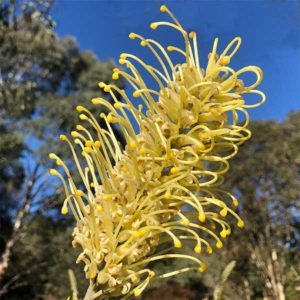
The Mundubbera grevillea.
With outstanding creamy yellow flowers and a naturally upright growth habit, Grevillea whiteana makes a good specimen plant in the garden.
This is a species originally from Queensland, it very adaptable to cooler climates and thrives at least as far south as Melbourne.
It is a naturally bushy species and can be used as a background screening plant or hedge. Look Grevillea x Moonlight a selected form with brilliant flowers.
How To grow Grevillea whiteana – Basic Care
Best grown in full sun and a well drained soil this is an easy care plant once established. If can be tip pruned after flowering maintain a more compact and bushy growth habit.
Growing Conditions
This grevillea is remarkably adaptable. While it hails from Queensland, it performs reliably in much cooler southern regions, including Melbourne. It is both frost-tolerant and drought-tolerant once it has settled into the garden, making it a low-fuss choice for busy gardeners.
Planting and Soil
To get the best out of your Mundubbera grevillea, select a position that receives full sun, though it will tolerate a little light shade. The most important requirement is well-drained soil. If you have heavy clay, consider planting on a slight mound to encourage water runoff away from the root zone.
Watering and Fertilising
Once established, this species is quite hardy and requires little supplementary water. During the first growing season, keep it hydrated to ensure strong root development. When feeding, always use a low-phosphorus native plant fertiliser; generic fertilisers can be harmful to proteaceae species.
Pruning and Maintenance
Grevillea whiteana is naturally bushy, but regular maintenance ensures it remains dense and attractive. A light tip-pruning after the main winter flowering period is highly recommended. This practice encourages new growth and keeps the plant compact, preventing it from becoming “leggy” or sparse.
Landscaping Uses and Companion Plants
Thanks to its upright, dense habit, Grevillea whiteana is an excellent choice for a formal or informal privacy screen. When planted in a row, it creates a clean, vertical line that occupies minimal footprint while providing maximum screening. Alternatively, it serves beautifully as a solitary specimen plant where the winter blooms can be appreciated up close.
When choosing companions, opt for other low-water, sun-loving natives that share similar soil requirements:
Structural Contrast: Pair with strappy-leaf plants like Lomandra longifolia or Dianella species to contrast with the fine, needle-like texture of the grevillea.
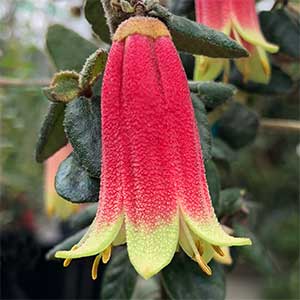
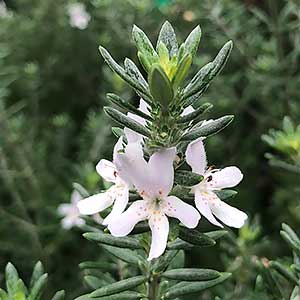
Flowering Complements: Include Westringia (native rosemary) for a reliable, silver-toned hedge backdrop, or Correa species to extend the flowering season into late winter and spring.
Bird Attractors: Integrate smaller Grevillea or Eremophila varieties nearby to create a pollinator-friendly corridor that brings local honeyeaters and insects into your garden.



Top Tips
- Screening and Hedging: Because of its upright habit, you can plant Grevillea whiteana at 1.5–2 metre intervals to create a functional, attractive privacy screen or hedge.
- Cultivar Choice: If you are specifically looking for enhanced floral displays, look for Grevillea ‘Moonlight’. This is a popular selected form that shares the reliable nature of the species but is often sought after for its particularly brilliant flowering performance.
- Avoid Waterlogging: Never let the plant sit in boggy or water-saturated soil, as this is the primary cause of decline in established grevilleas.
Summary Information
- Botanical Name – Grevillea whiteana
- Common Name – Mundubbera grevillea.
- Family – Proteaceae
- Origins – Queensland.
- Height – To around 3 – 4 metres
- Spread – To around 3 metres
- Growth rate – Medium.
- Position – Full sun to a little shade.
- Soil – Well drained
- Flowers – Cream to yellow.
- Flowering Time – Winter
- Foliage – Needle lime and mid olive green..
- Frost tolerant – Yes
- Drought tolerant – Yes, once established.