
Few ground covers make a statement like Grevillea ‘Poorinda Royal Mantle’. Regarded as one of the best prostrate Grevilleas—perhaps one of the best Grevilleas, full stop—this vigorous native is hard to beat for colour, toughness, and garden versatility.
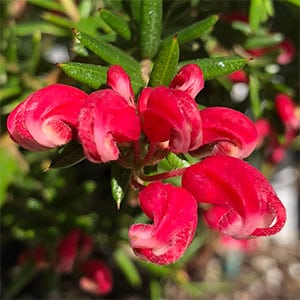
With its dense, spreading habit, this Grevillea forms a lush carpet of foliage that thrives even in dry, frosty conditions once established. The brilliant red toothbrush flowers, which appear mainly from winter through late spring, create a spectacular show and attract wildlife year-round.
The foliage is equally appealing: dark green, often toothed leaves up to 10–15 cm long, and delightful coppery-red new growth for extra visual flair. The only serious limitation? It does not enjoy high humidity—so give it an open, airy position and avoid tropical climates.
Growing Grevillea ‘Poorinda Royal Mantle’
This celebrated hybrid, bred by Leo Hodge in Victoria during the 1970s–80s, likely combines Grevillea laurifolia from the Blue Mountains with G. willisii or a close relative. Like its parents, it thrives in well-drained soil and full sun to light afternoon shade.
Planting Tips
- Prepare the site: Weed thoroughly and dig over an area at least twice the pot’s width.
- Enrich the soil: Mix in well-rotted cow manure and aged compost—gentle on natives and ideal for slow, steady feeding.
- Planting depth: Keep it at the same level as in the pot. Firm the soil and water well to settle.
- Mulch: Apply a native-friendly mulch, keeping it clear of the crown to prevent rot.
- Spacing: Allow 1–2 m between plants for a solid carpet effect; expect a spread of 3–6 m within a few years.
Once established, this Grevillea is tough and drought-tolerant—though a deep soak during long dry periods helps maintain lush growth and heavy flowering.
Watering and Feeding
- Watering: Keep soil lightly moist for the first one to two summers. After that, water only during extended dry spells.
- Feeding: Fertilise in spring or summer with a low-phosphorus native plant food. Avoid regular garden fertilisers with high phosphate—they can damage the roots.
In good conditions, it rarely needs extra feeding—its natural resilience and soil adaptation do most of the work.
Pruning and Maintenance
Prune after the main flowering flush (around late spring to early summer) to keep plants compact, bushy, and blooming.
- Tip prune lightly to encourage dense growth.
- Avoid cutting into old wood—stick to new or semi-hard growth.
- Do not transplant established plants; they resent root disturbance.
A light trim mid-spring can trigger fresh flowers in as little as 9–12 weeks.
Wildlife and Landscaping Appeal
The vivid red toothbrush flowers of ‘Royal Mantle’ are rich in nectar, attracting:
- Honeyeaters and small native birds
- Bees and butterflies
- Beneficial garden insects
Beyond its wildlife value, it’s superb for erosion control and weed suppression on banks, slopes, and rocky sites. It also shines spilling over retaining walls or cascading from raised beds.
For smaller gardens, try a grafted weeping standard form—it combines height and impact without sacrificing space.
Common Problems and How to Avoid Them
Grevillea ‘Poorinda Royal Mantle’ is generally hardy and low-maintenance. But a few conditions can cause trouble:
- Poor drainage or humidity: May lead to root rot or leaf spot—improve airflow and soil drainage.
- Pests: Occasionally affected by scale, aphids, or mealybugs, which natural predators help manage.
- Yellowing leaves: Usually due to overwatering, underwatering, or nutrient imbalance. Adjust care and it usually recovers quickly.
Quick Reference
| Feature | Detail |
|---|---|
| Botanical Name | Grevillea ‘Poorinda Royal Mantle’ |
| Common Name | Royal Mantle Grevillea |
| Family | Proteaceae |
| Origin | Hybrid from Victoria by Leo Hodge |
| Position | Full sun to light shade |
| Soil Type | Well-drained, sandy to loamy, slightly acidic to neutral |
| Height | 0.1–0.3 m (prostrate) |
| Spread | 3–6 m+ |
| Growth Rate | Medium to fast |
| Flower Colour & Type | Bright red toothbrush-style |
| Main Flowering | Winter to late spring (spot flowers year-round) |
| Drought Tolerance | Excellent once established |
| Frost Tolerance | Moderate to high |
| Key dislikes | High humidity, poor drainage, high-phosphorus fertilisers |
Why Grow ‘Poorinda Royal Mantle’?
If you’re looking for a tough, colourful, bird-attracting native ground cover that thrives in Australian gardens, this one’s hard to beat. Plant it right, give it sunshine and drainage, and it’ll reward you with low fuss, high impact, and stunning displays year after year.
More Grevilleas