
Winter flowering plants bring colour, fragrance and wildlife interest to the garden when many other plants are resting.
In Australia, the USA and the UK, flowering times vary by region and microclimate, but there are excellent choices for native gardens, shaded spots, pots and sunny borders.
Why Grow Winter Flowering Plants?
No garden should be without some winter flowering plants, and with a wide choice of both Australian native and exotic species, plants for all situations are available
Winter flowering plants solve a common problem: a garden that looks dull and quiet in the colder months. They provide:
- Winter colour when most plants are dormant
- Fragrance to lift your mood on cold mornings
- Wildlife interest, especially Australian natives that attract birds and bees
- Container options for patios, balconies and small spaces
- A mood boost from seeing blooms outside your window

Winter flowering plants will vary in flowering time depending on location and even microclimate. However, with lots of flowers and colour available in a great range of plants, you should have little trouble finding some winter flowering plants suitable for your location
And for fragrance, Luculia pinceana – ‘Pink Spice’, with is wonderful pink flowers and great perfume, this small tree has a lot to offer. Daphne odora, is still one of the best winter flowering small shrubs for fragrance, and of course Chimonanthus (wintersweet) is another that lives up to its name.
Best Winter Flowering Plants
Check with your local nursery for flowering times and to see which plants on our list are suitable for your area and climate zone.
Winter Flowering Plants by Climate Zone
Temperate & Cool Climates
In temperate and cool climates – such as the UK, southern Australia (Melbourne, Tasmania) and northern USA – you can rely on hardy shrubs, bulbs and perennials that tolerate frost and shorter days.
Plants that thrive here include:
- Snowdrops (Galanthus) and snowflakes (Acis) – classic white flowers that seem to belong in winter
- Hellebores – reliable shade-lovers with white, pink, purple or green flowers
- Camellias – especially Camellia japonica and sasanqua types for winter blooms
- Daphne odora – fragrant, evergreen shrub for shade or dappled light
- Mahonia – bold yellow flowers on cold winter mornings, tough and evergreen[
- Erica (heath) – many species flower in winter, great for acid soils and containers
- Rhododendrons – some varieties bloom in late winter in cool, moist conditions
Subtropical & Warm Climates
In subtropical and warm climates – coastal Australia, southeastern USA and milder UK areas – you have more flexibility. Many natives and exotics flower through winter with little or no frost damage.
Good choices include:
- Grevillea – many species flower in winter, attracting honeyeaters
- Callistemon (Bottlebrush) – hardy, bird-friendly, often flowering in cooler months
- Chamelaucium uncinatum (Geraldton Wax) – fragrant, waxy flowers from winter to spring
- Alyogyne huegelii (Native Hibiscus) – bold purple flowers, even in cooler months
- Hardenbergia violacea (Native Sarsaparilla) – purple flowers from late winter to spring
- Salvia species – some flower through winter in mild climates
- Strelitzia reginae (Bird of Paradise) – in milder climates, may flower in cooler months
Best Australian Native Winter Flowering Plants
Australian native plants are unique, and many are at their flowering best through winter. They offer drought tolerance, bird attraction and a distinctly Australian look.
Key natives include:
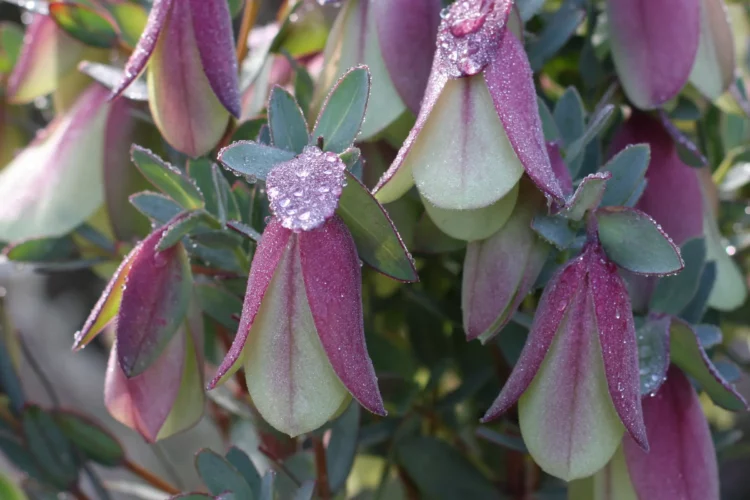
- Pimelea physodes (Qualup Bell) – Vibrant winter flowers, unique to Australia; great for native gardens and attracting birds.
- Grevillea spp. – Diverse group; many flower in winter, attracting honeyeaters; hardy and drought-tolerant once established.
- Alyogyne huegelii (Native Hibiscus) – Bold purple flowers, even in cooler months; loves sun and well-drained soil.
- Hakea laurina (Pincushion Hakea) – Striking flowers in winter to early spring; excellent for birdlife.
- Kunzea baxteri (Bobby Bell) – Bright red or pink flowers in winter; ideal for native shrub borders.
- Hardenbergia violacea (Native Sarsaparilla) – Vibrant purple flowers in late winter to early spring; good for trellises and groundcover. Note: correct spelling is violacea.
- Callistemon spp. (Bottlebrush) – Many flower in winter and spring; attract birds; hardy in most Australian climates.
- Chamelaucium uncinatum (Geraldton Wax) – Fragrant, waxy flowers in winter to spring; great for cutting and native gardens.
- Boronia spp. – Fragrant flowers, many in winter; prefer well-drained, slightly acidic soil.
- Xerochrysum bracteatum (Australian Paper Daisy) – Some varieties flower in cooler months; long-lasting flowers, great for cutting.
Best Winter Flowering Shrubs & Small Trees
This group includes both Australian natives and exotics, offering structure, colour and sometimes fragrance.

- Camellia spp. – Classic winter flowers; white, pink, or red; prefer shade or dappled light.
- Daphne odora – One of the best fragrant winter shrubs; compact, evergreen, and loves shade.
- Hellebores (Lenten Rose) – White, pink, purple, or green flowers; shade-tolerant and reliable in cool climates.
- Mahonia spp. – Bold yellow flowers on cold winter mornings; evergreen, thorny, and tough.
- Chaenomeles speciosa (Flowering Quince) – Bright red, pink, or white flowers in late winter; great for hedges and walls.
- Chimonanthus praecox (Wintersweet) – Lives up to its name; fragrant yellow flowers in deep winter.
- Osmanthus fragrans – Highly fragrant flowers, often in winter; small tree or large shrub.
- Erica spp. (Heath) – Many flower in winter; compact, evergreen, and great for acid soils.
- Rhododendron spp. – Some varieties bloom in late winter; prefer cool, moist, acidic conditions.
- Protea spp. – Striking flowers, some in winter; suited to well-drained, low-phosphorus soils.
- Strelitzia reginae (Bird of Paradise) – In milder climates, may flower in cooler months; structural, exotic look.
- Kalanchoe spp. – Often grown in pots; some flower in winter; drought-tolerant succulent.
- Bergenia – Broad-leaved perennial; pink or white flowers in late winter; very tough and shade-tolerant.
- Liriope spp. – Grass-like perennial; some flower in late winter to spring; great for borders and shade.
- Pyrostegia venusta (Flame Creeper) – Vibrant orange flowers, often in winter; vigorous climber for sunny walls.
- Salvia spp. – Some species flower through winter in mild climates; versatile and drought-tolerant.
- Garrya elliptica (Silk Tassel tree) – Long catkins in winter; evergreen shrub for mild areas. Note: correct spelling is elliptica.
- Brachysema celsianum – Small pea flower with winter/spring blooms; suited to well-drained soils. Note: correct spelling celsianum.
Fragrant Winter Flowering Plants
Fragrance is especially precious in winter when gardens are quiet. These plants add perfume to cold air and make outdoor spaces feel more alive.
- Luculia gratissima / Luculia pinceana ‘Pink Spice’ – Wonderful pink flowers and great perfume; small tree or large shrub.
- Daphne odora – One of the best winter flowering small shrubs for fragrance.
- Chimonanthus praecox (Wintersweet) – Fragrant yellow flowers in deep winter.
- Osmanthus fragrans – Sweetly scented flowers, often in winter.
Winter Flowering Bulbs & Perennials
Bulbs and perennials bring delicate flowers and long-lasting colour to borders, and are suited to growing beneath deciduous trees as well as containers.
- Galanthus spp. (Snowdrops) – Classic white flowers; names fit the season; perfect for cool gardens.
- Acis spp. (formerly Leucojum snowflakes) – Pretty white flowers, often in winter.
- Cyclamen spp. – Winter-flowering cyclamen for shade and containers.
- Primula spp. (including Fairy Primrose) – Bright winter/early spring flowers; great for pots and shade.
Winter Flowering Plants for Pots, Patios and Courtyards
Pots let you move colour around your home and protect plants from harsh conditions. Choose compact varieties and ensure good drainage.
Best pot plants:
- Daphne odora – Compact, fragrant, great in pots with good drainage.
- Camellia (dwarf varieties) – Winter blooms in pots; protect from harsh wind.
- Erica spp. – Compact, evergreen, ideal for pots and edging.
- Kalanchoe – Succulent pot plant with winter colour.
- Primula & Fairy Primrose – Bright winter pots for shade.
- Bergenia – Tough border or pot plant for late winter flowers.
Site Selection (Sun & Shade)
- Full sun – Bottlebrush, Grevillea, Flowering Quince, Geraldton Wax, many Salvias.
- Shade or dappled light – Camellias, Hellebores, Daphne, Snowdrops, Cyclamen, Primula.
Match the plant to your garden’s light conditions for best results.
Soil and Drainage
Most winter flowering plants hate “wet feet” – ensure good drainage.
- Acid-loving plants – Camellias, Rhododendrons, Erica, Magnolias prefer slightly acidic soil.
- Natives – Often prefer low-phosphorus, well-drained, sandy or gravelly soils.
Add organic matter (compost) to improve soil structure before planting.
Frost Protection
In cool climates, protect tender plants (Luculia, some Camellias) with fleece or move pots under cover.
- Plant frost-tender species against a warm north-facing wall (in the Southern Hemisphere) or south-facing wall (Northern Hemisphere).
- Mulch around the base to protect roots from hard frost.
Pruning After Flowering
- Prune most winter-flowering plants soon after flowering, usually in late winter or early spring.
- This allows them to set buds for the next season without cutting off next year’s blooms.
- Lightly tip-prune plants like Erica and Chamelaucium after flowering to keep them compact.
Mulching and Feeding
- Apply a layer of mulch in late autumn to conserve moisture and protect roots.
- Use a slow-release, low-phosphorus fertilizer for Australian natives.
- For exotics like Camellias, Rhododendrons and Daphne, use a fertilizer formulated for acid-loving plants.
Also of interest for the winter garden are Silver Foliage Plants great for adding adding colour to the garden