
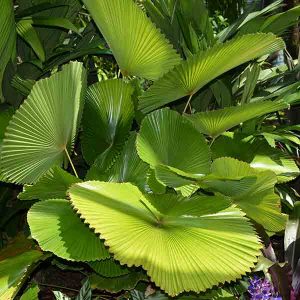
Licuala cordata – A Rare Heart-Leaved Tropical Fan Palm
Licuala cordata is one of the most attractive and sought-after fan palms in cultivation. Native to tropical rainforest regions from Borneo to Sarawak, this rare species is prized for its large rounded to heart-shaped leaves and compact growth habit.
Although not widely available, it is highly regarded by palm collectors and tropical gardeners for its stunning foliage and suitability as an understorey plant. The pleated leaves have finely serrated edges and create a bold tropical effect in shaded areas of the garden.
If you are fortunate enough to live in a tropical or subtropical climate, you are already well placed to grow this beautiful palm. The biggest challenge is usually finding a plant, as Licuala cordata remains uncommon in cultivation. Specialist palm nurseries occasionally offer plants, however many enthusiasts grow it from seed when seed becomes available.
Growing naturally beneath the rainforest canopy, this is a shade-loving species that requires warm, sheltered conditions and protection from drying winds.
Quick Facts
| Feature | Details |
|---|---|
| Botanical Name | Licuala cordata |
| Common Name | Heart-leaf Fan Palm |
| Plant Type | Tropical Fan Palm |
| Origin | Borneo and Sarawak |
| Growth Rate | Slow |
| Mature Height | Around 1 metre |
| Mature Width | 1–1.5 metres |
| Foliage | Large pleated heart-shaped leaves |
| Flowers | Small yellow flowers |
| Fruit | Dark coloured fruit |
| Position | Shade to filtered light |
| Soil | Humus-rich, moist, free-draining |
| Frost Tolerance | Very low |
| Drought Tolerance | Low |
Why Grow Licuala cordata?
Few palms can match the foliage of Licuala cordata. The rounded leaves create an almost perfect fan shape, giving the plant a distinctive appearance that immediately draws attention.
Its compact size makes it suitable for smaller tropical gardens, shaded courtyards and large containers. Because it rarely develops much trunk, the foliage remains close to the ground, creating a lush rainforest effect.
For palm collectors, it is considered one of the most desirable of the smaller Licuala species.
Growing Conditions
Licuala cordata grows naturally as an understorey palm in tropical rainforest environments. To achieve good results in cultivation it is important to recreate these conditions as closely as possible.
Choose a position with protection from direct afternoon sun, strong winds and cold weather. Filtered light beneath larger trees is ideal.
The soil should be rich in organic matter, moist yet free draining. Regular additions of compost, leaf litter and aged manure will help maintain soil structure and fertility.
This species prefers high humidity and consistent moisture throughout the year. Extended dry periods can cause leaf damage and slow growth.
Licuala cordata Care
Licuala cordata is a palm for tropical and subtropical climates and can be difficult to grow outside these regions.
Once established, maintenance is relatively simple. Remove dead or damaged leaves when required and top dress annually with compost and well-aged manure to replenish nutrients and improve soil health.
Mulching around the root zone will help retain moisture and keep roots cool during warmer months.
Watering
The soil should remain evenly moist but never waterlogged.
Allow the surface of the soil to dry slightly before watering again. Deep watering is preferable to frequent light watering, particularly during warmer weather.
Additional watering will be required during extended dry periods, especially for container-grown plants.
Fertiliser
Feed with a quality liquid fertiliser every four weeks during active growth, or apply a slow-release fertiliser in spring.
Palms generally respond well to fertilisers formulated specifically for palms, particularly where soils are low in trace elements.
Growing Licuala cordata Indoors
Gardeners in cooler climates can successfully grow Licuala cordata indoors provided adequate warmth and humidity are maintained.
Position the plant near a bright window with filtered light and avoid locations exposed to cold drafts or heating vents.
Regular misting, humidity trays or a humidifier can help recreate the humid conditions this species enjoys in its natural rainforest habitat.
Because of its slow growth and compact habit, it makes an excellent indoor specimen plant.
Landscaping Uses
Licuala cordata is best used where its unique foliage can be appreciated up close.
It works particularly well:
- As an understorey plant beneath taller palms and tropical trees.
- In shaded tropical garden beds.
- Around pools in protected locations.
- In rainforest-style gardens.
- In courtyard gardens with filtered light.
- As a feature specimen in large decorative containers.
- As a collector’s plant in specialty palm collections.
Its bold foliage contrasts beautifully with ferns, gingers, heliconias and other tropical foliage plants.
Propagation
Propagation is usually from seed.
Fresh seed provides the best germination results, although patience is required as germination can be slow and sometimes irregular.
Young seedlings should be protected from direct sun and allowed to develop in warm, humid conditions.
Flowers and Fruit
Small yellow flowers are produced on short flower spikes, followed by dark coloured fruits that contain the seed.
While the flowers are relatively insignificant, the ornamental foliage remains the primary attraction of this species throughout the year.
Comparison with Other Licuala Species
| Species | Height | Leaf Shape | Best Climate |
|---|---|---|---|
| Licuala cordata | Around 1m | Rounded to heart-shaped | Tropical to subtropical |
| Licuala grandis | 2–3m | Circular fan-shaped | Tropical to subtropical |
| Licuala ramsayi | Up to 15m+ | Large fan-shaped leaves | Tropical |
Licuala cordata is generally considered the most compact and one of the most desirable species for collectors due to its distinctive heart-shaped foliage.
Is Licuala cordata Toxic to Dogs and Cats?
Licuala cordata is regarded as mildly toxic if ingested by dogs or cats.
Although toxicity is generally considered low, it is still advisable to prevent pets from chewing any part of the plant. The tough foliage and occasionally spiny stems usually make it less attractive to animals.
Also see
WHERE TO BUY
In Queensland Try
Tropical Coast Palms (07) 4061 2909
Innisfail, Queensland