
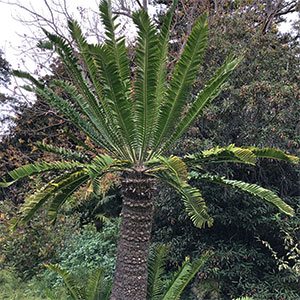
The Bread Tree
Encephalartos altensteinii, commonly called the Bread Tree or Giant Cycad, is a striking, slow-growing cycad native to the Eastern Cape of South Africa. Its architectural crown of lush, pinnate foliage gives gardens a tropical sense of scale and structure, whether planted in the ground or grown in large containers.
Unlike many cycads, this species can form multiple stems or clumps over time, but in landscape design it typically looks best as a stand-alone specimen.
Key Features
- Botanical Name: Encephalartos altensteinii
- Common Names: Bread Tree, Eastern Cape Giant Cycad
- Plant Type: Evergreen cycad
- Mature Height: Up to about 5–7 m (16–23 ft) tall, with a sturdy trunk
- Spread: Foliage crown up to around 2 m (+) wide
- Foliage: Long, pinnate deep-green leaves
- Climate Tolerance: Suits tropical to temperate gardens and tolerates light frost (not severe freezes)
- Evergreen: Yes
Growing Conditions
Being adaptable in climate requirements this is a cycad that will grow well in full sun to part shade.
Growth rate is medium and in a well drained humus rich soil it requires very little care once established. Over time it can reach 5 – 7 metres in height and forms a sturdy trunk.
Growing Conditions
Light & Position
Thrives in full sun to part shade. Strong light encourages robust leaf colour and compact growth, while filtered shade suits warmer climates.
Soil Requirements
Plant in a well-drained, humus-rich soil. Excellent drainage is essential to prevent root issues and support healthy establishment.
Water & Care
Once established, E. altensteinii is low-maintenance. In dry climates, supplementary watering during summer helps keep foliage green and vigorous. Remove old fronds to maintain a clean trunk profile.
Planting & Use
This species is ideal for feature planting, accent palms, or tropical-style landscaping. It also works beautifully as a centrepiece in large courtyard pots or conservatories in cooler climates.
Why Choose This Cycad?
- Ornamental impact: Architectural form adds structure and vertical interest to gardens.
- Adaptable: Performs well in a wide range of climates from subtropics to mild temperate regions.
- Heritage appeal: One of the most iconic cycads, with individual plants known to live for centuries in cultivation.
Quick Care Summary
- Sunlight Full sun to part shade
- Soil Well-drained, fertile soil
- Height ~5–7 m mature height
- Spread ~2 m crown
- Frost Tolerance Light frost tolerant
- Maintenance Low, occasional pruning

We Are Asked?
Is Encephalartos altensteinii safe for pets?
Like most cycads, Encephalartos altensteinii is toxic if ingested. It should be planted away from areas where pets or livestock may chew the foliage or seeds.
How fast does Encephalartos altensteinii grow?
Encephalartos altensteinii is a very slow-growing cycad. Growth is steady rather than fast, with new fronds usually produced once or twice a year under good conditions. While slow to mature, it rewards patience with exceptional longevity and structure.
Can Encephalartos altensteinii tolerate frost?
Yes, it is tolerant of light frost, particularly once established. However, young plants should be protected from heavy or prolonged frosts, especially in cooler climates.
Is Encephalartos altensteinii suitable for pots?
Yes. While it will eventually prefer planting in the ground, E. altensteinii grows well in large containers for many years. Ensure the pot has excellent drainage and is positioned in full sun to part shade.