
Hot Lips Plant or The Sore-mouth bush

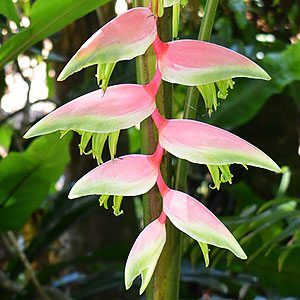
Psychotria poeppigiana, commonly known as the ‘Hot Lips Plant’ or Sore Mouth Bush, is a striking tropical shrub grown for its vivid red bracts that resemble lips.
Native to Central and South America, it thrives in warm, humid rainforest conditions and makes a unique feature plant in sheltered gardens or indoor collections.
Despite its common names, to us it looks like a very bad Botox job, so watch out.

What is Psychotria poeppigiana?
A small to medium-sized tropical shrub, Psychotria poeppigiana is best known for its bright red bracts that surround small yellow flowers. These bracts attract pollinators such as hummingbirds in its native habitat.
- Botanical name: Psychotria poeppigiana
- Common names: Hot Lips Plant, Sore Mouth Bush
- Height: Up to 3 metres in ideal conditions
- Spread: Around 1 metre
- Origin: Central and South America (cloud forests)
How To Grow Psychotria poeppigiana – Basic Care and Conditions
Light Requirements
Prefers dappled shade or filtered light. Avoid direct afternoon sun, especially in warmer climates.
Temperature and Humidity
- Thrives in warm, humid environments
- Ideal temperature: 18–30∘C18–30∘C
- Not frost tolerant
Soil Requirements
Despite growing in poor native soils, it performs best in:
- Well-drained, humus-rich soil
- Consistently moist (not waterlogged)
- Slightly acidic to neutral pH
Soil Preparation
Before planting:
- Incorporate organic matter such as compost or well-rotted manure
- Improve drainage with coarse sand or fine bark if needed
- Mulch to retain moisture and regulate soil temperature
Planting Time
- Tropical climates: Year-round, best in early wet season
- Subtropical regions: Spring to early summer
- Cooler climates: Plant after frost risk has passed
Watering and Feeding
- Keep soil consistently moist, especially during establishment
- Use mulch to reduce evaporation
- Apply a balanced liquid fertiliser during the growing season
Propagation
From Cuttings
- Semi-hardwood cuttings strike reliably in warm, humid conditions
- Use rooting hormone for better success
From Seed
- Possible but slow and inconsistent
- Requires warmth and patience
Care Tips for Home Gardeners
- Protect from wind and cold snaps
- Maintain high humidity (misting or grouping plants helps)
- Avoid letting soil dry out completely
- Ideal for shaded courtyards or indoor tropical displays
Common Problems
- Leaf drop: Often caused by cold or low humidity
- Poor growth: Usually linked to dry soil or lack of nutrients
- Root rot: Result of poor drainage
Climate Zones
Australia
- Best suited to tropical and subtropical regions (QLD, northern NSW)
- Requires protection or indoor growing in cooler areas
North America
- Suitable for USDA Zones 10–12
- Grown indoors or in greenhouses in cooler zones
UK
- Best grown indoors or in a heated greenhouse
- Requires high humidity and stable warmth
Europe
- Mediterranean regions may support outdoor growth in sheltered spots
- Otherwise suited to conservatories or indoor environments
We deal with this plant as a garden specimen. However it is also reportedly used for medicinal purposes.
Psychotria poeppigiana (syn. Palicourea tomentosa) is a tropical plant traditionally used in Central and South American medicine. Leaf and bark extracts are valued for anti-inflammatory, pain-relieving, and antimicrobial properties, and are used to treat headaches, rheumatism, skin conditions, and respiratory issues. Recent research suggests potential benefits for pain sensitivity and cognitive health.
Ref. https://www.japsonline.com/admin/php/uploads/2239_pdf.pdf
Summary Information
- Botanical name – Psychotria poeppigiana syn. Palicourea tomentosa
- Common Names – Hot lips, The Sore-mouth bush, Botox gone wrong.
- Position – Dappled shade.
- Soil – Moist
- Height – To 3 metres plus, often shorter.
- Spread – To 1 metre.
- Flowers – Small yellow flowers-surrounded by brilliant glossy red bracts.
- Foliage – Mid green.
- Frost tolerant – No
- Drought tolerant – No
You May Also Like

We are asked?
What makes the Hot Lips plant red?
The bright red structures are bracts, not petals. They surround the small white flowers and attract pollinators.
Can Psychotria poeppigiana be grown indoors?
Yes, provided it receives warmth, humidity, and bright indirect light.
Is it difficult to grow?
It can be challenging outside tropical climates due to its need for warmth and humidity.