Lobster Claw and Parrot Beak Plants

Heliconia, commonly known as Lobster Claw or Parrot’s Beak plants, are bold tropical plants grown for their spectacular flowers and lush, banana-like foliage. There are around 200 species, native to tropical regions of Central and South America, the Caribbean, the Pacific Islands, and parts of Indonesia.
Once considered specialist plants, Heliconia are now popular landscape features in warm climates and are widely grown as cut flowers. Their long-lasting, brightly coloured bracts make them standout plants in tropical and subtropical gardens.
Many varieties make great garden specimens and are also much sought after by the florist industry as they are most suitable as cut flowers. Heliconias are a tropical plant so cool climate gardeners miss out on such beauties as H. psittacorum, H. rostrata, and the giant H. caribaea.
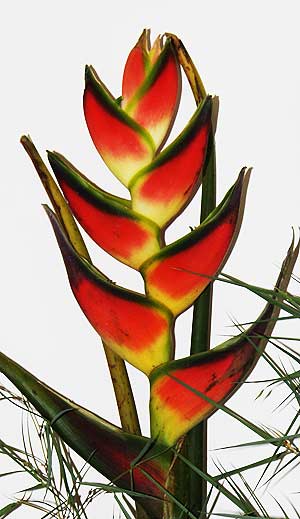
Most species are really a tropical plant and require these conditions to thrive. They have leaves similar to those of the banana or strelitzia. These are a group of plants that are prized for their showy inflorescences which hold the true flowers. (see picture right)
The ginger family actually contains a wide range of plants including Ziniber, Hedichium, Curcuma and Alpinia

Flowers, Foliage, and Common Names
Heliconia are prized for their showy bracts, which protect the small true flowers hidden inside. These bracts are waxy, durable, and often mistaken for the flowers themselves.
Common names include:
- Lobster claw – referring to the curved, claw-like bracts
- Parrot’s beak / Parrot flower – used for slimmer, upright species
- False bird-of-paradise – due to their similarity to Strelitzia
- Wild plantain – referencing their banana-like leaves

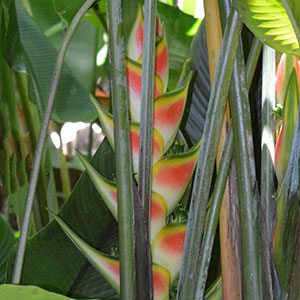
Even when not in flower, Heliconia provide strong architectural foliage and a lush tropical look.
Heliconias or ‘Ginger Plant’ Profile, Care and Growing Notes
Most species may be grown in pots or in the ground, they do have a vigorous root system so consider using a root barrier when planting in the open if this is a concern.
A deep moist humus rich soil is best. In the tropics plant them just before the wet season commences for best results. They may die back in winter but will flower from summer through autumn.
Best suited to Queensland, Sunshine Coast, Gold Coast and further North.
Soil, Water, and Light
- Soil: Deep, rich, humus-filled soil with good drainage
- Water: Keep soil consistently moist, especially during active growth
- Light: Full sun to partial shade; protect from harsh afternoon sun in hot areas
Mulching helps retain moisture and improve soil quality.
Temperature and Climate Suitability
Australia:
Best suited to Queensland, the Sunshine Coast, Gold Coast, and further north. Some varieties grow in warm, sheltered coastal areas as far south as Sydney.
USA Climate Zones:
Heliconia grow best in USDA Zones 10–12.
- Zone 10: Suitable outdoors year-round with frost protection
- Zones 8–9: Best grown in containers and overwintered indoors or in greenhouses
Heliconia are not frost tolerant. Growth slows below 10°C (50°F), and frost will damage foliage.
Maintenance and Pruning
Heliconia are easy to maintain once established. Remove spent flower stems and damaged leaves at the base to keep plants tidy and encourage new shoots.
At the end of winter, plants can be cut back hard, removing old flowering stems while leaving new growth intact. Regular feeding during the warmer months promotes healthy foliage and vibrant colour.
Popular Heliconia Varieties for Gardens
Commonly grown and garden-friendly species include:
- Heliconia rostrata — Hanging Lobster Claw
- Heliconia psittacorum — Parrot’s Beak
- Heliconia caribaea — Giant Heliconia
- Heliconia wagneriana — Classic Lobster Claw
- Heliconia latispatha
- Heliconia champneiana (including ‘Maya Gold’)
- Heliconia stricta — compact and container-friendly
Dwarf vs Large Forms
- Dwarf varieties: 1–2 m tall, ideal for small gardens and containers
- Large varieties: Up to 4–6 m tall, best for spacious tropical landscapes
Cooler Climate Options
Some species and hybrids tolerate slightly cooler conditions when grown in warm, sheltered positions:
- Heliconia latispatha ‘Distans’
- Heliconia bihai × caribaea hybrids
- Heliconia champneiana cultivars
All cooler-climate Heliconia should be grown frost-free, preferably in containers.
Heliconia Care Quick Guide
Common names: Lobster Claw, Parrot’s Beak
Plant type: Tropical perennial
Growth habit: Clumping rhizome
Light:
Full sun to partial shade. In hot climates, protect from harsh afternoon sun.
Water:
Keep soil consistently moist. Do not allow to dry out completely. Avoid waterlogging.
Soil:
Deep, rich, well-draining soil with plenty of organic matter.
Climate:
Frost-free climates preferred.
Australia: Best in QLD and warmer coastal areas
USA: USDA Zones 10–12 (container-grown in cooler zones)
Temperature:
Ideal growth above 10°C (50°F). Frost will damage foliage.
Feeding:
Regular feeding during warm months with a balanced or high-potassium fertiliser.
Maintenance:
Remove old flower stems and damaged leaves at the base. Cut back old growth at the end of winter.
Container Growing:
Suitable for large pots. Water and feed more frequently.
Greenhouse Growing:
Ideal in cooler climates. Provide warmth, bright light, humidity, and good ventilation.
Flowering:
Summer to autumn (may vary by species and climate)
Mature Size:
1–6 m depending on variety

Heliconia for cooler climates
Heliconia Schiedeana is perhaps one of the better species for cooler climates, it originally comes from lower mountain regions of South America. Perhaps not as spectacular as some of its relatives, but the red and yellow flowers which appear in early summer are long lasting.
At the end of winter these wonders can be cut back hard, removing only the old flowering shoots from the previous season, but not the new ones, ready for a new spurt of growth. This one will still need a frost free position and no cold winds.
Some varieties will grow well in cooler climates, limited to the warmer coastal areas as far south as Sydney, these include
- Heliconia latispatha ‘Distans’
- Heliconia bihai x caribaea
- H. bihai x caribaea ‘Hot Rio Nights’
- H. bihai x marginata ‘Rauliniana’
- H.bihai x marginata ‘Rauliniana’
- H. champneiana ‘Maya Blood All best grown in containers in a warm sheltered position.
You may also be interested in
Where To Buy
52 Rodd St Canowindra NSW 2804
An online nursery specialising in drought and frost tolerant perennials and fragrant, edible and herbs.
www.perennialle.com.au