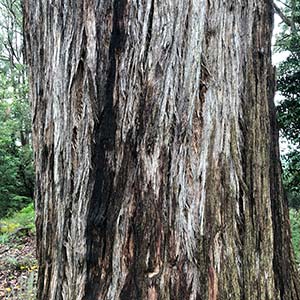
Stringybark trees are a group of Eucalyptus species characterised by their distinctive rough, fibrous bark that can be pulled away in long strings, giving the group its common name. Around 20 species are generally classified as stringybarks, although distinguishing between individual species can be difficult due to their similar appearance.
Stringybarks are widespread across Australia and occur in a range of environments, from coastal forests to inland woodlands. While bark texture is the defining feature, some species outside the strict stringybark group have similar bark characteristics.
One well-known example is Eucalyptus obliqua, commonly called the messmate stringybark. Other closely related groups include the peppermint and mahogany eucalypts, which can sometimes be confused with true stringybarks.
Ecological Importance of Stringybark Trees
Stringybark trees play an important role in native ecosystems. Their rough bark provides shelter for insects, reptiles, birds, and small mammals, while the forest structure they form supports a wide range of understory plants.
Some stringybarks are particularly important for native orchids, including species that depend on specific soil fungi associated with the tree’s root system. A classic example is Dipodium roseum, a leafless orchid that relies entirely on this fungal relationship to survive.
Uses of Stringybark Timber
Stringybark timber has long been valued for its strength and versatility. The wood generally has a fine, straight grain, though it may be interlocked in some species. Colour varies depending on the species and can range from pale tones to deeper reddish or yellow hues.
Common uses include:
- Structural framing
- Flooring
- Joinery and interior timber work
- General construction
Its durability and availability have made stringybark timber a staple in Australian building for generations.
Stringybark Species
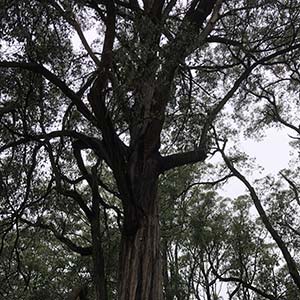
Below is a list of commonly recognised stringybark species, with common names where applicable. There is some debate around the classification of certain species, particularly those sometimes grouped as messmates
- E. muelleriana – Yellow Stringybark (named for the colour of the heartwood)
- Eucalyptus obliqua – Messmate Stringybark
- E. globoidea – White Stringybark
- E. laevopinea – Silver-top Stringybark
- E. macrorhyncha subsp. macrorhyncha – Red Stringybark
- E. macrorhyncha subsp. cannonii – Cannon’s Stringybark
- E. mackintii – Blue-crowned or Orbost Stringybark
- E. williamsiana
- E. baxteri – Brown Stringybark
- E. boliviana – Bolivia Hill Stringybark
- Eucalyptus youmanii – Youman’s Stringybark
- E. capitellata – Brown Stringybark
- E. camfieldii – Heart-leaved Stringybark
- E. bensonii
- E. cameronii – Diehard Stringybark
- E. caliginosa – Broad-leaved Stringybark
- E. eugenioides – Thin-leaved Stringybark
- E. sparsifolia – Narrow-leaved Stringybark
- E. tenella
- E. mckieana – McKie’s Stringybark
- E. ligustrina – Privet-leaved Stringybark
- E. tindaliae – Tindale’s Stringybark (also Queensland White Stringybark)
- E. agglomerata – Blue-leaved Stringybark
- E. cephalocarpa – Silver-leaf or Mealy Stringybark
Stringybark Species for Landscaping and Gardens
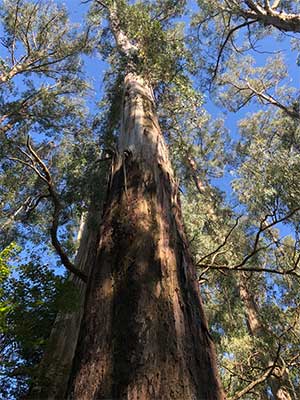
Most stringybark trees are large forest trees, making them unsuitable for smaller gardens. However, a few species are either naturally smaller or more adaptable, and may be considered for larger residential landscapes, rural properties, or revegetation projects.
More Suitable or Smaller-Growing Stringybark Trees
- Eucalyptus camfieldii (Heart-leaved Stringybark)
One of the better options for landscaping. Smaller than most stringybarks, with attractive foliage and a more compact habit. Suitable for larger gardens and open spaces. - Eucalyptus cephalocarpa (Silver-leaf or Mealy Stringybark)
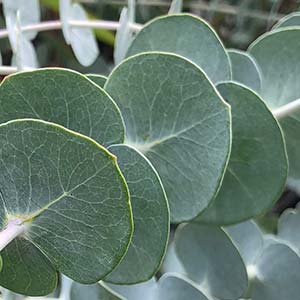
Notable for its silvery foliage and ornamental appeal. Still a medium-sized tree, but slower growing and often used in landscape and restoration plantings. - Eucalyptus globoidea (White Stringybark)
Occasionally used in managed landscapes. While it can become large, it is more predictable in form than many forest species. - Eucalyptus macrorhyncha (Red Stringybark)
Common in dry forests and sometimes used in rural landscaping. Best suited to large blocks rather than suburban gardens.
Considerations Before Planting
- Most stringybarks develop deep root systems and tall canopies
- Leaf and bark drop can be significant
- Best suited to large gardens, acreage, windbreaks, or revegetation
- Not generally appropriate near buildings or small urban spaces
For smaller gardens, other eucalypt groups such as mallees or selected smooth-barked gums are usually a better choice.
Quick Identification Guide: Stringybark vs Ironbark vs Box
Eucalypts are often grouped by bark type, which is one of the easiest ways to identify them in the field. The three groups below are commonly confused but have clear differences once you know what to look for.
Stringybark
- Bark is fibrous, rough, and stringy, often peeling in long strips
- Bark usually extends from the base right up into the branches
- Texture is soft and fibrous rather than hard
- Common in forests and woodlands
- Includes messmates and related species
Ironbark
- Bark is hard, deeply furrowed, and dark, often black or grey
- Texture is solid and rough, almost burnt-looking
- Bark is impregnated with resin, making it very durable
- Typically found in drier forests and open woodland
- Timber is extremely hard and long-lasting
Box
- Bark is rough and flaky on the trunk, becoming smooth on upper branches
- Texture is tighter and less fibrous than stringybark
- Often has a patchy or tessellated appearance
- Common in woodland and agricultural landscapes
This bark-based grouping is widely used in forestry and plant identification, particularly where leaf and flower features overlap.
Stringybark Trees and Other Eucalypt Groups
Only smooth-barked eucalypts are referred to as gums. All others fall into bark-based groups such as stringybarks, boxes, ironbarks, messmates, peppermints, and mahoganies.
This bark classification system is a practical way of grouping eucalypts and is widely used in forestry, ecology, and identification guides.
You May Also Like

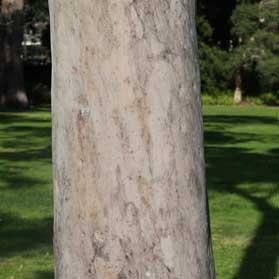
– Lemon scented gum