

Scaevola aemula, commonly known as the Purple Fan Flower or Fairy Fan Flower, is one of Australia’s most useful and adaptable native groundcover plants. Tough, long flowering and easy to grow, it has become a favourite in home gardens, public landscapes and container plantings.
The genus Scaevola is found right across Southern Australia, growing in a wide range of environments from coastal areas to woodland and inland regions. This broad distribution has resulted in many different forms, ranging from low-growing groundcovers to small shrubs approaching a metre in height.
The common name “Fan Flower” comes from the unique arrangement of the petals, which form a distinctive fan shape. Flowers are most commonly shades of purple and mauve, however pink and white forms are also available.
Scaevola aemula is particularly valued for its ability to flower over a long period while tolerating heat, wind and dry conditions once established.
Quick Growing Guide
| Feature | Details |
|---|---|
| Botanical Name | Scaevola aemula |
| Common Name | Purple Fan Flower, Fairy Fan Flower |
| Plant Type | Native perennial groundcover |
| Height | 20cm – 50cm |
| Spread | Up to 1.5m |
| Flower Colour | Purple, mauve, pink or white |
| Position | Full sun to light shade |
| Soil | Well-drained soil |
| Frost Tolerance | Light frost |
| Uses | Groundcover, containers, hanging baskets, rockeries |
How to Grow Scaevola aemula
Generally speaking, Scaevola aemula is a hardy plant that prefers a humus-rich, well-drained soil and a sunny position.
Although many species thrive in dry conditions, regular watering during extended dry periods will help maintain healthy growth and improve flowering.
Because species occur across a wide range of Australian habitats, it is worthwhile selecting varieties suited to your local conditions.
Soil
A well-drained soil is essential. Heavy clay soils should be improved with compost and organic matter before planting.
Watering
Once established, Scaevola is relatively drought tolerant, however occasional deep watering during prolonged dry periods will keep plants looking their best.
Fertiliser
Apply a low-phosphorus native plant fertiliser in early spring to encourage strong growth and prolific flowering.
Mulching
Mulch around plants to help retain moisture, suppress weeds and regulate soil temperature.
Pruning
Tip pruning regularly will help keep plants compact and encourage dense growth.
A light trim after the main flowering flush will often stimulate a fresh display of blooms.
Growing Scaevola in Containers
Scaevola performs exceptionally well in pots, containers and hanging baskets.
Its naturally trailing habit allows stems to spill gracefully over the sides, creating a colourful display for patios, balconies and courtyards.
Use a quality free-draining potting mix and ensure containers receive plenty of sunlight.
Landscaping Uses
The versatility of Scaevola makes it useful in many different garden styles.
Popular uses include:
- Groundcover beneath larger shrubs.
- Native cottage gardens.
- Coastal gardens.
- Rockeries and gravel gardens.
- Hanging baskets.
- Containers and window boxes.
- Retaining wall plantings.
- Pollinator-friendly gardens.
- Water-wise landscapes.
Its spreading habit helps suppress weeds while adding colour for much of the year.
Why Grow Scaevola?
Few Australian native plants provide such a long-lasting display with so little maintenance.
The flowers appear in abundance from spring through summer and often well into autumn, creating a carpet of colour that attracts bees and other beneficial insects into the garden.
Its naturally spreading habit makes it ideal for covering bare areas, softening retaining walls and cascading over the edges of containers and hanging baskets.
Companion Plants
Scaevola combines beautifully with many other Australian native plants including:
- Brachyscome species.
- Chrysocephalum apiculatum.
- Westringia fruticosa.
- Correa species.
- Grevillea groundcovers.
- Myoporum parvifolium.
- Carpobrotus glaucescens.
- Dianella species.
Together these plants create attractive low-maintenance native garden displays with year-round interest.
A Great Plant for Pollinators
The nectar-rich flowers attract a range of beneficial insects including native bees, honeybees and butterflies.
Including Scaevola in the garden can help support local pollinator populations while adding colour over an extended flowering season.
Propagation
Scaevola can be propagated from either seed or cuttings.
From Seed
Sow seed into a free-draining seed-raising mix and keep moist until germination occurs.
From Cuttings
Softwood or semi-hardwood cuttings taken during the warmer months generally strike readily and are the preferred method for maintaining named cultivars.
Common Problems
Scaevola is generally trouble free.
Root Rot
Poor drainage can lead to root problems, particularly in heavy soils.
Leggy Growth
Plants growing in too much shade may become open and sparse.
Reduced Flowering
Usually caused by insufficient sunlight or lack of feeding.
Scaevola Varieties
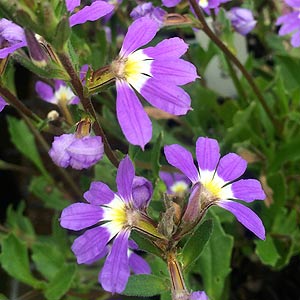
Scaevola aemula
The classic Purple Fan Flower with clusters of mauve flowers often highlighted by creamy-white centres.
Scaevola nitida ‘Sapphire Skies’
An upright-growing form with attractive pale blue flowers.
Scaevola ‘Zig Zag’
A low-growing selection ideal for rock gardens and cascading over walls.
Scaevola ‘Purple Fanfare’
One of the most popular groundcover cultivars with masses of purple flowers.
Scaevola albida
Often known as the Coast Fan Flower, a hardy species well suited to coastal conditions.
Scaevola crassifolia
The Thick-leaved Fan Flower, valued for its drought tolerance and attractive foliage.
How to grow Scaevola aemula – Basic Care
Generally speaking these are a hardy plant that require a humus rich well drained soil. A little extra moisture during long dry periods is recommended and tip pruning regularly will keep the plants in good shape.
Mulch to retain moisture and use a low phosphorous native plant fertilizer in early spring.
With clusters of mauve flowers and a touch of cream towards the centers, scaevola aemula the ‘Purple’ or ‘Fairy’ Fan Flower makes a great addition to the garden.
Scaevola in International Gardens
“Although native to Australia, Scaevola aemula has become one of the most widely grown Australian native ornamental plants overseas. It is particularly popular in the United States where it is used as a heat-tolerant flowering annual in containers, hanging baskets and landscape plantings. Its long flowering season and ability to thrive in hot conditions have made it a favourite among American gardeners.”
would help broaden the article’s appeal and capture searches from international readers looking for information on this increasingly popular Australian native plant.
Among Australian native ornamentals, Scaevola would rank alongside plants such as Kangaroo Paw, Grevillea and Bottlebrush as one of the most commercially successful Australian plants in overseas horticulture.
Where It Is Most Common
You’ll see Scaevola used extensively in:
- Florida
- Texas
- California
- Arizona
- Georgia
- Louisiana
- Southern coastal states
In colder regions it is usually grown as a summer annual, while in USDA Zones 9–11 it can behave as a perennial.