
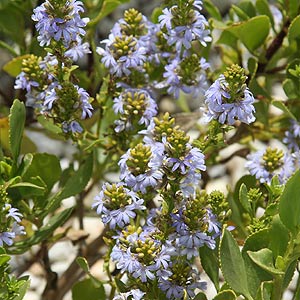
Scaevola crassifolia is a tough and attractive Australian native plant that naturally occurs along coastal regions from South Australia through to Western Australia. With its thick fleshy foliage and distinctive fan-shaped flowers, it is well adapted to harsh seaside conditions and makes an excellent plant for coastal gardens and low-maintenance landscapes.
The thick succulent-like leaves give the plant its common name, the Thick-leaved Fan Flower, and help protect it from drying winds, salt spray and prolonged dry periods.
In its natural habitat, Scaevola crassifolia plays an important role in stabilising coastal dunes and protecting fragile ecosystems from erosion. Its ability to thrive in sandy soils and withstand constant exposure to wind and salt makes it one of the most reliable Australian native plants for coastal conditions.
Quick Facts
| Feature | Details |
|---|---|
| Botanical Name | Scaevola crassifolia |
| Common Name | Thick-leaved Fan Flower |
| Family | Goodeniaceae |
| Origin | Coastal South Australia and Western Australia |
| Height | 0.5–1.5m |
| Spread | Up to 2m |
| Position | Full sun |
| Soil | Well drained sandy or gravelly soils |
| Drought Tolerance | Excellent |
| Salt Tolerance | Excellent |
| Flower Colour | White, mauve, pale blue to purple |
| Flowering Time | Winter to summer |
Growth Habit and Flowers
Growth habit varies depending on exposure to coastal conditions. In highly exposed sites plants are often compact and low growing, while specimens growing in more sheltered positions may reach 1.5 metres or more in height.
Flower colour can vary between naturally occurring forms, ranging from white through to pale blue, mauve and purple. Flowering may occur from winter through to summer, although the heaviest display is generally seen during spring and early summer.
The fan-shaped flowers are attractive to a range of beneficial insects and pollinators.
Landscaping Uses
Scaevola crassifolia is one of the most useful Australian native plants for coastal landscapes and difficult growing conditions.
It is particularly suited to:
- Coastal gardens
- Dune stabilisation projects
- Erosion control plantings
- Waterwise gardens
- Native garden designs
- Low-maintenance landscapes
- Wildlife-friendly gardens
- Mass planting on slopes and embankments
Its spreading habit and excellent drought tolerance make it an effective groundcover or small shrub for large areas where little ongoing maintenance is desired.
Coastal and Drought Tolerance
Few Australian native plants cope with coastal conditions as well as Scaevola crassifolia.
The thick leaves help conserve moisture while protecting the plant from drying winds and salt-laden air. Once established, it is highly drought tolerant and requires very little supplementary watering.
These characteristics have made it a valuable species for coastal revegetation and dune restoration projects throughout southern Australia.
How to Grow Scaevola crassifolia
A sunny position and excellent drainage are the keys to success.
Although adaptable to a range of soil types, the plant performs best in sandy, gravelly or free-draining soils. Heavy clay soils should be improved before planting.
Growing Conditions
- Height: Around 1 metre in exposed coastal situations, up to 1.5 metres or more in sheltered positions.
- Spread: Up to 2 metres.
- Soil: Very well drained.
- Position: Full sun.
- Flowering Period: Winter through to summer, with peak flowering generally in spring and early summer.
Watering
Water regularly during the first growing season while the root system establishes. Once mature, plants require little supplementary watering except during extended periods of drought.
Fertiliser
Generally not required. If growth appears slow, apply a light application of a low-phosphorus native plant fertiliser in spring.
Pruning
Tip prune young plants to encourage dense, bushy growth. Mature plants respond well to light pruning after flowering and can tolerate harder pruning if required to rejuvenate older specimens.
Propagation
Scaevola crassifolia is relatively easy to propagate.
Large seeds are produced following flowering and can often germinate naturally in suitable conditions. Seed can be collected when mature and sown into a free-draining native propagation mix.
Plants may also be propagated from semi-hardwood cuttings taken during the warmer months. Using cuttings is often the best method for maintaining desirable flower colour and growth habit.
Comparison with Other Scaevola Species
| Species | Height | Growth Habit | Flower Colour | Best Use |
| Scaevola crassifolia | 0.5–1.5m | Spreading shrub | White, mauve, blue, purple | Coastal gardens and dune stabilisation |
| Scaevola aemula | 20–40cm | Groundcover | Blue, mauve, white, pink | Hanging baskets and borders |
| Scaevola humilis | 20–50cm | Low spreading groundcover | Purple-blue | Groundcover and native gardens |
| Scaevola albida | 30–60cm | Compact spreading shrub | White | Coastal and cottage-style plantings |
| Scaevola ramosissima | 30–100cm | Scrambling or climbing habit | Mauve to purple | Containers, trellises and mixed plantings |
Other Species
- Scaevola aemula – Fairy Fan Flower
- Scaevola humilis – Purple Fan Flower
- Scaevola albida – White Fan Flower
- Scaevola ramosissima – Climbing Fan Flower
Final Thoughts
For gardeners looking for a resilient Australian native that thrives where many other plants struggle, Scaevola crassifolia is hard to overlook. Its attractive flowers, thick foliage, exceptional drought tolerance and ability to withstand harsh coastal conditions make it an excellent choice for both home gardens and large-scale revegetation projects.
More Scaevola species

