
Kunzea pomifera, commonly known as Muntries, is a low-growing native Australian plant prized for its edible berries and excellent ground-covering habit. Naturally occurring in parts of South Australia and western Victoria, this attractive species has been used as a bush food for hundreds of years.
The small berries range from mauve to purple and have a sweet, spicy flavour often described as a blend of apple, juniper and dried fruit. Traditionally the fruit was eaten fresh, or dried and stored for later use.
Today Muntries are becoming increasingly popular as a commercial bush food crop. The berries are rich in antioxidants and are widely used in jams, desserts, sauces and a range of native food products.
Reaching around 30cm in height and spreading widely across the ground, Kunzea pomifera is also an excellent landscaping plant for native gardens, slopes and embankments.
What are Muntries?
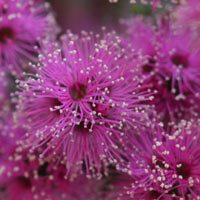
Muntries are the edible berries produced by Kunzea pomifera. The plant forms a dense mat of foliage and produces masses of fragrant white flowers from late spring into summer.
The flowers attract a range of pollinating insects and beneficial wildlife. Following flowering, the berries develop and mature through summer.
Fruit colour and flavour can vary between plants, with darker-coloured berries often regarded as sweeter and more intensely flavoured.
Uses of Muntries
Muntries have become one of Australia’s most sought-after native fruits.
The berries can be used:
- Eaten fresh from the plant.
- Dried for later use.
- In jams and preserves.
- In desserts and baked goods.
- In sauces and chutneys.
- Added to ice creams and yoghurts.
- In native food products and beverages.
Their sweet, spicy flavour makes them a versatile ingredient in both sweet and savoury dishes.
Growing Kunzea pomifera
Although valued for its fruit, Kunzea pomifera is also a highly ornamental and practical landscape plant.
Position
A sunny position is preferred for the best flowering and fruit production.
While plants will tolerate light shade, fruit yields are generally higher in full sun.
Soil
Excellent drainage is essential. Heavy wet soils can lead to root problems and poor plant performance.
Sandy soils and well-drained loams are ideal.
Water Requirements
Newly planted specimens benefit from regular watering during establishment.
Once established, plants are relatively drought tolerant, although occasional deep watering during prolonged dry periods will improve growth and fruit production.
Excessive watering should be avoided as it may reduce fruit quality and sweetness.
Mulching
Apply a layer of mulch around the plant to suppress weeds and help maintain even soil moisture. Keep mulch clear of the stem to prevent moisture-related problems.
Coastal Conditions
Kunzea pomifera performs well in coastal gardens where it tolerates wind, salt-laden air and sandy soils.
Fruit Production and Harvesting
The fragrant flowers appear from late spring into summer and are followed by the distinctive berries.
Fruit generally matures through summer and can be harvested once fully coloured and slightly soft.
Commercial growers often use low trellis systems to lift stems from the ground. This improves air circulation, reduces fruit contact with the soil and can increase yields.
For home gardeners, allowing plants room to spread naturally is usually sufficient.
Landscape Uses
The dense spreading habit makes Kunzea pomifera a versatile landscaping plant.
It is particularly useful for:
- Ground cover plantings.
- Native gardens.
- Coastal gardens.
- Embankments and slopes.
- Erosion control.
- Wildlife-friendly landscapes.
- Bush food gardens.
Its low maintenance nature and attractive foliage provide year-round garden appeal.
Propagation
Propagation is most commonly carried out from semi-hardwood cuttings.
Cuttings
Semi-hardwood cuttings taken during the warmer months generally provide the most reliable results.
Layering
The plant naturally layers where branches touch the soil and form roots. These rooted sections can be separated and replanted.
Grafting
Some commercial selections are grafted onto related Kunzea species such as Kunzea ericoides or Kunzea ambigua. These rootstocks can improve vigour and create a slightly more upright growth habit.
Seed
Propagation from seed is possible, although it is less common due to variation in the resulting plants.
Care and Maintenance
Kunzea pomifera dislikes root disturbance, so it is best planted into its permanent position as early as possible.
Once established it requires little maintenance apart from occasional watering during prolonged dry periods and the removal of any damaged growth.
Quick Growing Guide
| Aspect | Details |
|---|---|
| Botanical Name | Kunzea pomifera |
| Common Name | Muntries |
| Plant Type | Native edible ground cover |
| Position | Full sun to part shade |
| Soil | Well drained |
| Water | Moderate |
| Height | Around 30cm |
| Spread | 2–4 metres or more |
| Flowers | White, fragrant |
| Flowering Time | Late spring to summer |
| Fruit | Mauve to purple edible berries |
| Frost Tolerance | Moderate |
| Coastal Tolerance | Excellent |
| Propagation | Cuttings, layering, grafting, seed |
Kunzea pomifera is one of Australia’s most rewarding bush food plants. Combining attractive growth, fragrant flowers and delicious berries, it serves equally well as a productive edible plant and a durable native ground cover.
Plant Profile and Growing Hints
Kunzea pomifera is also known as Muntries, this is a prostrate form although some plants are more upright that others. Used as a bush tucker food as well as for making jams, with the mauve to purple berries having a sweet spicy taste. Used as a bush food for 100s of years. Traditionally the fruit was eaten fresh, or dried and stored for use later.
Where To Buy

Specialist Native Food Nursery with thirty species available in both forestry tubes and 14 cm pots, from ground cover to canopy. Twenty years experience supplying landscape scale projects to backyard gardens.
www.peppermintridgefarm.au .
You may also be interested in