
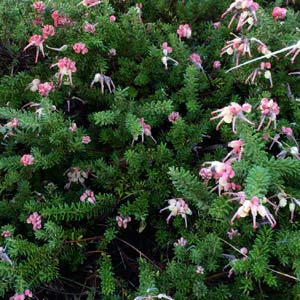
Grevillea lanigera, commonly known as Woolly Grevillea, is a low-growing Australian native shrub valued for its soft foliage, long flowering season, and wildlife appeal. It’s native to Victoria and New South Wales, where it thrives in coastal and inland regions.
Description
Depending on the form, Woolly Grevillea can grow as a neat, compact shrub or as a spreading groundcover that creates a dense, mat-like carpet. Its small leaves are deep green and softly textured, giving the plant a distinctive “woolly” appearance.
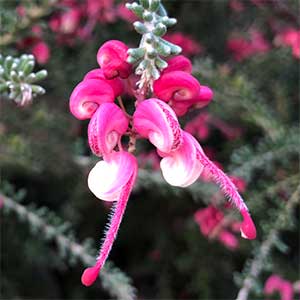
Flower colours vary from soft cream and pink to deeper reds and coral tones, with blooms appearing mainly from late winter through spring and occasional flowering at other times of year. These nectar-rich clusters attract honeyeaters and small native birds to the garden.
A yellow-flowered variety is also available — see Grevillea lanigera ‘Lutea’ for details.
Landscaping Uses
Grevillea lanigera’s low, spreading habit makes it ideal for:
- Groundcover plantings on banks or slopes to help with soil stabilization.
- Mass planting for a soft, natural effect in native garden designs.
- Borders and rock gardens where it provides colour and texture year-round.
- Wildlife-friendly gardens, as it offers nectar, shelter, and dense cover for birds.
Once established, Woolly Grevillea forms a resilient, low-maintenance carpet that suppresses weeds and tolerates dry conditions.
Care and Growing Conditions
Best grown in full sun to part shade, good drainage is essential. Once established Grevillea lanigera and its cultivars require little to no extra water and they do not require fertiliser.
- Position: Full sun to light shade.
- Soil: Free-draining soil is essential; avoid heavy or waterlogged sites.
- Water: Minimal once established. Water deeply during long dry spells only.
- Climate: Suited to temperate and dry regions; not recommended for humid or tropical zones.
- Fertiliser: Generally not required. If needed, use a low-phosphorus native fertiliser.
Pruning and Maintenance
For best results, tip prune young plants to promote compact, dense growth. Light pruning after flowering helps maintain shape and encourages more blooms. Avoid hard pruning into old wood, as regrowth may be slow.
Tip: Regular trimming after the main spring flush keeps groundcover forms tidy and encourages continued flowering.
Grevillea lanigera Varieties
Several cultivars and regional forms of Woolly Grevillea are popular in home gardens:
- Coastal Gem – Features vibrant red to deep pink flowers from autumn to midsummer with grey-green foliage and a compact habit.
- Grevillea lanigera ‘Mt Tamboritha’ – A highly popular low-growing form reaching around 20 cm high and spreading up to 1.5 m. Excellent for rockeries and borders.
- Grevillea lanigera ‘Kangarutha Form’ – Known for its strong growth and showy flowers, ideal for coastal gardens.
- Grevillea lanigera ‘Lutea’ – A yellow-flowering selection offering a striking alternative to the usual red and pink tones.
Key Differences
These popular forms differ in ways that suit specific garden roles, from tight groundcovers to slightly taller shrubs. All thrive in well-drained soil and full sun to part shade.
| Cultivar/Form | Height/Spread | Flower Color | Foliage Notes | Best Uses |
|---|---|---|---|---|
| Mt Tamboritha | 0.2-0.5 m / 1-2 m | Pink-red with cream | Fine, grey-green, woolly | Rockeries, embankments |
| Kangarutha | 0.3-1 m / 0.5-1.5 m | Red-pink to cream | Narrow-oblong, deep green, hairy | Coastal slopes, borders |
| Lutea | 0.3-0.5 m / 1-1.5 m | Bright yellow | Fine, woolly green | Feature groundcover, accents |
| Coastal Gem | 0.3-0.5 m / 1-1.5 m | Deep red-pink | Grey-green, compact | Mass planting, seaside gardens |
Growth Habits
- Mt Tamboritha forms the tightest mat, suckering reliably for weed suppression.
- Kangarutha grows more upright and vigorous, ideal where slight height variation adds structure.
- Lutea spreads steadily with a brighter floral contrast, but watch for hybridization with nearby Grevilleas.
All respond to tip pruning after flowering for density, with main blooms in winter-spring
Summary Information
- Botanical Name – Grevillea lanigera.
- Common Name – Woolly Grevillea.
- Position – Full sun to a little shade.
- Soil – Well drained.
- Height – From .4m to 1.4 metres depending on variety.
- Spread – From .4 metres to 1.4 metres.
- Flowers – Varying from white through to cream and red.
- Flowering Time – Late winter into spring is the main flowering period, spot flowering may occur through the year.
- Foliage – Deep green – evergreen.
- Frost tolerance – Medium
- Drought tolerance – Good once established.