
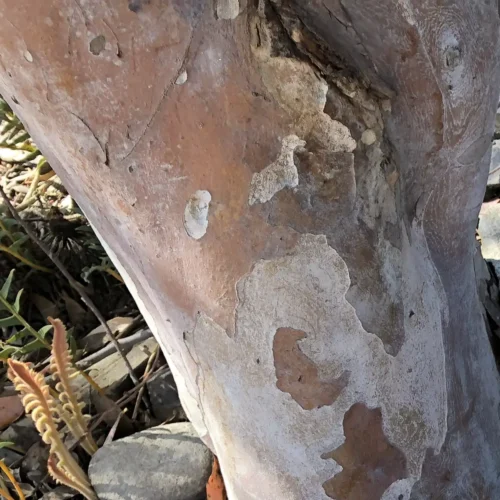
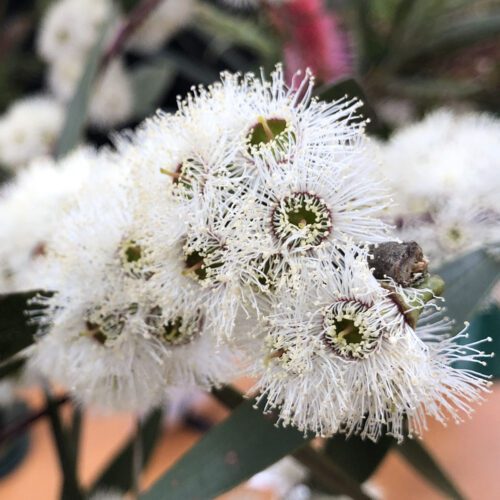
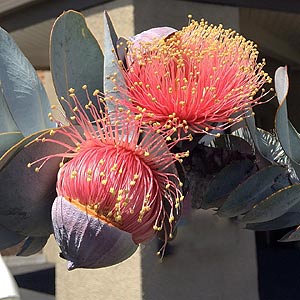
Eucalyptus conferruminata, commonly known as Bald Island Marlock, is a distinctive Western Australian native tree admired for its striking ornamental form, smooth silver-grey bark, and unique rounded canopy. Its broad, glaucous foliage provides year-round visual appeal, while masses of greenish-yellow to creamy-yellow flowers appear from late summer through autumn, creating an impressive floral display that attracts birds, bees, and other beneficial pollinators. The tree’s naturally compact, sculptural habit makes it an outstanding feature in both native and contemporary landscapes.
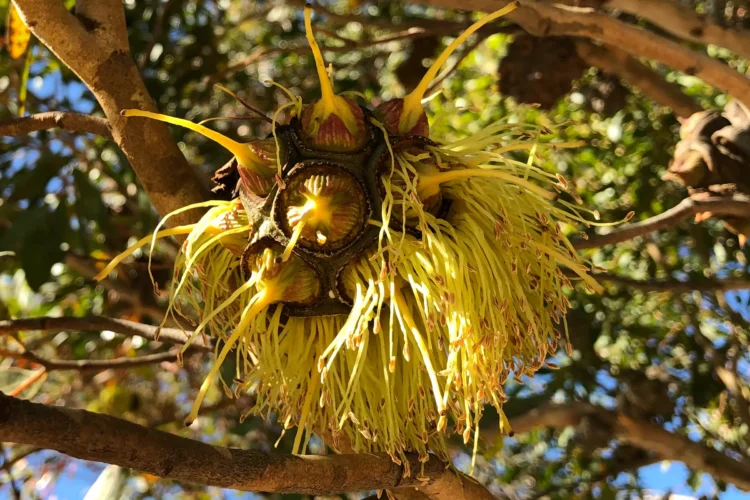
Endemic to the south coast of Western Australia, particularly around Bald Island and nearby coastal regions, Bald Island Marlock is adapted to sandy, well-drained soils and performs best in a full sun position. It is highly tolerant of coastal conditions, including salt-laden winds, and once established is drought tolerant.
Typically reaching 4–8 metres in height with a similar spread, it is well suited as a feature tree, screening plant, windbreak, or specimen for coastal gardens, parks, and waterwise landscapes where its distinctive foliage and flowers can be appreciated.
Bald Island Marlock develops a dense, rounded crown and generally requires minimal maintenance beyond occasional formative pruning to maintain shape or remove damaged branches. It is a hardy, long-lived species with good resistance to dry conditions once established, although it performs best with adequate drainage and should not be planted in poorly drained soils.
As with many eucalypts, seasonal leaf, flower, and bark drop can occur, and its mature size should be considered when selecting a planting location. Providing sufficient space will allow the tree to develop its attractive natural form while minimising maintenance requirements.
Climate & Soil Requirements – How to Grow Eucalyptus conferruminata
- Eucalyptus conferruminata thrives in temperate and Mediterranean climates with warm, dry summers.
- Prefers a full sun position for the best growth, flowering, and canopy development.
- Grows best in well-drained sandy or loamy soils but will tolerate a range of soil types with good drainage.
- Adapted to coastal conditions and has excellent tolerance to salt-laden winds.
- Drought tolerant once established, although regular watering during the establishment period promotes healthy growth.
- Avoid planting in poorly drained or waterlogged soils, as these can lead to root decline and disease.
- Benefits from occasional deep watering during extended dry periods, particularly when young.
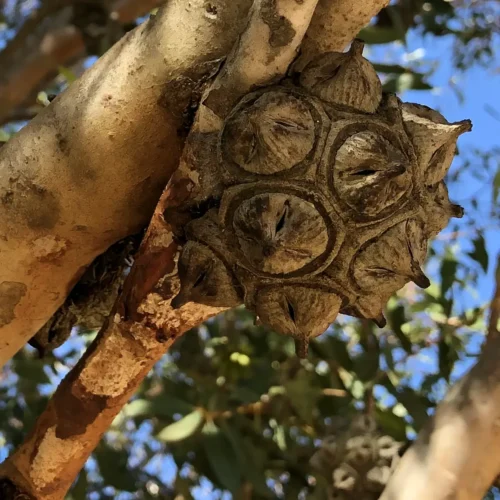
Landscaping Uses
- Ideal as a feature tree, showcasing its smooth silver-grey bark and naturally rounded canopy.
- Provides seasonal interest with masses of greenish-yellow to creamy-yellow flowers from late summer to autumn.
- Excellent for native, coastal, and waterwise gardens where its ornamental bark adds year-round appeal.
- Can be used as wind break tree.
- Suitable for parks, larger residential gardens, and streetscapes as an attractive specimen tree.
- Flowers provide a valuable nectar source for birds, bees, and other pollinators.
- Combines well with other Western Australian native species to create striking, low-maintenance landscape plantings.
Practical Considerations
- Performs best in well-drained soils and is susceptible to root diseases if exposed to prolonged waterlogging.
- Generally Eucalyptus conferruminata low maintenance, but stressed trees may be affected by borers or fungal diseases.
- Light pruning is well tolerated to maintain shape or remove dead branches; avoid heavy pruning into older wood.
- Adapted to fire-free coastal environments and regenerates from seed rather than resprouting after severe fire.
- Allow adequate space for Eucalyptus conferruminata to reach its mature size and rounded canopy when selecting a planting location.
Quick Facts
- Botanical name: Eucalyptus conferruminata
- Common name: Bald Island Marlock, Bushy Yate.
- Plant type: Small to medium evergreen tree
- Height: 4–8 m
- Spread: 4–8 m
- Flower colour: Greenish-yellow to creamy-yellow
- Flowering season: Late summer to autumn
- Foliage: Broad, glaucous blue-grey leaves
- Bark: Smooth silver-grey to pale cream
- Position: Full sun
- Soil: Well-drained sandy or loamy soils
- Water requirements: Low once established
- Frost tolerance: Light frost


Author JohnnyA