
Darwinia is a genus of about 70 Australian native shrub species, known for their vibrant bell‑like flowers and excellent use in native gardens, containers and low hedges. Native principally to Western Australia, with ranges into South Australia, Victoria and NSW, these plants are valued for their showy blooms, aromatic foliage and drought‑tolerant forms, making them ideal for landscaping and biodiversity‑focused gardens.
Why Grow Darwinia?
Darwinias make excellent garden plants and many have outstanding flowers, especially in spring and early summer. They suit a range of garden styles, from cottage‑style and native gardens to low‑water and coastal‑friendly planting schemes. Although they can be a little tricky to grow from seed, many species strike well from cuttings and the grafted forms are generally the best choice for gardens, as they have more tolerant rootstocks.
A number of Darwinia species have bell‑shaped flowers, which is why they’re often called Mountain Bells. Forms range from low, prostrate plants suitable as ground cover to taller, bushy shrubs that can act as feature plants or informal screens
Growth Habit and Form
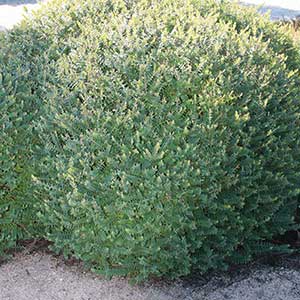
Darwinias vary in habit from low‑growing and spreading to more erect shrubs. Some, such as Darwinia citriodora ‘Seaspray’ and Darwinia virescens (Murchison Darwinia), are low‑growing and ideal for low borders or containers. Others, like Darwinia meeboldii (Cranbrook Bell), are taller, bushy shrubs better suited as feature plants or informal screens.
This range of forms makes Darwinias useful for different roles in the garden, from small‑scale feature plants to larger screening and hedging.
Landscaping Uses For Darwinia
Use Darwinia species in:
- Native gardens as focal plants or flowering backdrops.
- Containers and patio gardens, especially compact and weeping forms.
- Low flowering hedges, such as Darwinia citriodora which can be trimmed to form a low, fragrant hedge.
- Coastal and low‑water gardens, where their drought tolerance and salt‑spray tolerance are an advantage.
They are also attractive to birds and bees, making them useful in biodiversity‑friendly and wildlife‑supportive plantings.
Key Growing Conditions
Position and Light
- Choose a sunny position; most Darwinia species flower best in full sun, though some tolerate light shade.
- In hotter climates, a spot with morning sun and afternoon shade can help reduce stress.
Soil and Drainage
Darwinias demand very well‑drained soil and have little tolerance for waterlogging. They prefer sandy or sandy‑loam soils, and struggle in heavy clay unless the site is mounded or the planting bed is raised.
On heavier soils, consider planting on a low mound so the root zone drains freely and the crown sits slightly above the surrounding level.
Watering
- Water regularly during establishment, especially through the first summer, to help the plant become established.
- Once established, most Darwinias are drought‑tolerant and should be watered only when necessary; over‑watering can encourage root rot and shorten plant life.
Fertiliser and Mulch
- Use a low‑phosphorus native‑plant fertiliser, applied once a year in spring, to support healthy growth without over‑stimulating the plant.
- A light layer of mulch helps keep the root zone cooler in warm climates, but keep the mulch clear of the graft union and avoid heavy mulch caps that hold moisture against the stem.
Planting Grafted Darwinia Species
Many of the Darwinias available for landscaping are grafted close to the ground, using a hardier rootstock to improve their adaptability. Take care not to bury the graft itself, as this can lead to rot and early decline.
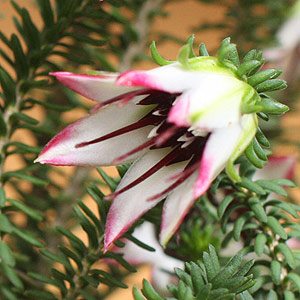
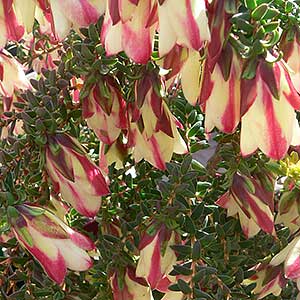
Darwinia macrostegia (Mondurup Bell) is one of the most commonly available grafted varieties, and the ‘Stripey’ form by Phillip Vaughan is a standout for its striking red‑and‑white striped flowers.
Usually grated varieties are grafted very close to ground level, so care needs to taken not to bury the graft itself.
Planting Darwinia Successfully
- Choose full sun or part shade (some species tolerate light shade).
- Ensure very good drainage (low tolerance of soggy soil).
- Plant grafted plants with the graft just above soil level.
- Water regularly through establishment but avoid overwatering.Australia)
- Add mulch to encourage cool root run if in warm climates.
- Light pruning after flowering encourages shape and repeats blooms.
Popular Darwinia species and Cultivars
- D.macrostegia – Brilliant flowers red and white striped and the plant is often called the ‘Mondurup Bell’. Weeping shrub to around 1m.
- D.meeboldii – Also known as the ‘Cranbrook Bell’, white and red flowers, bell shaped on a bushy shrup to 3m in height.
- D.purpurea – Deep red to purple flowers, usually more red. Low growing spreading shrub to 1m.
- D. oxylepis – Attractive red flowers, on a bushy shrub to 1.5m in height.
- D. citriodora – Known as the Lemon Scented Darwinia, for the fragrant foliage. Small rosey red flowers. Both upright and prostrate forms are available.
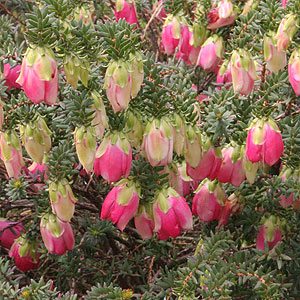
- D. carnea – From Western Australia with very attractive green bell shaped flowers flushed with red, some cultivars have bright red flowers