

The ‘Fishbone Water Fern’
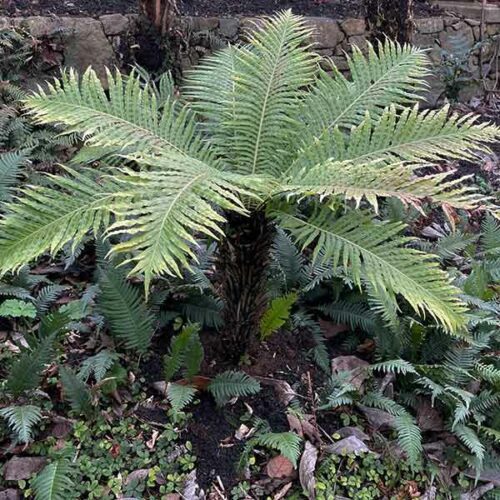
The Blechnum nudum, commonly known as the Fishbone Water Fern, is an attractive Australian native fern prized for its elegant foliage and suitability to damp, shaded areas. Naturally found along creeks, gullies, and moist forest floors in Victoria, New South Wales, Tasmania, and Queensland, it brings a lush, rainforest feel to the garden or patio.
Over time, this unique fern can form a short trunk, creating a striking vertical feature—especially when planted in drifts or as a standalone specimen in a shaded landscape.
Why Choose Blechnum nudum?
If you’re looking for a low-maintenance, moisture-loving fern that adds texture and visual interest to shaded garden spaces, Blechnum nudum is a standout. Here’s why it’s a smart addition to any cool-climate garden or indoor fern collection:
- Native to Australia, making it well-adapted to local conditions.
- Forms a clumping habit, ideal for mass planting or natural groundcover.
- With age, it creates a trunk-like feature for a unique, tropical look.
- Thrives in pots and containers—great for patios or balconies.
- Easy to care for when grown in the right conditions.
Care and growing Notes
- Light: Prefers filtered light or full shade—direct sun will scorch the fronds.
- Water: Requires constantly moist soil, especially through warmer months. Avoid allowing the root zone to dry out.
- Soil: Grows best in rich, well-draining soil with high organic matter.
- Feeding: Apply a slow-release fertiliser once a year in spring. Avoid over-fertilising.
- Positioning: Excellent for cool, damp spots between buildings, shaded borders, or near water features.
Top Tip: In hot or dry climates, increase humidity around the plant by mulching well and grouping with other moisture-loving plants.

Best Uses in the Garden
- Underplanting beneath trees where filtered light and moisture are consistent.
- Groundcover in rainforest or fern gardens for lush texture and year-round greenery.
- Feature plant in large containers on shaded patios or balconies.
- Indoor display in cool, well-ventilated areas away from direct sunlight.
- Shaded courtyard gardens or between buildings where damp soil is retained.
5 Reasons to Grow Blechnum nudum
- Unique Architectural Form
Develops a short trunk over time, creating a miniature tree-like effect without being a true tree fern. - Perfect for Shaded, Damp Areas
Ideal for underplanting trees, shaded courtyards, or fern gardens that mimic its natural rainforest habitat. - Low Maintenance
Once established in the right location, this fern requires minimal intervention beyond consistent moisture. - Versatile Growing Options
Can be grown in the ground or in pots, indoors or outdoors, as long as moisture and filtered light are available. - Native Resilience
Being an Australian native, it’s adapted to the local environment and supports native biodiversity.
Quick Facts
- Botanical Name : Blechnum nudum
- Common Names : Fishbone Water Fern, Naked Water Fern
- Position : Shaded to fully shaded, moist locations
- Height & Spread : Up to 1m tall, 1m wide (with age)
- Flowering : Non-flowering (fern – reproduces via spores)
- Frost Tolerance : Moderate – can tolerate light frosts once mature
- Drought Tolerance : Low – requires consistent moisture

Common Questions ?
Why is it called “naked water fern”?
The name “naked” refers to the smooth, hairless stipe (the stalk that supports the frond), which lacks the scales or hairs commonly found in other ferns. “Water fern” reflects its preference for damp, riparian habitats.
What does Blechnum nudum look like?
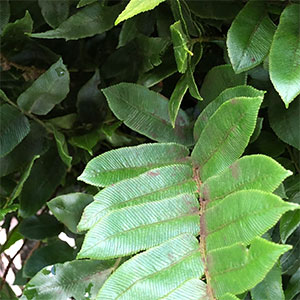
It typically has a rosette of once-pinnate fronds (like a fishbone), with glossy green sterile fronds and narrower, upright fertile fronds that carry spores on the underside. The fern can form small trunks and reach up to 1–1.5 meters in height.
Can I grow Blechnum nudum in my garden?
Yes, it can be cultivated in cool, moist, shaded gardens. It prefers well-drained, humus-rich soil and regular watering to mimic its natural rainforest habitat. It’s suitable for fern gardens, understory planting, or pots, especially in temperate to subtropical climates.
You may also be interested in