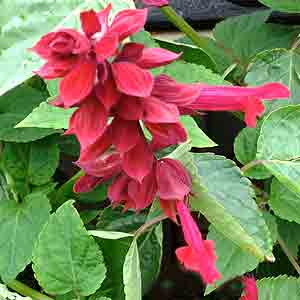
Little Leaf Sage

As the name suggests, Salvia microphylla is a smaller-growing salvia, but still with plenty of presence in the garden.
Often referred to as Little Leaf Sage, it forms a naturally spreading, slightly rounded shrub. While it has a low, bushy habit, it can still reach around 60 cm to 1 metre in height depending on conditions.
It’s sometimes confused with “Baby Sage,” though that name is more correctly used for specific hybrids.
Quick Reference
Botanical Name – Salvia microphylla
Common Name – Little Leaf Sage
Height – 60 cm to 1 m
Spread – Around 60 cm to 1 m
Position – Full sun to light shade
Soil – Well-drained
Water Requirements – Low once established
Flowering – Long flowering period, spring through autumn
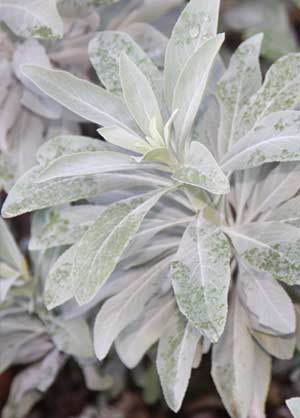
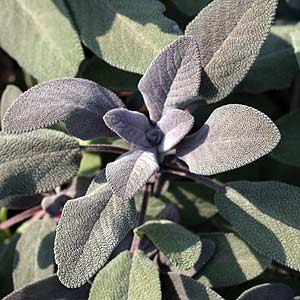
Foliage – Small, aromatic green leaves
Salvia microphylla Flowers and Varieties
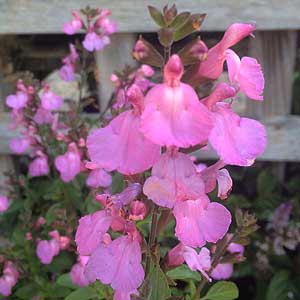
Salvia microphylla has been widely used in hybridising, which means there’s now a broad range of cultivars available in different colours and forms.
Some of the better-known varieties include:
- ‘Hot Lips’ – a popular red and white bicolour
- ‘Pink Blush’ – soft pink tones
- ‘Cyclamen’ – deeper pink shades
- ‘Huntington Red’ – rich red flowers
More recent releases include:
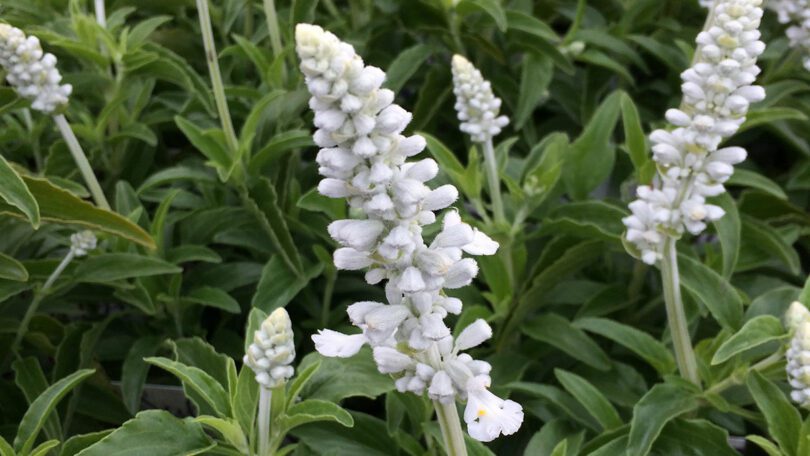
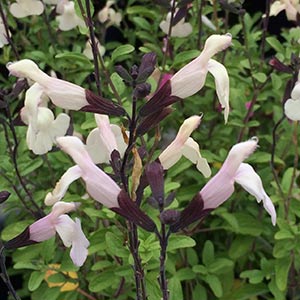
- ‘Marshmallow’ – clean white flowers
- ‘Pink Marshmallow’ – soft pink and white
- ‘Poppy Shan’ – bright pink
- ‘Beetroot’ – deeper red tones
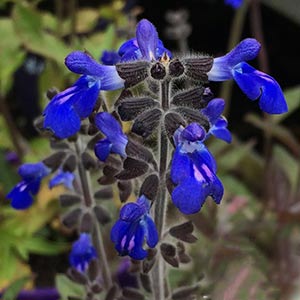
‘Mesa Purple’ is another standout—a bushy form with strong purple flowers that works particularly well in containers.
New varieties continue to appear, although not all are readily available.
Growth Habit
This is a semi-woody perennial shrub that becomes denser over time.
- Height – 60 cm to 1 m
- Spread – Similar to height, forming a rounded clump
- Growth – Moderately fast, especially in warm conditions
It can become a little open or leggy if left unpruned, which is where a bit of maintenance comes in.
Growing Conditions and Care
An easy-care plant, Salvia microphylla suits a wide range of garden styles.
Position
Full sun to light shade. Too much shade will reduce flowering.
Soil
Well-drained soil is essential.
Watering
Drought tolerant once established, though flowering improves with occasional deep watering through summer.
Mulching
Mulch around the plant to help retain moisture and regulate soil temperature.
Feeding
A light feed in spring will support stronger growth and better flowering.
Spacing Tip
When planting in borders, allow enough space for it to spread naturally—this helps maintain airflow and keeps plants looking their best.
Pruning
he main challenge with Salvia microphylla is knowing when to prune—it flowers for such a long period that it’s easy to put off cutting it back.
Over time, plants can become a little leggy, so pruning is important to keep them compact and tidy.
- Best pruned in winter to early spring
- Can be cut back fairly firmly, but always leave some green growth
- Light trims through the season can help maintain shape
Propagation
One of the easier plants to propagate.
- Take cuttings around 15 cm long
- Ensure each cutting has at least 5–6 nodes
- Use a standard potting mix
- Keep warm and slightly moist
Roots should develop in around 4 weeks, with plants ready to pot on in 6–8 weeks.
Garden Uses
A versatile plant that adds long-lasting colour to the garden.
Well suited to:
- Mixed borders
- Cottage gardens
- Containers and pots
- Low informal hedging
It’s particularly useful for filling gaps and adding colour over an extended flowering period.
Wildlife and Garden Value
Like many salvias, this is a great plant for attracting pollinators.
When in full flower, it will bring in bees and other beneficial insects, making it a useful addition to a wildlife-friendly garden.
Background and Origin
Salvia microphylla is native to parts of Mexico and the south-western United States, where it grows in open, sunny conditions with well-drained soils.
This background explains its tolerance to dry conditions and its preference for warmth and good drainage.
Where to Buy

www.planterspatch.com.au
More Salvia Varieties