
The Mexican Sage That Blooms in Winter

One of the most versatile and rewarding salvias for the garden is Salvia leucantha, commonly known as Mexican Sage. With its velvety flower spikes and soft foliage, this species brings reliable colour to the garden—often right through the winter months, even in cooler climates like Melbourne.
In recent years, several beautiful cultivars have become available, offering variations in flower colour and plant size.
Whether you’re looking to fill a sunny spot with winter colour or attract pollinators year-round, S. leucantha deserves a place in your garden.
Top Salvia leucantha Varieties
A number of eye-catching cultivars are now widely available, each offering unique colour tones and garden performance:
- Salvia leucantha ‘Santa Barbara’
A compact form with rich purple to deep pink flower spikes. Ideal for smaller gardens or front-of-border plantings. - Salvia leucantha ‘White Velour’
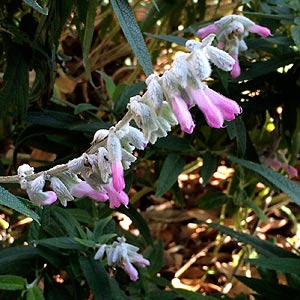
Featuring striking white flowers from late summer into autumn, this variety adds a cool-toned elegance to mixed borders. - Salvia leucantha ‘Velour Pink’
Produces a beautiful mix of soft pink and white blooms. Great for pairing with silver or blue-foliaged plants. - Salvia leucantha ‘Purple Velvet’
A classic cultivar known for its lush purple flower spikes and soft, grey-green foliage. - Salvia leucantha ‘Midnight’
Occasionally mentioned in literature, but as of now, it does not appear to be available in Australia.
Growing Conditions and Care
Like most salvias, S. leucantha is low-maintenance when grown in a warm, sunny position with well-drained soil. It thrives in full sun and is relatively drought-tolerant once established.
While it can tolerate light frosts, extreme cold may knock it back. In such cases, a light prune and a few warm days will usually see it bounce back quickly.
How to Prune Salvia leucantha
Pruning is key to keeping your Mexican Sage looking healthy and full:
- Tip pruning throughout the year helps keep the plant compact and encourages repeat flowering.
- Every few years, the plant may become a little leggy. At this stage, a harder prune is beneficial.
- Simply follow the stems down until you see new shoots (often close to the base), and cut back to just above them.
- Best time for hard pruning is in early spring, just as new growth appears. This is also the ideal time to apply a balanced fertiliser to support vigorous regrowth.
Dividing and Propagating
Salvia leucantha forms clumps over time and benefits from division every 4–5 years to maintain health and vigour.
When to Divide:
- Spring in cooler climates like southern Australia.
- Any time of year in warmer, frost-free zones.
How to Divide:
- Dig up the entire clump.
- Use a sharp spade or an old handsaw to cut the plant into 3–4 sections.
- Replant in fresh soil enriched with compost or aged manure.
Propagation is also possible by division or from seed, although division tends to be more reliable and quicker.
Why Grow Salvia leucantha?
- Winter flowering – adds valuable colour when many other plants are dormant.
- Pollinator-friendly – loved by bees, butterflies, and even hummingbirds in the right climate.
- Low-maintenance – minimal water and care once established.
- Great in mixed borders – pairs beautifully with ornamental grasses and other sun-loving perennials.
Salvia leucantha are available for sale from the following participating nurseries

125 Palmer Rd Jindivick 3818
Open Thursday - Sunday 10am - 4pm
Specialising in growing and selling Rare and Unusual Trees, shrubs Perennials Bulbs and Climbers, a unique nursery with amazing stock.
www.muskersbroughtonhall.com.au

www.planterspatch.com.au