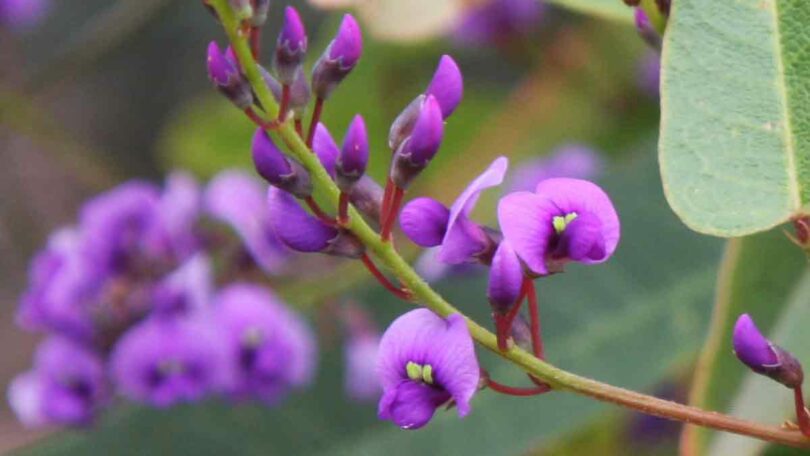

White flowering Hardenbergia offer a contrasting appearance to the normal purple flowering species. The snowy white flowers and deep green foliage say it all.
However, with a number of different cultivars available, with very different growth habits, we take a look at both climbing and low growing types to help you select the right variety for your garden.
- Alba (Hardenbergia violacea ‘Alba’) This is the one that started all of the others, vigorous small shrub‑climber; height ~1‑1.5m, spread ~1‑2m; upright, spreading, climbing; evergreen; tolerates a range of soils, drought, lime, moderate frost.
- ‘White Wren’ (PBR) This is low growing, more of a trailling ground cover, fairly compact reaching around 0.3‑0.5m height with a spread of 0.5‑1.5m spread. A good ground cover, masses of white pea flowers from late winter through spring.
- ‘Edna Walling Snow White’ A strong climbing habit, or use it as a groundcover. Reaches around 2‑4m height as a climber with a similar width.The same snowy white flowers and due to its vigour it will need pruning after flowering.
- ‘Flat White’ WE think the is the lowest growing of them all, a real groundcovering form. Can stay as low as ~20cm high however will spread up to ~4m diameter. Good dense foliage.
- ‘White Out’ (PBR) Its fast‑growing, a climber; to ~2.5m height & spread; green foliage; the same masses of pure white pea‑flowers mid‑winter to mid‑spring.

How to Grow Hardenbergia violacea ‘Alba’ (White Hardenbergia)
Once established this is a very easy care plant. Choice of position, soil and watering are the main factors for successful growth.Regular pruning is also recommended.
Planting & Position
- Choose a sunny to part shade location.
- Ensure well-drained soil – tolerates sandy to loamy types.
- Ideal for mild to warm climates; tolerates light frost.
- Plant in spring or autumn for best establishment.
- Provide a trellis, fence, or support if using as a climber.
Watering
- Water regularly while establishing (first 6–12 months).
- Once established, it is drought-tolerant.
- Avoid overwatering – prefers soil to dry slightly between watering.
Feeding
- Use a slow-release native plant fertiliser in spring.
- Avoid high-phosphorus fertilisers (native plants are sensitive).
Pruning
- Lightly prune after flowering to maintain shape and encourage bushiness.
- Remove dead or untidy growth throughout the year.
Pests/Disease
Generally pest- and disease-resistant.
- Watch for aphids or scale in humid conditions.
Climate
- Best suited to temperate, Mediterranean, and subtropical zones.
- Can survive in colder zones with frost protection when young.
How Big Do White Hardenbergia Get?
It depends on the cultivar, refer to the list on this page.
What are White Hardenbergia varieties used for?
Climbers, screens, ground covers and attracting bees and insects and adding contrast to the garden.
Is White Hardenbergia Fast Growing?
Yes, however actual growth rate will depend on the variety?
Garden Uses for The White Hardenbergia
- Climber or screening plant : Train up trellises, pergolas, fences, or walls for a cascading effect.
- Groundcover: Can be pruned to sprawl over embankments or open beds.Some varoeties are better than others for this use..
- Container Planting: Suitable for large pots with a support structure. So it could be grown in a courtyard or paved area.
- Cottage or Native Gardens: Blends beautifully with soft flowering schemes or Australian native designs.
- Erosion Control: Dense growth can help stabilise soil on slopes or banks.
- Attracts Wildlife: Flowers provide nectar for bees, butterflies, and birds.
- Low-Maintenance Screening: Offers light screening with a soft appearance.
- Winter Colour: Flowers of the white hardenbergia in late winter to early spring, adding brightness when many other plants are dormant.