Pimelea physodes

Regarded as having the best flowers of the Pimelea genus, Pimelea physodes is native to Western Australia.
Commonly called the ‘Qualup Bell’, Pimelea physodes not only makes a fascinating garden plant but also an attractive cut flower.
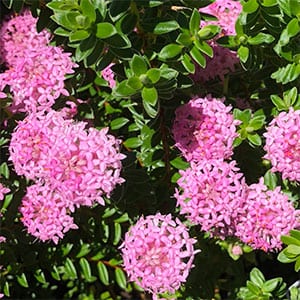
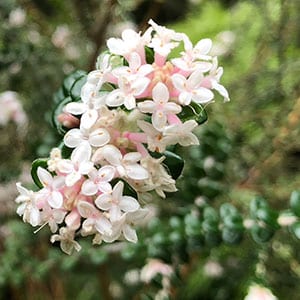
Grown for the flowers, large drooping bell shaped flowers from autumn through to winter. The flowers are long lasting and attractive and sought after as cut flowers.
If you are looking at growing them, try to find the grafted varieties which are easier to grow and are available for sale from specialist native plant nurseries.
Considerations (especially in eastern Australia)
- The species is not naturally suited to humid summers typical of the east coast — many plants grown from seed or own-root can struggle or die in such climates.
- Because of this, grafted plants are strongly recommended for reliability.
- Ensure excellent drainage — avoid heavy clay soil or poor drainage zones.
- Choose a protected site (morning sun, afternoon shade or light dappled shade) to avoid heat stress.
How to Grow Qualup Bell – Basic Care
The Qualup Bell is a small upright shrub to a height of approx 1m, they can be grown in a sandy loam and prefer a mild climate.
Site & soil preferences
- Prefers a well-drained soil — sandy loam or sandy soil over gravel is ideal. Avoid heavy clay or poorly drained soils.
- Soil should be low in phosphorus and generally typical of native-plant mixes if you use a fertilizer. Many WA natives (including Pimeleas) dislike “rich” fertilisers with high phosphorus.
- Best in a site protected from harsh afternoon sun (i.e. morning sun / part-shade or full sun to light shade, especially in warmer climates). Bracts and flowers display better in milder light, and intense afternoon heat can stress the plant.
- Good air circulation is helpful; avoid overly humid, stagnant or enclosed microclimates — aim for a breezy or open-air position).
Watering & climate tolerance
- Once established, Qualup Bell is quite drought tolerant.
- However — ensure regular watering while establishing (first few months after planting) until roots are set. Eg. water deeply after planting, then taper to occasional watering.
- Avoid overwatering — persistently damp soil risks root rot (especially in loamy or richer soils).
- Suitability: Can be grown in temperate to Mediterranean climates. Native to SW WA, its survival on the humid, hot east coast (or humid summers) can be problematic unless grafted onto hardier root stock.
Maintenance: pruning, feeding, care
- Prune lightly after flowering — trimming up to ~⅓ of growth can encourage denser, bushier habit and better bloom next season.
- Avoid heavy pruning into old wood — Pimeleas, including Qualup Bell, may not respond well if cut back too hard.
- Fertilise sparingly — if at all. Use a native-plant fertiliser (low-phosphorus) in spring only. Over-fertilising can do more harm than good
- Water in dry spells, but let soil dry out somewhat between watering — they prefer somewhat lean, well-drained soil rather than continuously moist.
Our Experience with Growing Qualup Bells

Grafted plants seem to be hardier and easier care than those from seed. A good specimen of a grafted Qualup Bell could just be the best Australian Native plant in your garden.
We believe that the grafted varieties of are an adaptable native plant. Originally from Western Australia the image (left) was taken in the Dandenong ranges east of Melbourne, a long way from the sand belts where they originated.
This is a grafted plant we purchased from Vaughans Australian Native Plants many years ago. Its doing well in a large pot, but would do equally well in a well drained position in the garden.
The Qualop Bell is a great plant, this one is flowering in May, very attractive green and red bell shaped flowers. A real Native Australian Beauty.
Summary Information
- Botanical Name – Pimelea physodes
- Common Names – Qualup Bell
- Country of Origin – Australia, Western Australia
- Climate Zones – Temperate, Mediterranean to Warm
- Position – Full sun to part afternoon shade
- Soil – Very well drained humus rich, sandy loam.
- Height – Generally around 1 metre with an upright growth habit.
- Spread – To .7 metres plus.
- Growth Rate – Slow to Medium
- Foliage – Oval shaped leaves, Green to Silvery Blue Grey.
- Flowers – Deep Red Pink and Green
- Flowering Time – Autumn through winter depending on climate.
- Frost tolerant – Light frosts only, not suited to humid climates
- Drought tolerant – Yes.
Landscaping Uses
Use Pimelea physodes as a feature plant in the garden or in a container.
Other Related Species
Pimelea ferruginea, Pimelea linifolia, and Pimelea spicata.