
Golden Pomaderris
Not widely used in gardens, Pomaderris aurea is a plant that deserves a little more attention. It is not widely found in cultivation as propagation is difficult.

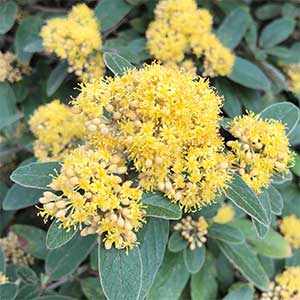
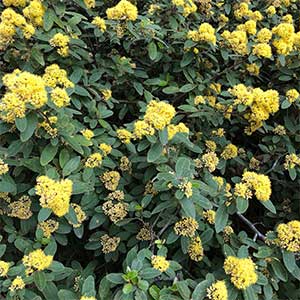
In spring it is covered with masses of dusky golden yellow flowers that attract bees to the garden. The foliage is a good deep green through the year with some indumentum on the underside.
This is plant that could be used in the background of a native plant border. It acts as a good screen and is very easy care once established.
Good specimens can be found in the Holey Plains State Park near Rosedale in South Eastern Victoria.
How To Grow Pomaderris aurea – Basic Care
Watering
When young, Golden Pomaderris benefits from regular watering to establish good root systems. It prefers moist but well‑drained soils and dislikes waterlogged conditions.
Once established, it tolerates moderate dry spells, but providing supplemental water during long dry periods helps maintain foliage vigor and flowering. Avoid overwatering — the roots can suffer in poorly drained soil.
Fertiliser
Golden Pomaderris is adapted to relatively low‑fertility soils and in general does not respond strongly to heavy fertilisation.
If you choose to fertilise, use a light application of a low‑phosphorus native plant fertiliser in spring, and avoid overdoing it. Excessive fertiliser can encourage soft growth that is more susceptible to pests or dieback.
Pruning
Pruning is useful to maintain shape, encourage bushiness, and remove dead or weak stems. After flowering is a good time to trim lightly, cutting back branch tips to just above a strong node or side shoot. Avoid heavy pruning into older wood, as recovery may be slow. Generally a light shaping pruning regime is sufficient.
Regular removal of spent flower clusters may help, and trimming helps keep the plant compact and promote more flowes in future seasons.
Propagation
From seed which will need a hot water stratification. Seed needs to be collected from the plant before it drops, germination can be difficult.
Landscaping Uses
Golden Pomaderris is ideally suited for native and naturalistic gardens. Some landscape uses include:
- Screening or background shrub: Its moderate height and density make it good for the background layer in native plant borders.
- Specimen or feature shrub: When in bloom, its golden flower clusters provide a striking focal point in spring.
- Mixed native shrub plantings: It pairs well with other Australian natives of similar water and sunlight requirements.
- Dry to moderate garden settings: Because it tolerates somewhat dry and less fertile soils, it is suitable for low‑maintenance or water‑wise gardens.
- Wildlife gardens: The flowers may attract pollinators like native bees.
When planting, ensure adequate spacing (its mature spread is moderate) so it doesn’t get overcrowded and so airflow is good, which reduces disease risk.
Summary Information
- Botanical Name – Pomaderris aurea (syn. Pomaderris humilis)
- Common Name – Golden Pomaderris.
- Family – Rhamnaceae.
- Origins / Distribution – Endemic to Victoria, Australia; found in forest and woodland in northeastern and eastern Victorian ranges.
- Position – Full to part sun to afternoon shade.
- Soil – Humus rich moist and well drained.
- Height – To around 1.5 metres
- Spread – To around 2 metre.
- Flowers – Dusky Golden Yellow.
- Flowering time – Late winter to spring.
- Foliage – Mid to deep green with slight serrations.
- Frost tolerant – Tolerates at least light to moderate frost, especially when established.
- Drought tolerant – Medium
Pomaderris aurea (Golden Pomaderris) is a charming and underused native shrub from Victoria, prized for its attractive foliage and golden spring flowers.
With moderate care — ensuring well‑drained soil, sensible watering, light fertilisation, and occasional pruning — it can be a resilient and beautiful addition to native gardens or low‑input landscapes.
Its moderate size and adaptability make it well suited as a screening shrub, background specimen, or part of mixed native plantings.