
Also known as Round-Leaf Rice Flower / Snowy Pimelea

Pimelea nivea is a beautiful Australian native shrub prized for its elegant clusters of creamy-white flowers and attractive evergreen foliage. Endemic to Tasmania, this native thrives naturally on rocky hillsides, open woodlands and heathlands.
Unlike some exotic ornamentals, it brings both ornamental beauty and ecological value to gardens – attracting pollinators while offering year-round greenery. Its compact yet bushy habit makes it suitable for garden borders, native plant landscapes, courtyards, pots and balconies alike.
- Foliage: Glossy deep green, rounded leaves with a subtly felty underside.
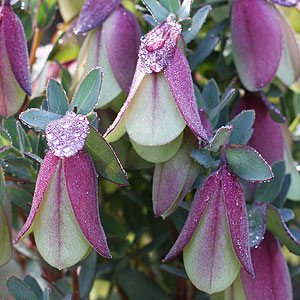
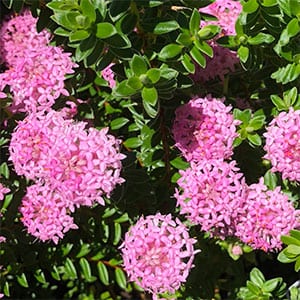
- Flowers: Small, creamy-white to pale pink clusters appearing mainly in spring to summer.
- Habit: Erect to bushy shrub usually reaching ~1–1.5 m tall.
How to Grow Pimelea nivea — Basic Care
Growing Pimelea nivea successfully comes down to understanding its natural preferences and mimicking them in your garden.
Grow Pimelea nivea in a humus rich well drained soil slightly on the acidic side. It will flower in morning sun and light afternoon shade and requires little in terms of fertiliser.
Give the plant a little room and it will develop a more bushy habit than it will if it needs to reach for light.
Sunlight Requirements
• Prefers full sun to part shade
• Morning sun with light afternoon shade helps prolong flowering and reduce leaf stress in hotter climates.
Soil
• Needs well-drained soil — sandy or loamy is ideal.
• Slightly acidic to neutral conditions benefit overall growth, reflecting its native heathland soils.
Watering
• Establishment Stage: Moderate regular watering to set strong roots.
• Once established: Drought-tolerant to moderate drought—water sparingly.
Fertiliser
• Use a low-phosphorus native fertiliser once or twice a year.
• Too rich or high-nitrogen feeds can reduce flowering and encourage leggy growth.
Temperature
• Performs best in mild to cool temperate climates mirroring its Tasmanian origins.
Frosts
• Light frosts are tolerated, but heavy or prolonged frosts can damage new growth.
Drought Tolerance
• Demonstrates moderate drought tolerance once established, making it suitable for low-maintenance gardens.
Pruning
Prune after flowering, however not back into old bare wood. This will also assist with creating a more rounded dense growth habit.
Climate Zones
Ideal for cool temperate and Mediterranean climates (e.g., southern Australian states). In hotter inland or tropical areas, partial shade and careful watering improve results.
Growing Outside Ideal Climate Zones
If you live in warmer, humid, or tropical areas:
- Grow in containers with raised soil mix to improve drainage.
- Plant in morning sun/afternoon shade locations.
- Avoid locations with prolonged wet soil or high humidity which can promote root or foliage diseases.
Propagation
Propagation of Pimelea nivea can be done several ways, though with varying success:
- Cuttings: Semi-hardwood cuttings taken in late spring to early summer strike reliably in well-drained propagation mix.
- Seed: Possible but less reliable — seeds benefit from fresh sowing in spring or autumn in free-draining soil.
Tip: Provide bottom heat and ample air circulation to improve root formation for cuttings.
Related Species and Inspiration Gallery
Other Pimelea species that offer similar garden appeal include:
- Pimelea ferruginea – A popular coastal rice flower with pink blooms.
- Pimelea glauca – Smooth Riceflower suited to sun and part shade.
- Pimelea linifolia – Slender Riceflower with small creamy blooms.
Propagation
From seed or cuttings.
Summary Information
- Botanical Name – Pimelea nivea
- Common Names – Round-Leaf Rice Flower / Snowy Pimelea
- Family – Thymelaeaceae
- Position – Full sun to a little afternoon shade.
- Soil – Well drained, humus rich.
- Height – To around 1.5 metres.
- Spread – To around 1 metres.
- Growth rate – Medium.
- Flowers – Small and creamy white or pink.
- Flowering Time – Spring to Summer.
- Foliage – Interesting deep green, glossy oval shaped foliage .
- Frost tolerance – Light frosts only
- Drought tolerant – Medium
Did You Know?
- Pimelea nivea contributes to local ecosystems by providing nectar for native pollinators.
- The species name nivea means “snow-white,” which reflects the plant’s classic flower colour.
- While not widely available in nurseries, dedicated native plant nurseries do sell it and enthusiasts often propagate it to preserve local biodiversity and enhance gardens with uniquely Australian character.