
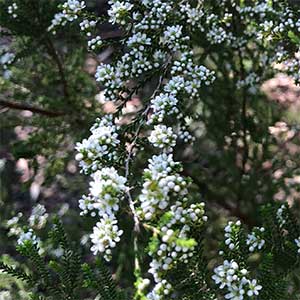
A small dense growing shrub Micromyrtus sessilis is from eastern Australia, commonly called the Heath Myrtle, it is most commonly found through New South Wales into Queensland.

With a natural spreading and arching habit it will reach a height of around 1 metre and spread to 1.5 metres. This a plant that naturally grows in part shaded forested areas and will perform best in the garden when planted in similar conditions.
Although attractive in flower and with good foliage this is a species that is not widely offered for sale.
How to Grow Micromyrtus sessilis – Basic Care
Growing well in poor and even rocky soils in open woodland areas, Micromyrtus sessilis is a tough and adaptable plant once established. It naturally prefers free-draining conditions and does not tolerate prolonged waterlogging.
- Best suited to well-drained soils, including sandy, gravelly or rocky ground
- Performs well in open, sunny positions but will benefit from a little afternoon shade, particularly in hotter or inland areas
- Avoid heavy clay soils unless drainage is significantly improved
- Drought tolerant once established, though occasional deep watering during extended dry periods will support healthier growth
It will benefit from some mulch around the base to the drip line, as this will provide a cool root run and help conserve soil moisture.
- Use a coarse, free-draining mulch such as pine bark or gravel
- Keep mulch clear of the main stem to prevent rot
- Mulching also helps suppress weeds and protects shallow roots
Additional care notes:
- Minimal feeding required; excessive fertiliser may cause soft growth
- If needed, use a low-phosphorus native fertiliser sparingly in spring
- Light pruning after flowering can help maintain a compact shape
- Generally low maintenance and well suited to naturalistic or low-water gardens
Garden and Landscaping Uses
Micromyrtus sessilis is well suited to low-maintenance and naturalistic garden settings, where its fine texture and compact habit can be appreciated.
- Ideal for native, bushland and wildlife-friendly gardens
- Well suited to rockeries, gravel gardens and raised beds where drainage is excellent
- Works well as a small feature shrub or as part of a mixed shrub planting
- Useful for low informal hedging or border planting in free-draining soils
- Effective on slopes and embankments due to its tolerance of poor, rocky ground
- Complements other small-leaved native shrubs and grasses in layered plantings
Its compact size and resilience make it a good choice for water-wise and low-input landscapes.
- Suitable for coastal and inland gardens with protection from extreme exposure
- Performs well in revegetation or restoration-style plantings
- Can be used in courtyards or smaller gardens where space is limited
- Pairs well with stones, boulders and hardscape elements for a natural look
Summary Information
- Botanical Name – Micromyrtus sessilis
- Family – Myrtaceae
- Common Name – Heath Myrtle
- Position – Full sun to a little shade.
- Soil – Well drained.
- Height – To around 1 metres, sometimes taller.
- Spread – To around 1.5 metres.
- Flowers – White turning to pink
- Flowering Time – Winter to spring.
- Foliage – Mid green and very fine.
- Frost tolerant – Yes
- Drought tolerant – Yes