
A number of species of Leptospermum are worth considering in landscaping. They not only produce wonderful flowers, they also make great screening plants and of course are sought after by apiarists for the medicinal honey industry.

It is the plants that we commonly call Tea Tree that include the Leptospermums. Wonderful flowering plants with a number of garden and landscaping uses. The species have been used for many years as screening plants and hedges. With hybridisation it is the new free flowering cultivars that are sought after by gardeners and landscapers alike.
Leptospermum Plant Profile
Leptospermum or ‘Tea Tree’ are found across Australia and also in New Zealand, and as such with over 80 species much variation exists.
In general most species make good screening plants and have attractive flowers
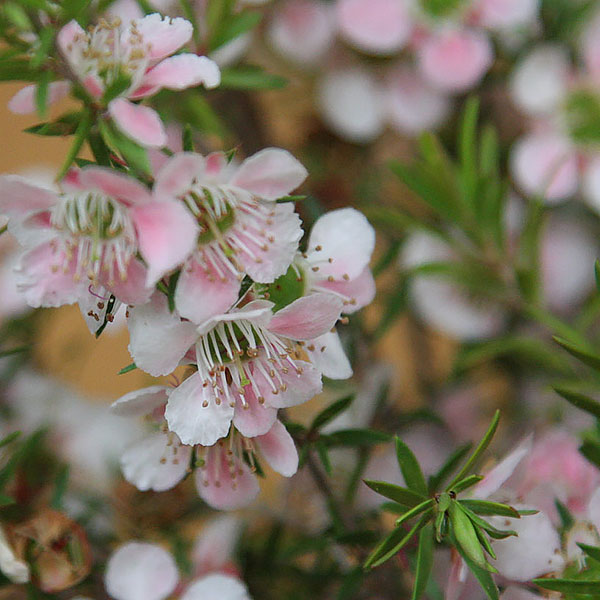
Flower colours vary from white to pink with some red flowers as well.
Species include Leptospermum scoparium, lanigerum laevigatum and petersonii.
In terms of size Leptospemum plants range from shrubs to small trees.
Hybrid cultivars such as Leptospermum ‘Pink Cascade’ have masses of flowers in Autumn through to Winter and are valued as garden plants for the winter color they provide.
How to Grow Leptospermum – Care Checklist
Use this simple checklist for thriving Leucospermum in Australian gardens.
-
- Sun: Full sun (6+ hours daily); south-facing slopes ideal in hot areas.
- Soil: Well-drained, acidic (pH 5.5-6.5), sandy/loamy; amend clay with gypsum.
- Water: Deeply weekly when young; drought-tolerant once established—avoid overhead watering.
- Fertiliser: Low-phosphorus native mix in spring; no high-P products.
- Pruning: Tip-prune after flowering to shape; remove dead stems anytime.
- Pests/Diseases: Watch for root rot in wet soil; use beneficial insects, not chemicals.
- Mulch: 5-7cm pine bark or gravel to retain moisture and acidity.
Popular Varieties
- In cultivation L. scoparium is common, however many of the hybrids have been developed in New Zealand. L. scoparium ‘Red Damask with dark red flowers is a hybrid that is most attractive, however this one was bred in California.
- L. continentale is known as the ‘juniper tea tree’ and L. lanigerum as the ‘woolly tea tree’.
- L. polygalifolium ‘Little Bun’ is a nice small growing form.
- L. sericeum or ‘silver tea tree’ has attractive silvery foliage.
- L. brevipipes or Slender Tea Tree
- Leptospermum flavescens ‘Cardwell’


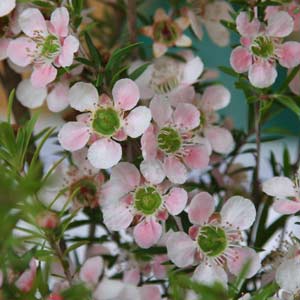


Try looking for Leptospermum ‘Pageant’ with its nice purple flowers or Leptospermum ‘Rudolph’ with large red flowers. Leptospermum ‘Pink Cascade’ pictured right is another with great flowers.
You may also be interested in
- Waratah
- Banksia
- Callistemon
- Alyogyne Huegelii (Native Hibiscus)
- Diplolaena grandiflora
- Veronica perfoliata (Diggers speedwell)
Where To Buy

Online and Retail Melbourne and Geelong based garden centres. Check out their large range of indoor and outdoor plants, Australian Natives, Fruit Trees and Edibles, Succulents, Gardenias, Camellias, Hydrangeas plus a full range garden products for delivery in Melbourne.
www.diacos.com.au
55 McDougal Rd Neerim South Victoria 3831 PH: (03) 56281507
Advanced ornamental trees and garden designs and concept plans. Direct to your property combined with specialist knowledge and outstanding service.
www.blericktreefarm.com.au
146 Dignams Crk Rd via Narooma NSW 2546
Tubestock - [50mm forestry tubes and 70mm supertubes] specializing in Bush Tucker Plants , Natives indigenous to the NSW South Coast , Permaculture Plants - Fruits, Nuts & Berries .
www.southcoastflora.com.au