The Trailing Guinea Flower

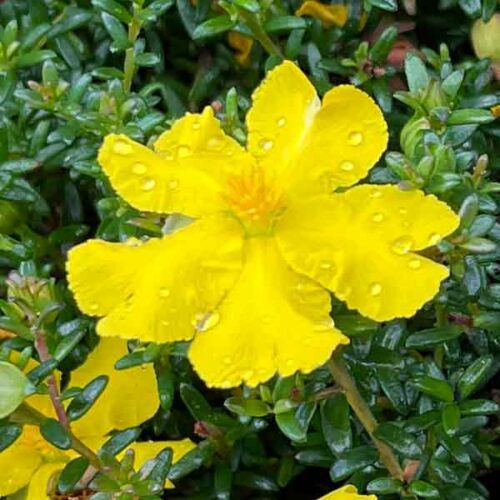
Hibbertia dentata, commonly known as the Trailing Guinea Flower, is a striking and easy-care Australian native plant. With glossy green leaves and bold yellow flowers, it brings a lush, tropical feel to your garden with minimal effort. It’s often seen trailing gracefully over rock walls, climbing through trees, or spilling from hanging baskets.
Like Rhipsalis, Hibbertia dentata has a somewhat wild, cascading growth habit, making it a standout in any semi-shaded position. Native to eastern Australia, particularly New South Wales and Queensland, it’s a versatile plant that fits beautifully into native gardens, tropical landscapes, or as a feature in vertical green walls.
Natural Habitat and Description
In the wild, Hibbertia dentata thrives in coastal and woodland areas, often scrambling through understorey shrubs or climbing up into tree canopies. It’s both a groundcover and a soft climber, giving you options in how and where to grow it.
- Plant Type : Evergreen, soft-wooded climber
- Growth Habit : Trailing or climbing, depending on support
- Height and Width : Can reach up to 2–3 metres in height if encouraged to climb, similar width when mature. Lower if used a a trailing plant
- Time to Ultimate Height : 2–3 years under optimal conditions
Growing Conditions
- Light
Prefers filtered or indirect light. It will tolerate light shade but thrives in dappled sun – very hot direct sun can cause leaf scorch or stress. - Soil / Potting Mix
Well-drained soil is essential. A mix rich in organic matter works well, especially if growing in containers. Slightly acidic to neutral pH (around 6.0–7.0). - Watering
Moderate water needs. Keep the soil evenly moist but never soggy. Like a lot of native plants, Hibbertia dentata doesn’t like wet feet but also won’t tolerate long dry spells without some care. - Temperature and Climate
Grows best in temperate to subtropical climates, but is surprisingly hardy. Tolerates light frost once established.
Fertiliser and Feeding
Feed in spring and summer with a native plant fertiliser or liquid seaweed for best growth and flowering. Avoid high phosphorus fertilisers.
Pruning and Propagation
- Pruning
Trim back lightly after flowering to shape and encourage bushier growth. You can prune more heavily if it becomes too leggy or sprawly. - Propagation
Easy to grow from softwood cuttings taken in spring or early summer. Also possible from seed, though less common.
Why Grow Hibbertia serrata?
- It Attracts Wildlife – Native bees and butterflies love the bright yellow flowers
- Low Maintenance – Minimal care once established
- Evergreen – Year-round green foliage
- Drought Tolerant – Once established
- Non-invasive – Grows gently without choking other plants
Garden and Landscaping Uses
- Trailing over retaining walls soften the impact.
- Climbing up trellises or tree trunks
- Hanging baskets or raised planters
- Native and wildlife gardens
- Understorey planting in semi-shaded areas
Suggested Native Planting Layout
Here is a suggest planting layout using Hibbertia dentata as a feature. Plants are mainly low growing.
- Low growing Plants Front row:
Scaevola aemula – cascading habit, softens borders, provides bright colour
Hibbertia dentata – planted to be allowed to trail over edges or a low rock wall - Add a little height – Small Plants Mid-layer:
Dianella caerulea – grass-like, vertical accent with blue berries
Lomandra hystrix – contrasting strappy foliage and year-round interest - Add a little more Height – Taller Plants – Back row:
Grevillea ‘Gin Gin Gem’ – dense, flowering groundcover, attracts birds. To around 45cm
Hardenbergia violacea – vertical interest trained on trellis, winter flowers
Quick Care Summary
Light : Filtered light, part-shade
Watering : Moderate, avoid soggy soils
Frost Tolerance : Light frost okay once mature
Drought Tolerance : Medium – benefits from occasional watering
Flower Colour : Bright yellow
Flowering Time : Spring to early summer
Foliage : Glossy, mid to dark green, evergreen and tooth on magins
Soil Type : Well-drained, loamy, slightly acidic
PH Level : 6.0–7.0
Lifespan : Perennial
Growth Style : Trailing, climbing
Best For : Native gardens, hanging baskets, vertical gardens