
A Rare and Radiant Wildflower from Western Australia

Geleznowia verrucosa, commonly known as Yellow Bells, is a striking small shrub native to the mid-west coast of Western Australia. This single-species genus is celebrated for its clusters of bright golden-yellow flowers that light up gardens in spring. Growing up to 1 metre tall, it’s both compact and eye-catching, ideal for low-maintenance native gardens and modern dry-climate landscapes.
Native to tough, sun-drenched conditions, Geleznowia verrucosa is drought-tolerant, sun-loving, and beautifully unique—a gem for gardeners looking to add something truly different to their plant palette.

Best Uses in the garden
- Feature plant in native or Mediterranean-style gardens
- Pollinator-friendly garden beds, attracting bees with its vivid blooms
- Rock gardens or sandy coastal landscapes
- Cut flower gardens – the blooms are widely picked in WA for floral arrangements
- Potted specimen on a sunny patio (with excellent drainage)
Whether you’re landscaping a dry corner or building a native plant garden, Geleznowia verrucosa offers bright, bold colour with minimal fuss.
How to Grow Geleznowia verrucosa
If you are considering growing this most attractive and desirable plant from WA you will need a well drained sunny position, look for a grafted form, for best chances of survival.
Growing Geleznowia verrucosa successfully comes down to mimicking its natural environment—full sun, excellent drainage, and minimal water once established. Native to the dry, sandy soils of Western Australia, this plant is best suited to gardeners in warm, dry, frost-free areas.
Here’s how to grow it:
- Climate
Requires warm temperate and semi-arid conditions (low humidity) and is adapted to low rainfall environments (around 500mm a year). It is not recommended for tropical climates. - Position
Choose a full sun spot. While it can tolerate light shade, it flowers best with at least 6+ hours of direct sunlight per day.
Needs air circulation and protection from humidity. - Soil
Free-draining soil is essential. Sandy or gravelly soils are ideal.
In heavier soils, plant on a raised mound or use large containers with a cactus/succulent potting mix. - Watering
Low water needs. Water sparingly after establishment. Overwatering or soggy soil can quickly lead to root rot.
Propagation
Problems with propagation and seed germination make this a rare plant. However Geleznowia verrucosa also makes a wonderful cut flower, and are picked as such in Western Australia. So much work has beeb done to improve prpagation technichues and seed germination rates
- Best grown from grafted plants (often onto Correa or Myoporum rootstock) for improved hardiness and reliability.
- Seed is difficult to germinate and typically requires smoke treatment to mimic natural fire cues.
- Smoke germination of seed, along with nicking the seed near the radical end can greatly improve germination rates. Improved grafting techniques are making this attractive plant more readily available.

Planting Themes – What to Plant With
Pair Geleznowia verrucosa with other hardy, sun-loving natives and Mediterranean plants. Consider planting with:
- Eremophila species – for complementary size and flowering habits
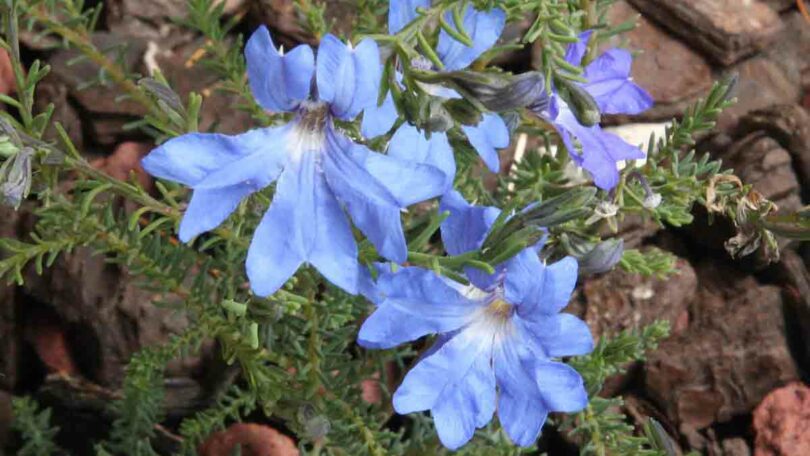
- Lechenaultia biloba – a WA native with striking blue flowers
- Kangaroo Paw (Anigozanthos) – for a layered wildflower look
- Westringia – adds evergreen structure and soft grey-green foliage
- Chrysocephalum apiculatum (Yellow Buttons) – for ground cover with similar colour tones
These companions all share similar requirements: full sun, well-drained soils, and low water needs.


We Are Asked?
Is Geleznowia verrucosa hard to grow?
It can be tricky from seed due to smoke germination requirements. For gardeners, grafted plants are the best choice for ease of growth and better survival.
Can I grow Yellow Bells in shade?
It tolerates light shade, but for best flowering and overall health, it needs full sun for most of the day.
When does it flower?
In spring, producing golden yellow blooms in eye-catching terminal clusters.
Top Tip:
In humid climates (e.g. coastal eastern Australia or the US South), avoid overwatering and choose open, breezy positions to reduce the risk of fungal issues.
Summary Information
- Height – Will reach around 1 m in height.
- Flowers – Golden yellow appear in terminal clusters.
- Flowering time – Spring
- Foliage – Mid green, small and oval shape held close to the stem.
- Soil – Well drained.
- Aspect – Full Sun to part light shade.
- Frost tolerant – No
- Drought tolerant – Yes once established.