
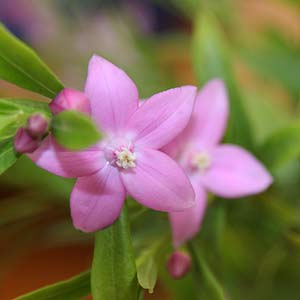
One of the more widely grown native plants are the Crowea species. Spring flowering, masses of flowers, attractive to bees and butterflies ad easy care.
A lot to like about this group of plants with C. angustifolia and C. exalta both being species that are widely grown and readily available for sale.
A group of small shrubs, these are an attractive group of flowering plants related to Boronia and require similar growing conditions. They work well in a mixed planting in the native border and are also suited to growing in a rock garden. Starry flowers range from white through to red (white are difficult to find in nurseries).
The great attraction of Crowea is that they tend to flower over an extended period. From Summer through to Autumn, they put on a good show of flowers. The lightly scented flowers and attractive foliage make them a good garden plant.
Evergreen and easy care, they are a little variable in height and growth habit. Very attractive and we do use them encourage to bees and butterflies and useful in the garden border.
A few very low growing cultivars with a mounding habit are now available, these work well as ground cover plants for sunny positions.
Key Features
- Height: 0.5 m to 1.5 m (some species up to 3 m, e.g. C. angustifolia)
- Width: 0.5 m to 1.5 m, naturally rounded
- Growth habit: Compact, bushy to slightly open; some mounding forms available
- Foliage: Evergreen, aromatic, fine-textured
- Flowers: Star-shaped, white to deep pink
- Bloom time: Late summer through autumn (extended flowering period)
- Wildlife: Attracts bees and butterflies
How to Grow Crowea – basic Care
A humus rich moist, but well drained partly shaded to sunny position with protection from wind.
Quick Guide
- Mound up soil to improve drainage if needed. Uses a low phosphate native plant fertiliser in spring.
- Stake young plants and use a plant protection barrier to help the plant through its first year.
- Some extra water through the first summer may be needed.
- Prune lightly after flowering to maintain a bush compact habit.
Light
Best in full sun to part shade.
In hotter climates (like inland VIC), some afternoon shade helps prolong flowering and prevent stress.
Soil
Crowea prefers:
- Humus-rich soil
- Slightly acidic conditions
- Consistent moisture without becoming waterlogged
Unlike tougher natives, Crowea does not thrive in poor, dry soils unless improved.
Drainage
Excellent drainage is essential.
If you’re dealing with clay, mound the soil or plant into raised beds—this is often the difference between success and failure.
Climate Sensitivity
- Dislikes strong, drying winds
- Can struggle in prolonged drought without supplementary watering
- Light frost is tolerated, but heavy frost can damage foliage
Planting & Establishment
Getting Crowea established properly is critical—it’s the stage where most failures occur.
- Dig in compost and improve soil before planting
- Plant slightly raised if drainage is questionable
- Water in with a seaweed solution to reduce transplant shock
- Stake young plants in exposed areas
- Use a tree guard or shelter in windy sites
Keep soil consistently moist (not wet) through the first summer. This is not a “plant and forget” native early on.
Maintenance & Care
Watering
- Regular watering during establishment
- Moderate, consistent watering in dry periods—especially in sandy soils
Crowea prefers steady moisture over drying out completely.
Feeding
- Apply a low-phosphorus native fertiliser in spring
- Avoid heavy feeding—too much fertiliser can reduce flowering
Pruning
- Light prune after the main flowering flush
- Tip pruning helps maintain density and shape
Do not hard prune into old wood—Crowea can be slow to recover from heavy cuts.
Landscaping Uses
Crowea is versatile but shines in more naturalistic plantings:
- Native garden borders
- Mixed shrub beds
- Rock gardens (especially compact forms)
- Low informal hedging
- Feature plant in small gardens
- Containers (with careful watering and drainage)
Mounding cultivars work particularly well as soft groundcovers in sunny positions.
Companion Planting
Crowea pairs well with other Australian natives that enjoy similar conditions:
- Westringia for structure and contrast
- Grevillea (small forms) for extended seasonal interest
- Correa for winter flowering contrast
- Native grasses like Poa or Lomandra for texture
Avoid aggressive or fast-growing plants that may outcompete it—Crowea prefers a bit of space.
Problems
Crowea is generally reliable but has a few known sensitivities:
- Root rot: The most common issue, caused by poor drainage
- Short lifespan: Some plants can become woody or decline after several years
- Leaf yellowing: Often linked to poor soil or overwatering
- Wind damage: Can cause dieback in exposed sites
Good drainage and positioning solve most issues.
Crowea Varieties
Look for
- C. salinga – Also known as the ‘Willow Leafed Crowea’ attractive pink flowers
- C. angustifolia – To 3m in height with white to pink flowers.
- C. exalata – Commonly called the small Crowea, attractive pink flowers.
Or maybe one of the hybrid forms with its pale pink flowers or look for the cultivar ‘Festival’ with darker pink starry flowers.
You may also be interested in
- Waratah
- Banksia
- Callistemon
- Alyogyne Huegelii (Native Hibiscus)
- Diplolaena grandiflora
- Veronica perfoliata (Diggers speedwell)
We are Asked?
How do I keep Crowea bushy and compact?
Tip prune lightly after flowering each year. Avoid letting it become leggy early on.
Can Crowea grow in full sun?
Yes, but in hotter areas it benefits from some afternoon shade to reduce stress and extend flowering.
Why is my Crowea dying suddenly?
Usually a drainage issue. Check for waterlogged soil—Crowea is very sensitive to wet roots.
How often should I water Crowea?
Regular watering during establishment, then maintain consistent moisture. Don’t let it fully dry out for long periods.