
Brilliant bright purple to pink flowers, good foliage and easy care nature make Carpobrotus rossii an excellent ground cover plant.

Commonly called Karkalla, as well as Native Pigface, is grows naturally in many coastal soils in coastal areas of Victoria, South Australia and Tasmania.
It will withstand frosts, drought coastal wind and salt spray and is useful for stabilising embankments.
The fruits which appear after the flowers are said to be edible as is the foliage, however it is as a spring to summer flower plant that Carpobrotus rossii gains merit in the garden.
The flowers are large and daisy like in appearance, a bright luminous purple to pink and appear in masses over a long period. This one of a number of species we call Pigface, and regarded as of of the best
Where to grow Carpobrotus rossii
Pigface is good for a number of garden applications including.
- Use Carpobrotus rossii as a perennial ground cover.
- Grow it in a container as a feature plant allowing it to trail over the sides.
- It is suited to growing in poorer soils in problem areas of the garden.
- Excellent for growing in no traffic areas next to swimming pools.
- Also used as a bush food.
How to grow Carpobrotus rossii
- Choose a position in full sun.
- Weed the area well before planting.
- Plant in an open loamy or sandy well drained soil is essential for good growth.
- Add extra drainage material if needed.
- Mound up soil in areas with poor drainage.

Top Tips
- Flowering is best in a sunny position and flowers do not open on heavy overcast days.
- Fertiliser is not generally required although a little seaweed/fish fertiliser in spring is said to be beneficial in very poor soils.
Watering
Once established Pigface only requires water in very long dry periods
Pruning and Maintenance
Simply pinch out growing tips or prune back long runners as needed.
Problems
- Overwatering can cause root rot, and this is a common cause of the plant dieting especially in poorly drained soils.
- Leaves may turn yellow in areas with to much shade.
Summary Details
- Botanical Name – Carpobrotus rossii
- Common Names – Native Pigface, Karkalla, Ross’s Noonflower.
- Family – Aizoaceae
- Genus
- Plant type – Perennial
- Position – Full sun to part shade
- Light
- Soil – Well drained, sand.
- Height – To around .3m
- Spread – To 3m plus
- Growth rate – medium to fast
- Flowers – Large pink to purple
- Flowering Time Late winter, Spring to summer
- Foliage – Thick succulent
Propagation
Easy from cuttings or by layering, possible from seed.

Similar Plants

Grevillea lanigera ‘Mt Tamboritha’
Grevillea lanigera ‘Mt Tamboritha’ One of the most popular prostrate Grevilleas is Grevillea lanigera ‘Mount…
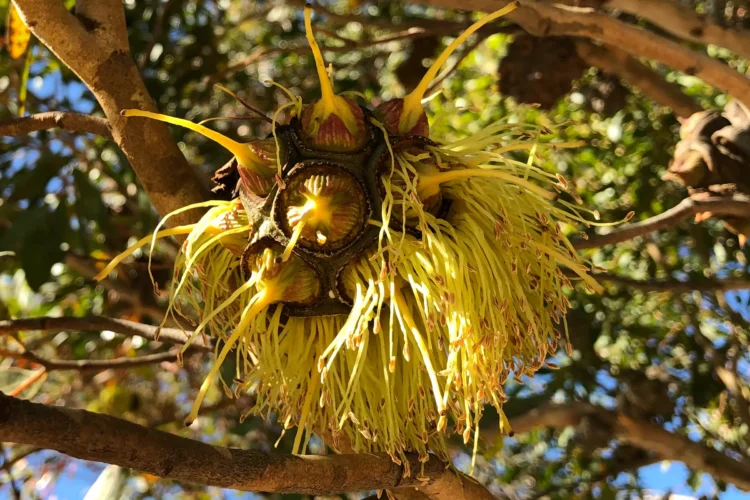
Eucalyptus conferruminata – Bald Island Marlock
Eucalyptus conferruminata, commonly known as Bald Island Marlock, is a distinctive Western Australian native tree admired…
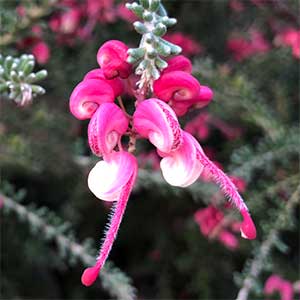
Grevillea lanigera – Woolly Grevillea
Grevillea lanigera – The Woolly Grevillea Grevillea lanigera, commonly known as Woolly Grevillea, is a…

Dianella tasmanica
Tasmanian or Tasman Flax Lily Dianella tasmanica – Tasmanian Flax Lily Dianella tasmanica, also known…

Eucalyptus gunnii – The Cider Gum
A very variable and versatile species, Eucalyptus gunnii is commonly called the Cider Gum. This…
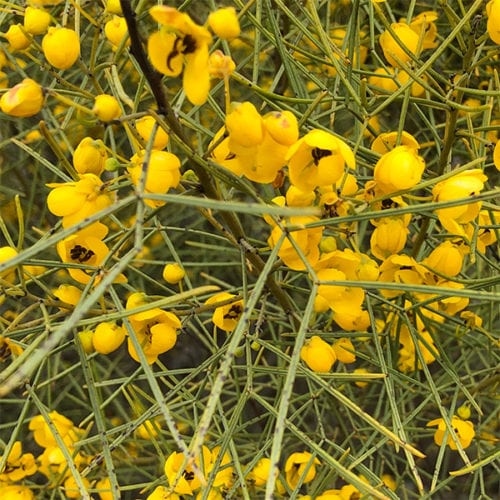
Senna artemisioides
Senna artemisioides – Silver Cassia or Silver Senna Widely found in the drier parts of…