
Banksia formosa was formerly known as Dryandra formosa or ‘Showy Dryandra’, and this is a species that lives up to its common name with very attractive (showy) flowers.
Description
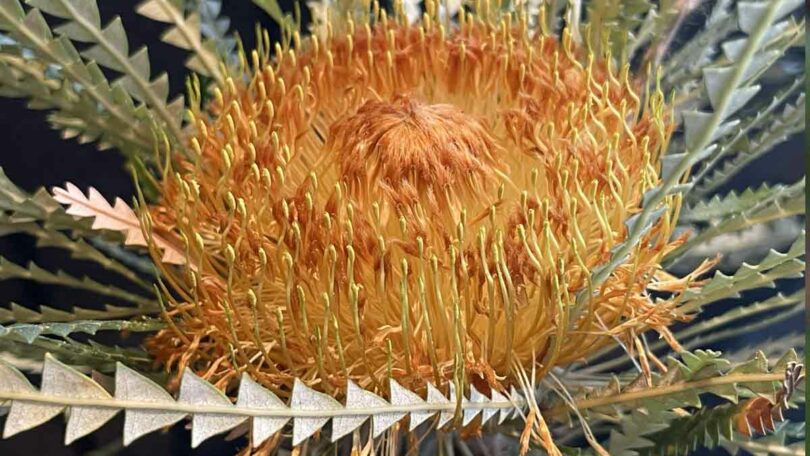
Formerly known as Dryandra formosa, Banksia formosa is one of the most spectacular of the former Dryandra species. Commonly called Showy Dryandra, it lives up to its name with large golden yellow to orange flower heads that stand out beautifully against the foliage.
Native to the south-west of Western Australia, this medium-sized shrub can reach around 3 metres in height and forms an attractive spreading habit. The flowers are nestled amongst the foliage and make excellent cut flowers for indoor arrangements.
The foliage is attractive in its own right. The narrow leaves are a rich mid green above with a silvery-white felted underside. Deeply serrated leaf margins add texture and interest throughout the year.
Banksia formosa is well suited to coastal gardens, native landscapes and water-wise plantings where its colourful flowers and attractive foliage can be fully appreciated.
- Description
- Why Was Dryandra formosa Renamed Banksia formosa?
- Why Grow Banksia formosa?
- How To Grow Banksia formosa
- Top Tips
- Pruning Banksia formosa
- Landscaping Uses
- A Bird-Attracting Banksia
- Banksia formosa as a Cut Flower
- Banksia formosa vs Banksia coccinea
- Banksia formosa vs Banksia speciosa
- Companion Plants
- Growing Banksia formosa in Pots
- Problems
- Banksia formosa Summary Description
Why Was Dryandra formosa Renamed Banksia formosa?
Many gardeners still know this plant as Dryandra formosa. Advances in botanical research showed that the genus Dryandra was closely related to Banksia.
As a result, all former Dryandra species were transferred into the Banksia genus. While the accepted botanical name is now Banksia formosa, the common name Showy Dryandra remains widely used.
When searching for plants or growing information, it can be useful to look under both names.
Why Grow Banksia formosa?
Banksia formosa combines many of the qualities gardeners look for in an Australian native shrub.
- Attractive flowers and foliage.
- Excellent bird and pollinator attraction.
- Suitable for coastal gardens.
- Drought tolerant once established.
- Responds well to pruning.
- Useful as a cut flower plant.
- Well suited to native and water-wise landscapes.
For gardeners looking for a distinctive flowering shrub with year-round appeal, Banksia formosa is one of the most rewarding of the former Dryandra species.
How To Grow Banksia formosa
Banksia formosa is relatively easy to grow provided drainage is excellent and the plant receives plenty of sunlight.
- Choose a sunny position or one with light afternoon shade.
- Ensure the soil is well drained.
- Improve drainage in heavy soils before planting.
- Plant at the same depth as it was growing in the container.
- Water in well using a liquid seaweed solution.
- Apply a light mulch around the plant, keeping it away from the stem.
- Water during extended dry periods while the plant is establishing.
- Apply a low-phosphorus fertiliser suitable for Australian native plants if required.
Top Tips
- Excellent drainage is essential.
- Plant in full sun for the best flowering display.
- Regular pruning will encourage a denser growth habit.
- Avoid excessive fertiliser applications.
- A great choice for coastal and water-wise gardens.
Pruning Banksia formosa
This is a Banksia that responds well to pruning, making it an excellent garden plant.
The best time to prune is immediately after flowering. Light annual pruning encourages dense growth, improves the shape of the plant and can lead to better flowering in future seasons.
Avoid removing large amounts of old wood as recovery may be slow.
Like most Banksia/ Dryandra species this is a plant that does respond well to pruning and this helps make it an excellent garden plant. The best time to prune is immediately after flowering.
Landscaping Uses
- Grow as a feature shrub in native gardens.
- Ideal for coastal landscapes.
- Use in water-wise and low-maintenance gardens.
- Plant in mixed shrub borders.
- Excellent as a cut flower plant.
- Suitable for attracting birds and pollinators.
- Provides shelter for small birds.
A Bird-Attracting Banksia
The nectar-rich flowers of Banksia formosa attract a range of native birds, particularly honeyeaters, along with bees and other beneficial insects.
The dense branching habit also provides shelter for small birds, making it a valuable addition to wildlife-friendly gardens.
Combining Banksia formosa with Grevilleas, Correas and Callistemons can help create a garden that supports wildlife throughout the year.
Banksia formosa as a Cut Flower
One of the outstanding features of Banksia formosa is its suitability as a cut flower.
The large golden yellow flower heads are long-lasting both on the plant and in floral arrangements. The flowers add texture, colour and a distinctly Australian character to fresh and dried displays.
Cut stems when the flowers are fully developed and place them in clean water. Regularly changing the water will help maximise vase life.
For gardeners who enjoy bringing flowers indoors, Banksia formosa is one of the best former Dryandra species to grow.
Banksia formosa vs Banksia coccinea
Banksia formosa and Banksia coccinea are both popular Western Australian species, however they offer very different garden features.
Banksia formosa is grown for its large golden yellow flowers, attractive serrated foliage and relatively easy-going nature once established.
Banksia coccinea, commonly known as the Scarlet Banksia, produces spectacular bright red flowers that are among the most striking in the genus. However, it is generally more demanding and can be difficult to grow outside areas with suitable climate and soil conditions.
For most gardeners seeking a reliable flowering shrub, Banksia formosa is often the easier choice.
Banksia formosa vs Banksia speciosa
Banksia formosa is sometimes compared with Banksia speciosa, another Western Australian species known for its showy flowers.
Banksia formosa develops as a medium-sized shrub with deeply serrated foliage and golden flower heads nestled amongst the leaves.
Banksia speciosa typically grows larger and produces prominent upright cream to pale yellow flower spikes that sit well above the foliage.
Both species attract birds and pollinators, however Banksia formosa generally provides greater foliage interest throughout the year, while Banksia speciosa is often grown primarily for its impressive flower spikes.
Companion Plants
Banksia formosa grows well alongside other Australian native plants that enjoy sunny positions and free-draining soils.
Good companion plants include:
- Grevilleas
- Kangaroo Paws (Anigozanthos species)
- Verticordia species
- Correas
- Westringia
- Native grasses such as Lomandra and Dianella
These plants provide contrasting colours and textures while thriving in similar growing conditions.
Growing Banksia formosa in Pots
Young plants can be grown successfully in large containers provided drainage is excellent.
Use a quality native plant potting mix and position the container in full sun. Regular watering will be required during hot weather, although the potting mix should never remain waterlogged.
Container growing is a useful option where garden space is limited.
Problems
Banksia formosa is generally a reliable plant when grown in suitable conditions.
- Poor drainage can cause root problems and plant decline.
- Flowering may be reduced in heavily shaded positions.
- Excessive phosphorus can damage roots.
- Young plants may require protection from severe frosts.
- Overwatering can lead to poor growth and reduced vigour.
Most issues can be avoided by planting in full sun and ensuring excellent drainage.
Banksia formosa Summary Description
- Botanical Name – Banksia formosa syn. Dryandra formosa
- Falily – Proteacae
- Common Name – Showy Dryandra
- Origins – South West of Western Australia
- Growth habit – Spreading perennial shrub
- Height – To 3m
- Spread – To 2m plus
- Growth Rate – Fast.
- Soil – Well drained humus rich, sandy, sandy loam.
- Position – Full sun to a little shade
- Foliage – Evergreen
- Flowers – Large golden yellow
- Flowering time – Spring
- Frost tolerance – Light frosts only
- Drought tolerant – Yes.
Where to Buy
Try the following nurseries
- Goldfields Revegetation Nursery – VIC
- Muchea Tree Farm – WA
- Southern Flora -WA